
Latest News
Honduran Grandfather Who Died in ICE Custody Told Family He’d Felt Ill For Weeks
Luis Beltran Yanez-Cruz is one of six people to die in Immigration and Customs Enforcement custody less than three weeks into 2026.
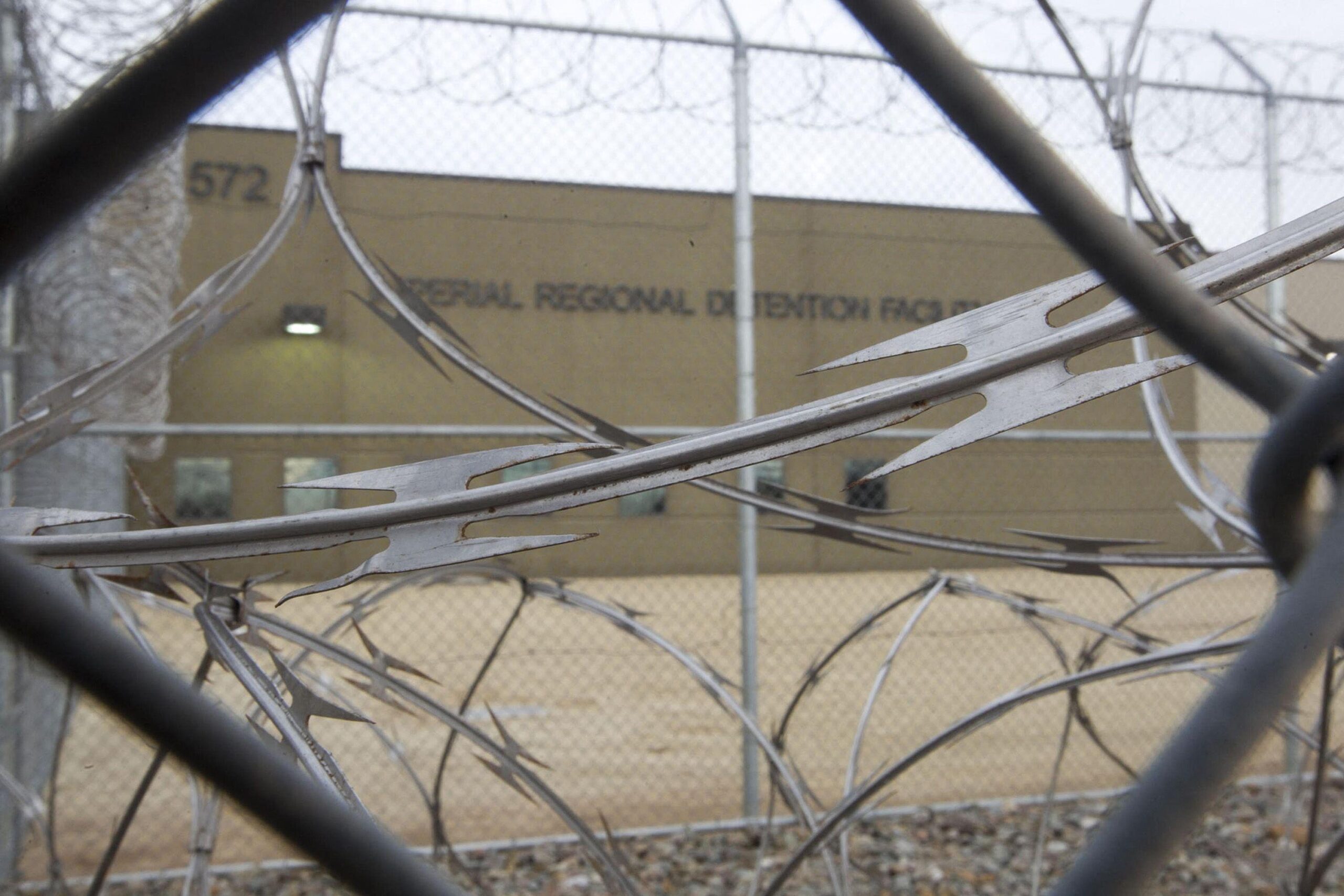

Luis Beltran Yanez-Cruz began telling his family that he wasn’t feeling well a few days after Immigration and Customs Enforcement transferred him to a California facility, his daughter recalled.
Originally from San Pedro Sula, Honduras, he is one of six people who died in ICE custody in the first two weeks of 2026. Last year, 32 people died in ICE custody, the most in a single year since the agency was created.
The family of Parady La, who died on Jan. 9 while in ICE custody, has raised questions about the medical care he received. Now Yanez-Cruz’s family has similar concerns, according to his daughter, Josselyn Yanez.
“I had hope that my dad would get out of that place but not in this way,” Yanez-Cruz’s daughter said in Spanish.
ICE did not respond to a request for comment from Capital & Main. Management and Training Corporation, the private prison company that runs Imperial Regional Detention Facility, directed Capital & Main to a press release from ICE.
“Our professionally trained medical staff — including licensed doctors and nurses — provide timely, compassionate care to all individuals in our custody. We take every medical concern seriously and ensure that appropriate care and oversight are provided at all times,” wrote Emily Lawhead, spokesperson for the company.
In that press release about Yanez-Cruz’s death, ICE said: “All people in ICE custody receive medical, dental and mental health intake screenings within 12 hours of arriving at each detention facility; a full health assessment within 14 days of entering ICE custody or arrival at a facility; access to medical appointments; and 24-hour emergency care. At no time during detention is a detained illegal alien denied emergency care.”
ICE initially detained Yanez-Cruz, 68, in mid-November in New Jersey, where he had lived for decades, according to his daughter. She said her father had just eaten breakfast at a McDonald’s and was on his way home when he stopped to talk to a friend who was working nearby when ICE showed up and arrested him.

Luis Beltran Yanez-Cruz. Photo courtesy Josselyn Yanez.
According to the press release, Yanez-Cruz was undocumented.
His daughter said her father didn’t talk about his immigration situation much with her. He left Honduras when she was very young, she said, and she grew up knowing him mostly through phone calls. She said her family would walk to a neighbor’s house that had a phone so that he could call them on weekends.
“He came (to the U.S.) looking for a better life for us, for me and my siblings,” she said.
She recalled him going to visit the family in Honduras twice, each time for about a week, as she was growing up.
She thought he had received temporary permission to live in the U.S. and to leave the country and return. ICE’s press release says that he was detained and deported once in 1993, and that between 1999 and 2012, he submitted requests for temporary protected status, but his applications were denied.
After those two visits during her childhood, she didn’t see her father again until she came to the U.S. herself, she said. After she and her siblings moved to Texas, her father would visit for the holidays at the end of the year, she said.
She said he especially loved watching his six grandchildren open the gifts he had gotten for them for Christmas. He was an avid soccer fan, particularly of the Honduran team Marathón, and worked as a painter and in construction.
Her favorite memories with him are moments when she cooked for him at her home. She said he liked when she made baleadas, a traditional Honduran dish made with tortillas and beans.
After ICE detained him, he called her and her siblings often, she said. The agency transferred him to Imperial Regional Detention Facility in Calexico, California, and within days, he told her that he was vomiting and had pain in his stomach and chest, she said.
After a week, he told her that he felt tired walking and was short of breath, she said.
She said she felt worried because she couldn’t do anything to help him, and she encouraged him to ask for medical attention.
He told her that the medical staff said if he got worse, they would take him to a hospital, she said. She thinks they should’ve taken him sooner.
“They only gave him pills for the pain,” she said. “They gave them to him without knowing the cause of the pain in his stomach or chest and without knowing why he was vomiting.”
On Jan. 6, a friend of her father who had recently been released called to tell her that another friend detained at Imperial Regional Detention Facility called him worrying about Yanez-Cruz. The friend told her that her father had been taken away in a medical emergency two days before.
“They were worried because dad hadn’t come back,” she said.
Usually either the person returns to the unit or staff moves their belongings to the medical unit, she said. Neither had happened.
While she was on the phone with her father’s friend, she received another call from a private number, she said. It was someone from ICE calling to tell her that her father had died that morning.
She said she wishes the agency had told her when he was hospitalized so she could’ve said goodbye.
According to ICE’s press release, Yanez-Cruz was taken to El Centro Regional Medical Center on Jan. 4 for chest pain and transferred by helicopter to John F. Kennedy Memorial Hospital in Indio because he needed a higher level of care. It says he was admitted there for “heart-related health issues,” but it does not indicate the cause of his death.
It says he died a little after 1 a.m. on Jan. 6.
His daughter said she and the family are devastated.
“The world came down on me,” she said. “I wasn’t expecting my dad to die this way, locked up, alone, without anyone with him.”
She said a family member launched a GoFundMe campaign to help pay the costs to bring his body to Texas so that the family can say goodbye before they send his remains back to Honduras to be buried.
“I want to see my dad for the last time, give him a final hug,” his daughter said. “It’s not the way I would’ve wanted, but, unfortunately, I have to do it this way.”
Another man died while in custody at Imperial Regional Detention Facility in September. Weeks later, Management and Training Corporation posted a job opening for a part-time physician there.
That opening is no longer listed.
Copyright 2026 Capital & Main



-

 The SlickMay 29, 2026
Feds to Open Tens of Thousands of Acres of Colorado Wilderness to Oil Drilling
-
 Deadly Dust: The Silicosis EpidemicMay 27, 2026
California Moves to Ban Quartz Countertop Fabrication to Combat Silicosis Epidemic
-
 Latest NewsMay 26, 2026
Conditions at California ICE Detention Centers Are Getting Worse, Inspections Find
-
 Imperial DivideJune 3, 2026
California’s Lithium Valley Dreams Meet Reality at the Only Restaurant in Town
-

 Column - State of InequalityMay 28, 2026
Top Democratic Candidates Agree on Housing Urgency, Not the Fix
-

 Latest NewsJune 1, 2026
Deep Cuts to Civilian Support Staff for Families of Deployed Marines Raise Concerns
-

 Column - State of InequalityJune 4, 2026
California’s Economy Runs on Labor Trump Wants to Deport
-
 The SlickJune 5, 2026
At This New Mexico Park, Mountain Bikers Pedal Amid Hundreds of Oil Wells