Column - State of Inequality
Federal Cuts Revive a California Lawmaker’s Push for Single-Payer Health Care
Assemblymember Ash Kalra says attacks on the Affordable Care Act underscore the urgency of creating state-run health insurance.

The latest set of health care proposals from the Trump administration has done nothing but embolden a California lawmaker to continue swinging for the fences: the creation of a single-payer, state-run system of care that virtually removes health insurance companies from the mix.
That idea is hardly a new one. In fact, the legislator, Assemblymember Ash Kalra (D-San Jose), has himself introduced or reintroduced a form of it four times over the past five years.
Those proposals have made little headway in Sacramento. But here in 2026, with Congress already having approved massive cuts to federal Medicaid funding and President Donald Trump’s staff pushing for further patient-hostile revisions to the Affordable Care Act, Kalra believes the time is right for another try — and another public discussion.
“Given what we’re seeing from the federal administration, and with the intense scrutiny on both Medicaid and ACA cuts, the general public is more aware than ever that we have an unsustainable, dysfunctional health care system,” Kalra told Capital & Main. “There’s an awareness among the public and stakeholders that the status quo is unacceptable.”
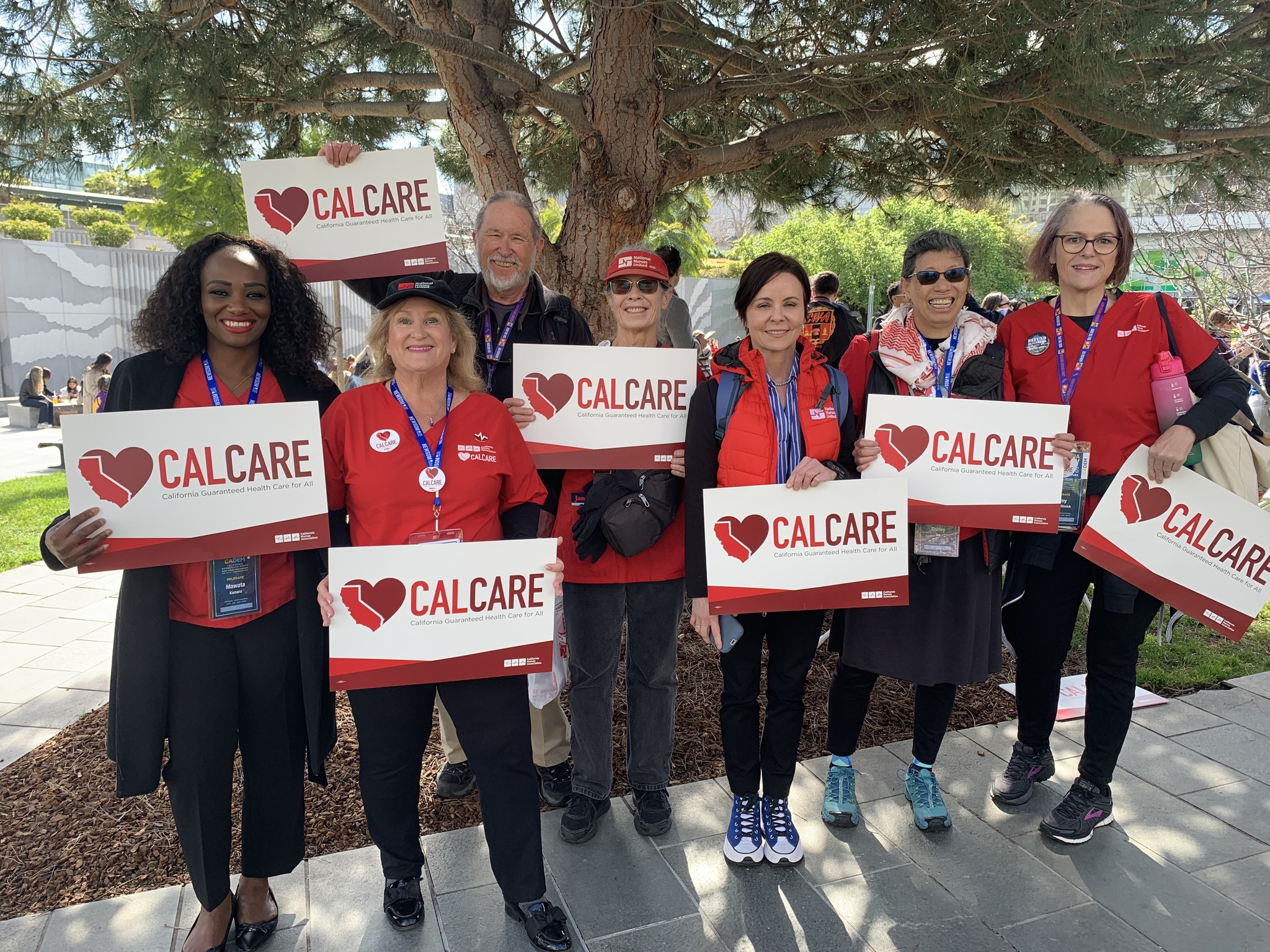
Kalra’s latest legislative attempt at single payer, Guaranteed Health Care for All, is strictly procedural — a necessary first step. It would create CalCare, a universal form of health care administered by a state-run governing board and providing no-cost care at the point of service to all residents, regardless of their income or immigration status. (National versions of the concept are often known as Medicare for All.)
Establishing the program is the first of scores if not hundreds of steps on a journey to single payer (or universal) health care. It would have to be approved by the state Legislature and signed into law by Gov. Gavin Newsom or his successor before any serious discussion of funding the program could even begin.
And it will face political headwinds that are utterly predictable, especially from the health insurance industry itself, one of the most powerful lobbies at the state Capitol.
“But everything else, short of a systemic change, is playing around the edges, and in some ways just rearranging the deck chairs on the Titanic,” Kalra said. “We have to make a change, and that will take several years to do. Every year we delay, lives are lost, families go into bankruptcy, and more and more Californians are stretched thin because of health care costs.”
* * *
Nearly $1 trillion in Medicaid federal funding was slashed as part of the so-called One Big Beautiful Bill, passed in 2025. That has come as a blow to California, whose Medicaid program, known as Medi-Cal, covers more than a third of the state’s population — about 15 million people. The state stands to lose roughly $30 billion every year in Medi-Cal funding over the next decade as a result, with no obvious state funding remedy in sight.
On top of that, the Republican-led Congress in January refused to extend federal tax credits that had enabled millions of Americans to buy health insurance through the Affordable Care Act marketplace. With monthly premiums spiking, new enrollment in Covered California is already down 32% from last year, the ACA state agency said last week.
Now, Trump’s Department of Health and Human Services has proposed new rules that would place even higher financial burdens on those Obamacare-purchased plans — in some cases, by allowing health insurance companies to sell policies that force families to pay up to $31,000 a year out of their pockets before any insurance actually kicks in.
“The root cause of the affordability crisis is that the underlying cost of health care continues to grow unchecked year after year,” said Kristof Stremikis, director of market analysis and insight for the California Health Care Foundation. “These proposals do nothing to address that, and simply shift the burden onto the patients least able to bear it.”
The new HHS rules, which would become effective in 2027, let insurers offer the kinds of “skinny” policies that President Barack Obama’s administration outlawed in the early years of the ACA. The policies come with lower premiums than what’s currently on the marketplace, but they’d force individuals and families to pay far more in deductibles than ever before.
Trump, in his State of the Union address, blamed rising health care costs on the ACA itself. He advocated a plan under which insurers would pay patients a fixed amount of money for certain services, leaving the patients or families to then shop for medical care or procedures themselves rather than be part of a health system.
“And families do what we know families do, right? They either find other ways to get that money [to pay], or they skimp and make decisions that they would rather not,” said Mike Odeh, senior director of health policy at the California-based policy advocacy group Children Now.
“This watering down of policies and networks worries me, and so does putting more financial risk onto families,” Odeh added. “They’re also facing increased costs for housing, utilities, food, transportation — all the things. And with health care, you don’t always know that you’ll need something until you need it, especially with kids.”
* * *
Kalra, who has served in the Assembly since 2016, hears and feels all of that. The first Indian American to serve in the California Legislature, he has carried the idea of a universal health care system for years and dealt with plenty of disappointing results in his efforts to elevate the idea.
He’s not naïve about the odds. It’s a longshot.
“Look, we know Republicans won’t support it, because they’re completely beholden to these corporations and billionaires that profit wildly off our current health care system,” Kalra said.
But it also isn’t clear that he’ll have enough support among Democrats when it comes to overhauling a health care system that, while clearly bloated and dysfunctional, is going to be difficult to dislodge. But Kalra is proceeding on two beliefs: that CalCare is the kind of program California actually needs; and that the discussion around the topic needs to happen in public, including on the Assembly and state Senate floors.
A recent poll commissioned for the California Nurses Association found that nearly two-thirds of Californians felt the state needs “major reforms” to its health care system, and 86% of Democrats supported a proposal for single-payer. The CNA is sponsoring Kalra’s bill. (Disclosure: The union is a financial supporter of Capital & Main.)
Financing a program that could cost hundreds of billions of dollars a year is a different question. It involves securing waivers to use federal money to build it out, and that process cannot begin until a state actually passes a bill to create a state-run health care system. Several states have introduced such legislation over the past few years, including New York and Oregon, but none has yet passed a plan.
There’s a reason: It’s incredibly complicated. But to Kalra, the alternative is untenable.
“The current system is getting worse,” he said. “Having this conversation is about more than just keeping it in the limelight. We actually need to change hearts and minds.”
Copyright 2026 Capital & Main



-

 The SlickMay 29, 2026
Feds to Open Tens of Thousands of Acres of Colorado Wilderness to Oil Drilling
-
 Deadly Dust: The Silicosis EpidemicMay 27, 2026
California Moves to Ban Quartz Countertop Fabrication to Combat Silicosis Epidemic
-
 Latest NewsMay 26, 2026
Conditions at California ICE Detention Centers Are Getting Worse, Inspections Find
-

 Imperial DivideJune 3, 2026
California’s Lithium Valley Dreams Meet Reality at the Only Restaurant in Town
-

 Column - State of InequalityMay 28, 2026
Top Democratic Candidates Agree on Housing Urgency, Not the Fix
-

 Latest NewsJune 1, 2026
Deep Cuts to Civilian Support Staff for Families of Deployed Marines Raise Concerns
-

 Column - State of InequalityJune 4, 2026
California’s Economy Runs on Labor Trump Wants to Deport
-

 The SlickJune 5, 2026
At This New Mexico Park, Mountain Bikers Pedal Amid Hundreds of Oil Wells