Labor & Economy
A Tale of Two Cities' Trash
[caption id="attachment_9894" align="aligncenter" width="432" caption="Wikimedia<p>Wikimedia</p>"] [/caption]

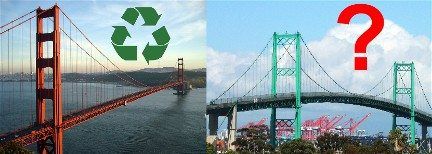
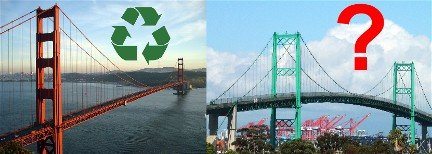
Earlier this month, San Francisco voters rejected Proposition A, a measure that would have significantly transformed how the city handles its waste and recycling. Prop. A would have changed the relationship between the city and its hauler by opening waste services to a bid process, splitting the waste hauling system into five zones and imposing a city-run collection facility. That hauler, Recology, has serviced the city’s waste stream since 1932, with little to no competition.
Clearly, for the City of San Francisco, the changes required by Prop. A would have been too expensive and too complicated. That’s why 76 percent of voters – siding with every major elected city official, community and environmental groups, business groups and politicians from both parties – opted to keep a system that is working.
The reason why Recology has been around for so long is its honest approach to business and its strong partnership with San Francisco. A mixture of reliable service, strategic investments in workers and innovations in zero waste has made Recology – once a small business – the ninth-largest sanitation company in the country. Recology experiments with different programs to meet specific customer needs, has kept rates comparatively low through an independent rate board and, unlike most of its major competitors, does not cut corners. In fact, Recology has helped San Francisco achieve the highest diversion rate, 78 percent, of all major U.S. cities.
For 80 years, this partnership has been entirely rooted in what amounts to a strong franchise system. The exclusive arrangement helped guarantee that Recology’s investments would benefit San Francisco residents. And they have – so far. Recology has invested millions of dollars in building modern recycling facilities because, early on, the company understood that striving towards zero waste required a shift from a disposal model to a sustainable resource recovery strategy. Not only has Recology constructed a state-of-the-art recycling infrastructure (enough to garner visits by officials from various cities, states and countries), but the company has also helped to create good jobs – approximately 900 employee-owners – with safe working conditions and upward mobility.
Contrast that with the City of Los Angeles, a city with an entirely backward system of waste disposal for businesses and large apartment buildings. Over three million tons of waste are landfilled every year, and the commercial haulers acknowledge that they take only 19 percent of what they pick up to recycling facilities. In addition, deceitful companies like American Reclamation continue to abuse and disrespect their workers. (Earlier this month Cal/OSHA issued 36 citations to American Reclamation and its affiliated companies for violations of serious health and safety standards that harmed workers.)
American Reclamation isn’t the only bad actor. These low-road practices are a product of an old-fashioned system of disposal that incentivizes bad business models, harming workers and negatively impacting communities and the environment.
The good news for Angelenos is that the City of Los Angeles can adopt a model similar to San Francisco’s – a high-road system that benefits workers, the environment and customers. To ensure that we reach our ambitious goals of zero waste by 2030 and the state-mandated diversion rate of 75 percent, the city must secure a strong franchise system – the only system that would create strong partnerships and incentivize companies to invest in our deteriorating waste and recycling infrastructure. We can either choose to modernize our recycling system, or risk watching it all fall apart.


-

 Column - State of InequalityMay 21, 2026
In California Governor’s Race, Xavier Becerra Walks Away From Single-Payer
-

 Latest NewsMay 22, 2026
Where California’s Gubernatorial Candidates Stand on Climate and Taking Big Oil Money
-
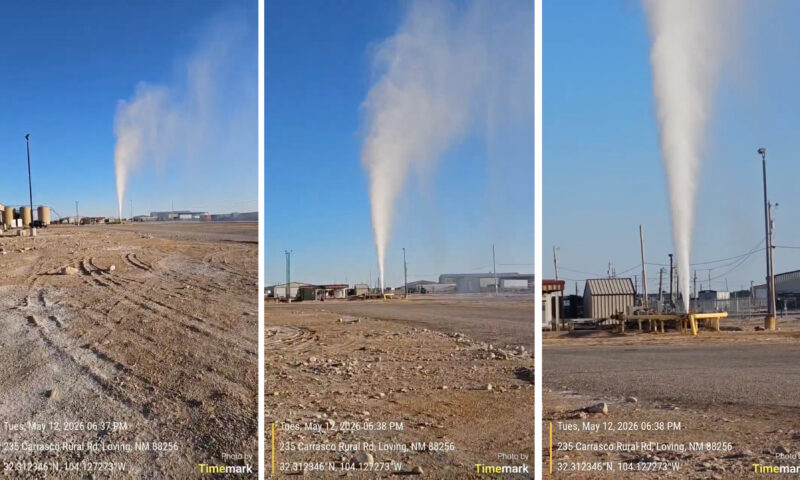
 The SlickMay 20, 2026
70-Foot Wastewater Geyser Reflects New Mexico’s Latest Oilfield Challenge
-

 The SlickMay 29, 2026
Feds to Open Tens of Thousands of Acres of Colorado Wilderness to Oil Drilling
-

 Latest NewsMay 18, 2026
Budget Cuts Threaten Program That Doubles Food Dollars for Californians in Need
-
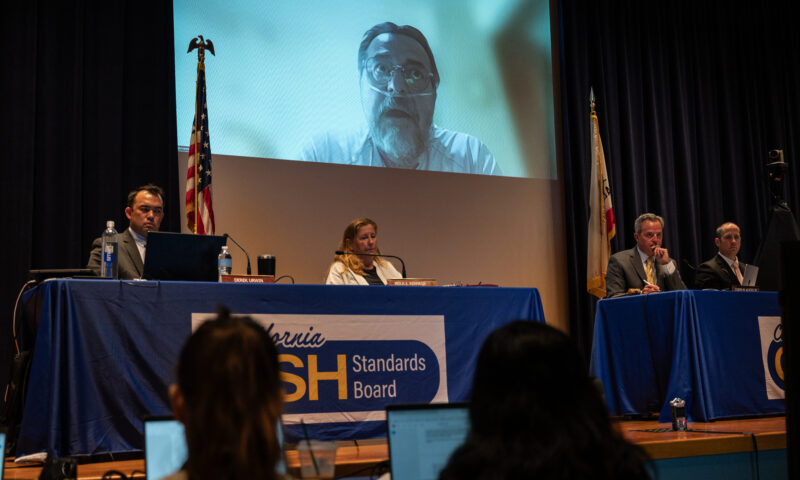
 Deadly Dust: The Silicosis EpidemicMay 27, 2026
California Moves to Ban Quartz Countertop Fabrication to Combat Silicosis Epidemic
-
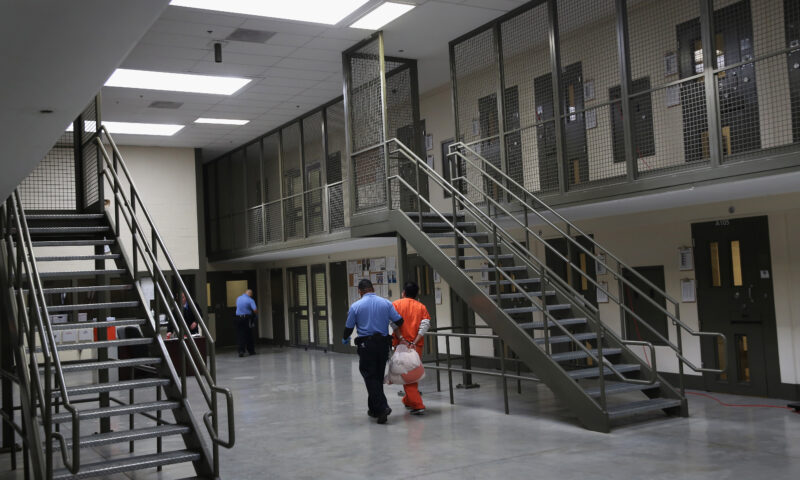
 Latest NewsMay 26, 2026
Conditions at California ICE Detention Centers Are Getting Worse, Inspections Find
-
 Imperial DivideJune 3, 2026
California’s Lithium Valley Dreams Meet Reality at the Only Restaurant in Town