
Society
The Holiday Season: A Long Night’s Journey Into Light
Winter festivals emphasize family and home, core strengths of every society. In our communities we guard ourselves against the long darkness. We hold out signs to one another that we can withstand these worst of days.

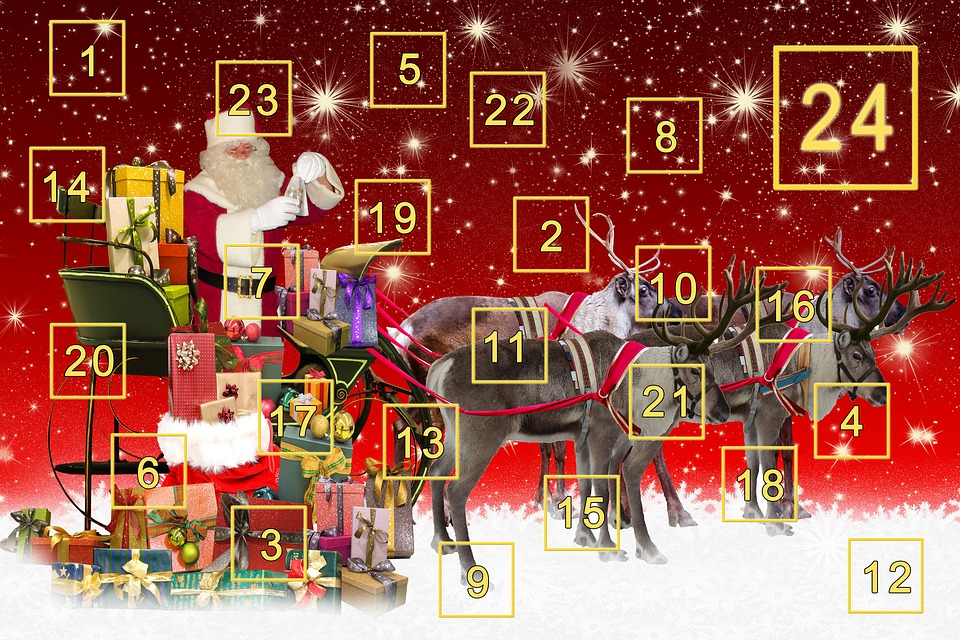
Advent calendars used to be quite popular. Now they’re fairly difficult to find, and I imagine not many people bother with the old custom associated with them. But my wife Susan and I have had one that we’ve used over and over for years, until now.
The calendars were invented by German Lutherans in the 19th century as a journey of preparation for the birth of Jesus on Christmas. The “calendar” is actually a large artist’s rendering of some scene. It might be a European ideal of Bethlehem or a quaint mountain village blanketed in snow with a church at its center. In recent versions, the picture is likely more secular – a small, snow-covered New England town with Santa, his sleigh and reindeer flying overhead, or a family gathered around the Christmas tree in a rather well-appointed living room that most of us don’t have.
On the picture there are a random series of windows numbered from one to 24. Each day, beginning on December 1, the faithful open one small window. Each opening displays a seasonal symbol behind it: a candle, a star, an animal or a wrapped gift. Each is a surprise, a precursor to the Great Surprise. In recent years the calendars seem to have fallen into a kind of Disneyesque kitsch. You can even buy Advent calendars with a piece of chocolate behind each window.
This fall, as Susan and I traveled in northern New Mexico, we discovered a different calendar. Instead of New England, it pictured a pueblo characteristic of the architectural style of the Southwest with, of course, a church at its center – the indigenous culture with an overlay of Spanish colonial religion. Instead of presenting only images, each window includes a few words. A drawing of a road runner reads “Personal Integrity”; a hanging bough of chile ristras says “Hard Work”; a pictograph of a lizard, “Living One’s Creed”; a pueblo pot contains the word “Justice.”
Pictures and words are a unique contribution to the Advent calendar tradition. But the words remind us that all of the festivals of this season carry values. In their several ways they not only help those of us in the northern hemisphere get through the longest night of the winter solstice, they embody moral principles – virtues – that guide a society toward survival and sustainability. Overtly they bring light – like the Hindu tradition of Diwali – as the daylight dwindles. Below that, these festivals carry meanings.
A rabbi friend reminded me this year that Hanukkah was a tale made up by the rabbis as an alternative to the bloody saga of the brutal victory of the Maccabees over the Greeks. The reality of the war so horrified the survivors that Jewish spiritual leaders replaced it within another story. They literally created a narrative that could celebrate the unexpected and transcendence — but built around a flame that kept burning.
The African-American festival of Kwanzaa also carries values that sustain and empower a community. The festival begins on December 26, and each day for a week people light a different candle. Each one refers to an underlying value, like “cooperative economics” and “collective purpose.” People not only use these symbols in their homes, they gather with others to light the candles together and rehearse their meanings.
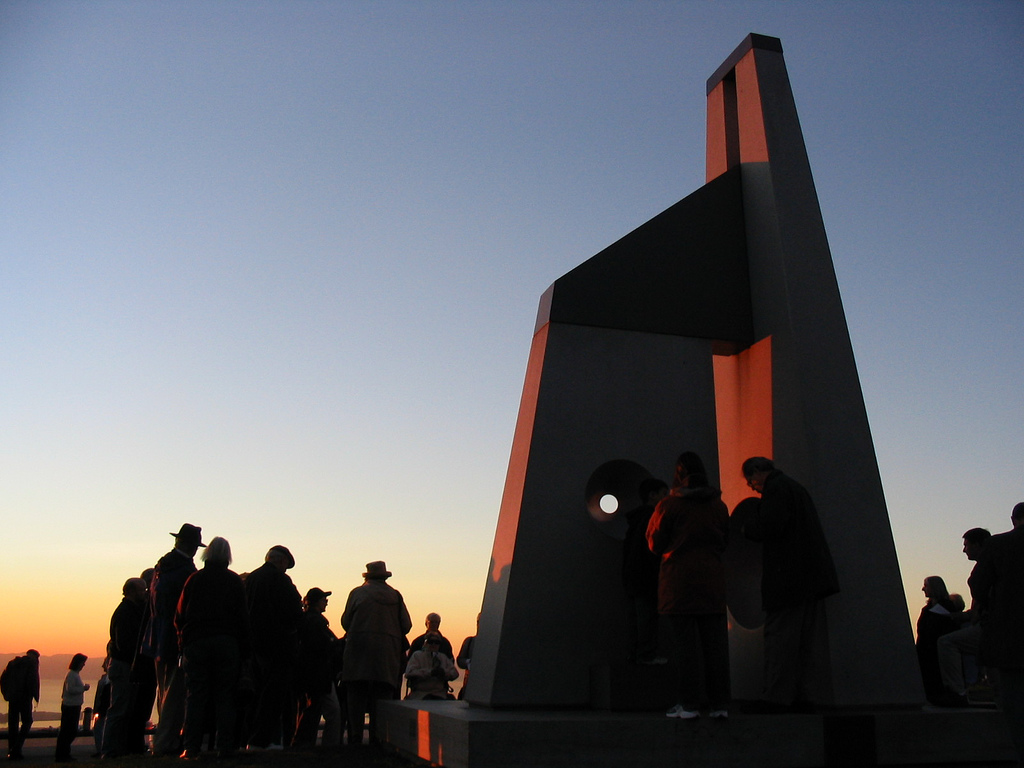
Solstice gathering, Lawrence Hall of Science, Berkeley. (Photo: Tim Ereneta)
These winter festivals emphasize family and home, core strengths of every society. They also underscore the importance of community and the reciprocal nature of people sharing, giving and receiving. They are public events – from the bonfires of Diwali to the lights that line our major streets to Posada processions and caroling on street corners. In our families and in our communities we guard ourselves against the long darkness. We hold out signs to one another that we can withstand these worst of days. That together, we humans can go on.
After all, the music of the season and the cards that fill our mailboxes carry constant messages of this hope. They say: love, peace, hope.
Copyright Capital & Main

-
 Column - State of InequalityMay 21, 2026
In California Governor’s Race, Xavier Becerra Walks Away From Single-Payer
-
 Latest NewsApril 28, 2026
A May Day Push to ‘Shut It Down’ Takes Shape Across the Country
-

 The SlickApril 29, 2026
With Promises of Money, Controversial Gas Pipeline on Navajo Nation Passes First Hurdle
-
 Deadly Dust: The Silicosis EpidemicMay 6, 2026
California Could Be the First State to Ban Quartz Countertops
-

 Latest NewsApril 27, 2026
As the U.S. Spends Billions Fighting Iran, War-Driven Inflation Hits Working Families Hard
-
 Latest NewsMay 1, 2026
In One of L.A.’s Food Deserts, ‘Hands That Harmed Are Now Hands That Heal’
-
 Column - State of InequalityApril 30, 2026
Don’t Call It Upward Mobility If People Still Can’t Afford to Live
-
 Latest NewsMay 5, 2026
Fire Recovery Could Wipe Out Altadena’s Affordable Rentals