
Culture & Media
Building the Future


From a 1987 Woman's Building exhibit: Frida Kahlo self-portrait and artist Barbara Carrasco (Photo: Nancy Webber)
What does the 1970s feminist art movement have to do with Occupy Wall Street? Quite a bit, I found out when I recently attended Still Doin’ It: Fanning the Flames of the Woman’s Building, an exhibit and performance experience at the Otis College of Art that was part of the Pacific Standard Time project. That kaleidoscopic endeavor, sponsored by the Getty Museum, looks at Los Angeles art from 1945-1980 and takes place in museums and venues across Southern California over the next 12 months.
The early participants of the Woman’s Building, including founder Sheila Levrant de Bretteville and performance artist and Otis professor Suzanne Lacy, described the motivation that drove them to that institution in 1973. At that time women artists and their work were largely ignored by the established arts institutions, and emerging women artists found few opportunities for support or mentorship of their art. And the issues that women struggled with, such as sexual violence, employment discrimination and sexist attitudes, were ignored by mainstream society.
The Woman’s Building founders, according to de Bretteville, were determined to create a nurturing environment in which each woman could be herself and had the freedom to explore her own beliefs, attitudes and understanding of the world and her response to it. Developing one’s consciousness was more important than political correctness.
And out of this liberated space, first located at the former Chouinard Art Institute in MacArthur Park and later, in a brick building near Chinatown, a feminist arts movement was born that transformed the national arts scene, engaging the arts in struggles to challenge the mistreatment of women in society. Sculpture, performance art, graphics, poetry and photography were taught, mentored and produced in the women-run space. American art would never be the same.
Suzanne Lacy stressed that the Woman’s Building continues in work that is done today as other artists look at the relationship between art and life. Her performance art, she said, seeks to produce “multi-vocal expressions in a public place with the goal of influencing public policy through community organizing.”
Similarly, the Occupy movement is creating public spaces where individual voices can be raised and heard. It’s a space in which consciousness and self-understanding of the “99%” can be articulated and developed. Occupy Wall Street (and L.A., Boise, Denver, etc., etc.) has created a public square in which a movement can be born and nurtured, where, as founder De Bretteville described the Woman’s Building gatherings, “a crazy quilt of American humanity can gather,” and where people can learn to be together.
And like the 1970s feminists, Occupy participants arrive at decisions by consensus. Long General Assemblies that aim to involve everyone in the deliberations can be tedious, but social change is born in the chaos that results from mass distress. Movements give people a voice that they never had. And sometimes those voices, working alongside each other, make history.
DOIN’ IT IN PUBLIC: Feminism and Art at the Woman’s Building Runs through January 28, 2012 at Otis College of Art and Design.


-
 The SlickApril 20, 2026
As Prices Climb, California Imports More Gasoline Made From Russian Oil
-
 Latest NewsApril 21, 2026
Federal Job Cuts Hit Black Women Hard — A Year Later, Unemployment Is Up
-
 Latest NewsApril 17, 2026
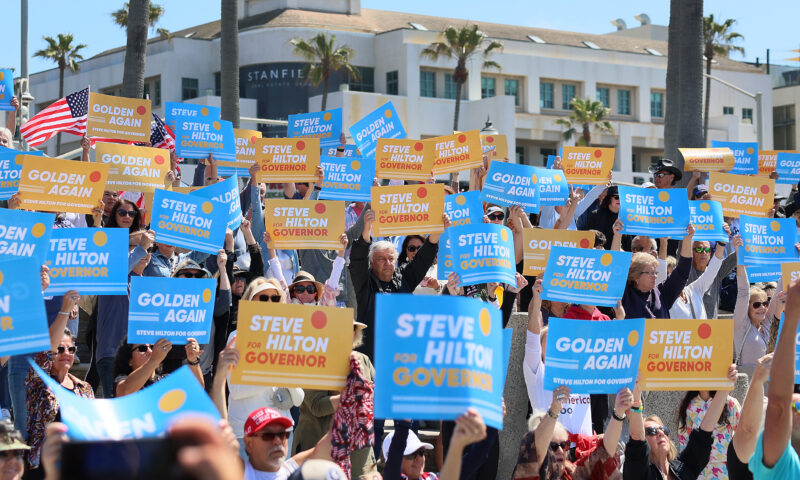
What Could a Republican Governor Get Done in Deep-Blue California?
-
 Featured VideoApril 15, 2026
Teaching LGBTQ+ History in Trump’s America
-
 The SlickApril 22, 2026
Texas’ Gulf Coast Has a Health Problem: Benzene Emissions Are Among the Highest in the Nation
-
 Column - State of InequalityApril 16, 2026
Hot Union Spring at LAUSD
-
 Latest NewsApril 28, 2026
A May Day Push to ‘Shut It Down’ Takes Shape Across the Country
-

 Latest NewsApril 24, 2026
A Grieving Afghan Man Says He Tried to Get Medical Care for His Brother Who Died in ICE Custody