
Labor & Economy
What ‘Zombie Economics?’ The Minimum Wage & Its Critics


The minimum wage is back on the rise. Last month Sen. Tom Harkin and Rep. George Miller introduced the Fair Minimum Wage Act of 2013, which would raise the federal wage to $10.10. State legislatures aren’t waiting. The New York state assembly approved an increase to $9 plus indexing, the New Mexico state senate approved an increase to $8.50, and the Hawaii state senate and house each passed increases.
But that hasn’t stopped the doomsayers. The conservative Cato Institute called the minimum wage “zombie economics.” Paul Ryan said that “history is very clear” that it “costs jobs.” Marco Rubio said that “We have a lot of history to prove” that “raising the minimum wage does not grow the middle class.”
In fact, the historical record is quite clear. “Consider the Source: 100 years of Broken Record Opposition to the Minimum Wage,” a new report by National Employment Law Project and the Cry Wolf Project, chronicles the history of unchanging sky-is-falling rhetoric by business interests opposed to minimum wage laws. The report is a comprehensive analysis based on decades of congressional hearing testimony, archives of leading business organizations and newspaper archives. It includes a detailed chronology of a century of standard opposition arguments.
Now, 75 years after Congress created the minimum wage, business voices are finally coming around:
- The Economist, November 2012: “Evidence is mounting that moderate minimum wages can do more good than harm.”
- Bloomberg News, April 2012: “[A] wave of new economic research is disproving those arguments about job losses and youth employment. The studies find minimum-wage increases even provide an economic boost, albeit a small one, as strapped workers immediately spend their raises.”
- Crain’s New York Business, February 2012: ““Critics of [the minimum wage] proposal are making the same arguments as the last time the [New York] Legislature increased the minimum wage, in 2004. Objections . . . while meriting consideration, are essentially objections to the very existence of a minimum wage, which has been a fixture in the U.S. since 1938 and has never stopped our economy from flourishing.”
And for more evidence, a new study by economist John Schmidt at the Center for Economic and Policy Research reviews the past two decades of research on the impact of minimum wage increases on employment and concludes that “the weight of the evidence points to little or no effect of minimum wage increases on job growth.”
On a final historical note, 102 years ago on March 25, 1911 the Triangle Shirt Waist fire killed 146 garment workers who were trapped behind locked doors in buildings without sprinklers and fire escapes. Even after the fire, the city’s businesses continued to insist they could regulate themselves, but the deaths clearly demonstrated that companies like Triangle, if left to their own devices, would not concern themselves with their workers’ safety. Despite this business opposition, the public’s response to the fire and to the 146 deaths led to landmark state regulations. Peter Dreier and I wrote The Fire Last Time on the 100th anniversary that is worth re-reading today as unsafe workplaces continue to kill and main too many workers in sweatshops across the globe.


-
 Latest NewsApril 28, 2026
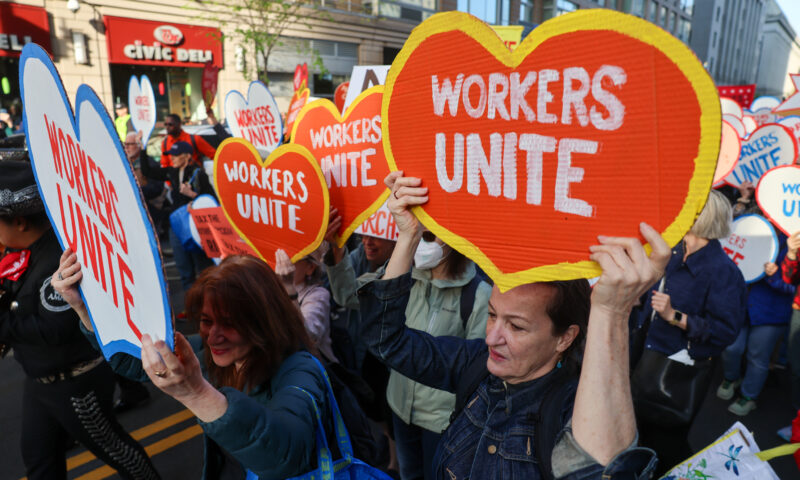
A May Day Push to ‘Shut It Down’ Takes Shape Across the Country
-

 Latest NewsApril 24, 2026
A Grieving Afghan Man Says He Tried to Get Medical Care for His Brother Who Died in ICE Custody
-

 The SlickApril 29, 2026
With Promises of Money, Controversial Gas Pipeline on Navajo Nation Passes First Hurdle
-
 Deadly Dust: The Silicosis EpidemicMay 6, 2026
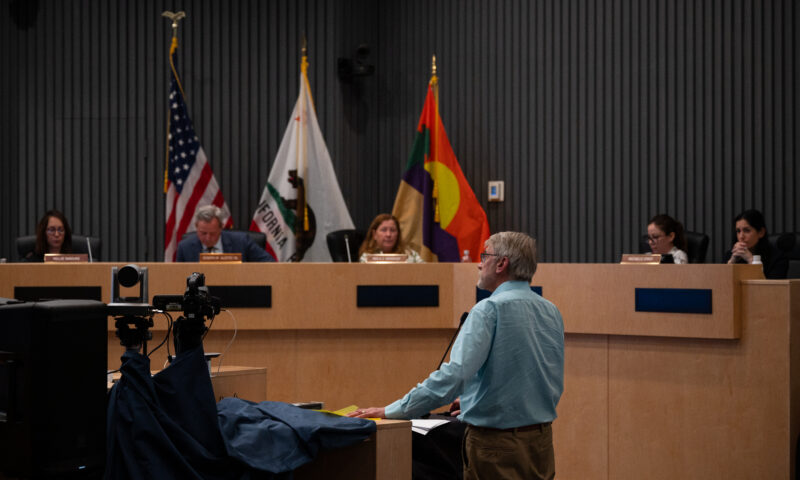
California Could Be the First State to Ban Quartz Countertops
-

 Latest NewsApril 27, 2026
As the U.S. Spends Billions Fighting Iran, War-Driven Inflation Hits Working Families Hard
-
 Column - State of InequalityApril 23, 2026
An Historic Strike in Southeast L.A. County Highlights Pressures Facing California Schools
-

 Latest NewsMay 1, 2026
In One of L.A.’s Food Deserts, ‘Hands That Harmed Are Now Hands That Heal’
-

 Column - State of InequalityApril 30, 2026
Don’t Call It Upward Mobility If People Still Can’t Afford to Live