
Latest News
Conditions at California ICE Detention Centers Are Getting Worse, Inspections Find
A state Department of Justice inspection of seven California facilities found overcrowding, poor medical care, inadequate food and excessive force from guards.
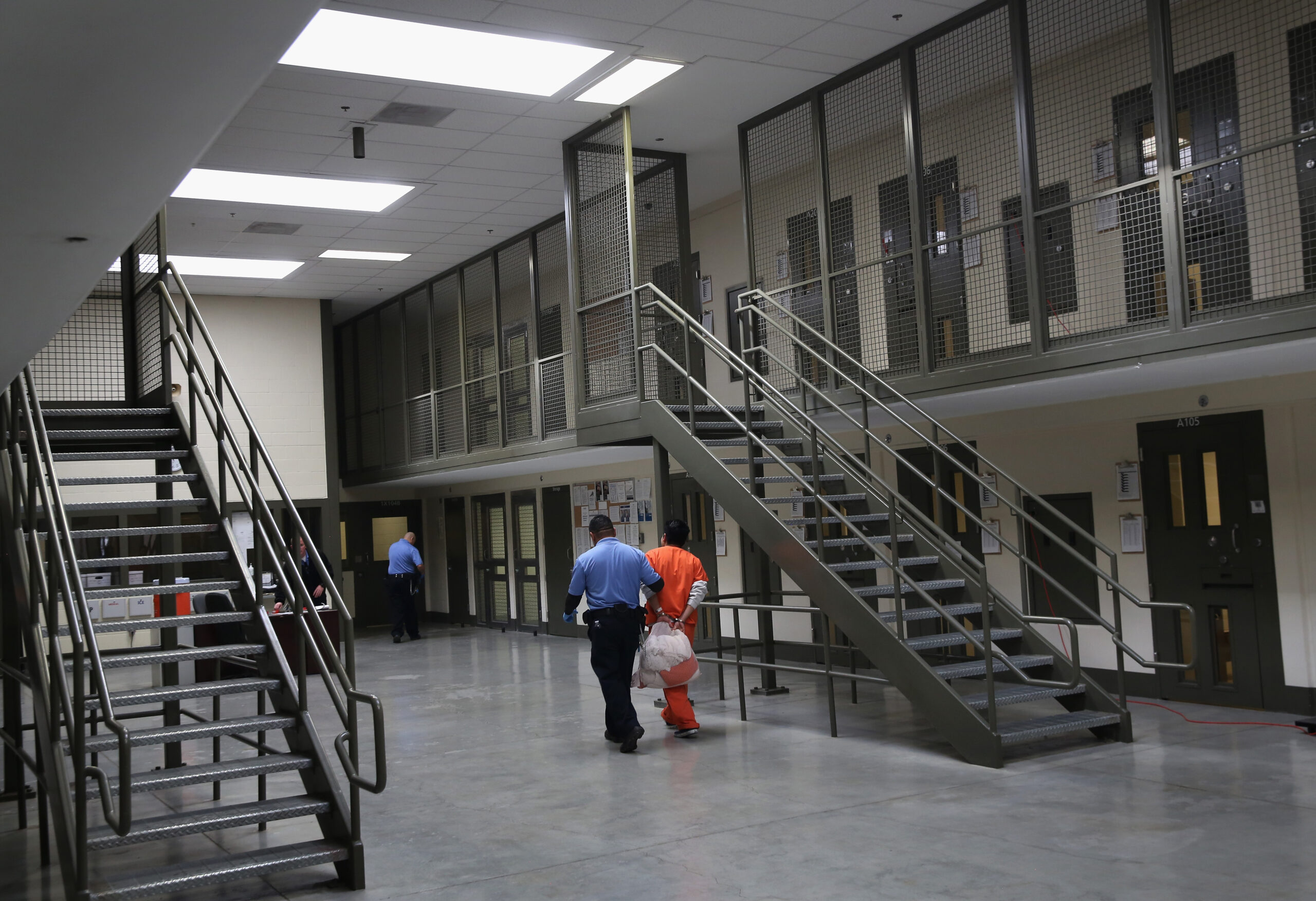

Inspections by the California Department of Justice confirmed what people in immigration custody have been saying since President Donald Trump took office — conditions at detention facilities have grown worse.
A report published May 15 by California Attorney General Rob Bonta found that overcrowding in the state’s seven ICE facilities that were operating last year led to inadequate medical care, food and hygiene as well as excessive use of force from guards. Investigators said that these issues violate ICE’s own detention standards.
Bonta called the conditions “cruel, inhumane and unacceptable.”
“The Trump Administration’s mass deportation campaign has led to a shocking increase in detainee populations — and facilities have been alarmingly unprepared to meet this new demand,” Bonta said.
ICE did not respond to a request for comment.
Policy changes from the Trump administration, including arrests of people who would normally be allowed to pursue their immigration cases out of custody and denials of bond for people who previously would qualify, have dramatically increased the populations in Immigration and Customs Enforcement custody.
A state law from 2017 requires the state Department of Justice to monitor conditions in ICE facilities. The state Attorney General’s Office has previously released reports in 2019, 2021, 2022 and 2025.
Since the state Department of Justice’s review, another immigration detention facility has opened in California, bringing the total to eight. All are run by private prison companies contracted by the federal government for a varying number of beds.
GEO Group runs five of the eight facilities. The Trump administration recently appointed David Venturella, who worked as a GEO Group executive for over a decade, to be acting director of ICE.
Inspectors found evidence of troubling conditions at Adelanto ICE Processing Center in California’s Mojave Desert and the nearby Desert View Annex, both run by the company.
“The observations and interviews at Adelanto and Desert View paint a picture of an understaffed facility overwhelmed with detainees and unprepared to provide basic necessities,” the investigators wrote in their report.
When asked about the report, Christopher Ferreira, a spokesperson for the company, said that ICE monitors the company’s facilities for compliance with detention standards.
“We are proud of the role our company has played for 40 years to support the law enforcement mission of U.S. Immigration and Customs Enforcement (ICE),” Ferreira said. “Over the last four decades, our innovative support service solutions have helped the federal government implement the policies of seven different presidential administrations.”
In January, a group of people held at Adelanto filed a class action lawsuit alleging medical neglect and poor conditions at the facility.
Many of the issues observed by the state Department of Justice staff at the Adelanto and Desert View involved medical care.
ICE standards require facilities to conduct medical screenings of new arrivals within 12 hours. State investigators found that some of those detained never had screenings or sometimes had screenings delayed by more than a week. Those who had screenings and needed follow-up care for chronic or urgent issues often did not receive timely treatment.
Only 18% of the detainees interviewed by investigators said they’d been able to see a doctor for the medical issues they were experiencing, according to the report.
Four people have died at Adelanto during the second Trump administration.
Investigators also found evidence of excessive use of force at the facilities.
One detainee told inspectors that facility staff had placed a group of recent arrivals in a dining room to wait for the intake process and that a guard pepper sprayed the room, causing all of them to have irritated eyes and skin.
At least 20 people held in Desert View Annex recently went on a hunger strike to protest conditions there.
“There are many people suffering here. This is the only way we have to raise our voice,” the hunger strikers said in a joint statement read by an advocate at a recent press conference. “This is a call to stop the suffering and to respect our dignity as human beings.”
GEO Group deferred to ICE when asked about the hunger strike.
The strikers are calling for repairs to the facility, including its water infrastructure and remediation of mold, adequate medical care, nutritious food, accountability for the deaths of their fellow detainees and a right to organize and communicate with advocates without retaliation. They are also ultimately asking for the government to shut down the facility.
A woman who identified herself as Eva during a press call about the hunger strike said that her husband Luis had been detained at Desert View for about five months.
“It’s been a horrible experience throughout,” she said, noting that her husband hadn’t received proper follow-up care for a finger surgery he had before he was detained, and now he has pain radiating through his arm.
“Nobody deserves to be treated that way,” she added.
Though the number of people held in each California ICE facility had grown since their last inspection, at the time of the state inspectors’ visits last year, Otay Mesa Detention Center in San Diego was the only facility that reported a higher number of detainees than the maximum number allowed in its contract, according to the report.
Run by CoreCivic, the facility has a maximum capacity of 1,142 ICE detainees, and staff there told inspectors that it had 1,433 people in ICE custody when they inspected last October, the report says.
“Overcrowding is a big concern at the facility, where overflow detainees sleep on ‘boats’ — small mats — placed on the floor due to the unavailability of beds,” the inspectors wrote in the report.
The overcrowding also meant that the facility did not have the required number of toilets per person in custody, the report says.
Ryan Gustin, a spokesperson for CoreCivic, pushed back on the report’s findings.
“CoreCivic has significant concerns about the accuracy of several findings in this report, which do not reflect the documented operational record at our California City and Otay Mesa facilities,” Gustin said. “That record has been verified by independent auditors, federal oversight officials and elected officials who have toured these facilities firsthand.”
People held at Otay Mesa have complained to Capital & Main about inadequate medical care over the past year, including a man who was experiencing rectal bleeding and concerned that he might have colon cancer.
In February, a Russian man named Andrei Menshikov contacted Capital & Main to say that he’d gone blind while in custody and that CoreCivic had not responded adequately when he told staff that he was losing his vision. Speaking over the phone through interpretation from a fellow detainee who spoke both Russian and English, he said that after he could no longer see, he still hadn’t received anything to help him learn to live without his sight, such as a mobility cane.
“He navigates by touching the walls,” the interpreter told Capital & Main. “He needs help to get to the kitchen, to go to the lunch. We help him to go to the kitchen.”
Gustin said that CoreCivic could not comment on an individual’s medical record for privacy reasons.
“We’re not aware of anyone in our care at Otay Mesa losing their sight,” Gustin said. “If anyone in our care has a disability, our facility staff work to ensure that accommodations are provided.”
State inspectors found that people requiring a higher level of medical care than the facility was able to provide remained there for months. They also found that medical record-keeping practices were faulty, particularly concerning referrals to specialty care and follow-up in the aftermath of a hospital visit.
The report noted that in those situations, “A lapse in care could have dangerous consequences.”
Gustin said Otay Mesa received reaccreditation from the National Commission on Correctional Health Care four months after the state inspectors’ visit.
CoreCivic’s other facility, California City Detention Facility, is the newest of the seven inspected by the state. The Kern County facility began receiving people in ICE custody last August.
State inspectors found that California City opened prematurely and did not have sufficient staff, including medical personnel, when it began holding detainees.
When asked about conditions at California City, Gustin pointed to a visit from a bishop who said he was impressed by the facility’s cleanliness.
Allen, who said he has been held there since February, told Capital & Main that the facility staff seem like they’re improvising much of the time. He declined to be fully identified due to retaliation concerns.
He said that a few weeks ago, guards decided to search all of the cells in his unit, and they put the men outside in the yard without water for hours. He said three people passed out from the heat. When the guards later searched another unit, he said, they moved the detainees to another interior space instead.
The report says that the facility had extensive violations of ICE detention standards, including issues with medical care, cold temperatures and leaks, lack of protective clothing and excessive lockdown periods.
Allen said that the facility is inconsistent in its procedures and slow to respond to requests, medical or otherwise.
One man in his pod who had food allergies made two medical requests after having breathing problems and was taken to the medical unit only after falling to the floor, Allen said.
He said guards have threatened detainees with solitary confinement over small issues like not listening and that counselors at the facility told them that if anyone else asks to switch beds because of issues with a cellmate, they would all be tear-gassed.
“My experience in the past, even in corrections, that has never happened. That would never happen,” Allen said. “That’s corporal punishment. That’s unheard of. That’s outrageous.”
Allen said one individual in the unit wanted to switch beds because a cellmate had masturbated in front of him. That individual came to Allen and other detainees for help, and when Allen approached the guards, he said the guards indicated that it wasn’t the first time that detainee had behaved that way.
But one of the issues that bothers Allen most is the lack of contact visits at the facility. According to the state Department of Justice report, detainees can only see loved ones through glass.
“Cal City’s practice of forbidding contact visits for detainees appears to violate its own policy because there was no apparent, substantiated security risk requiring these measures, except that the facility was understaffed,” the report says.
Allen said that he has asked his family not to visit because he thinks being able to see him but not touch him would further traumatize his child. He said people waiting to be deported should be able to hug and kiss their families goodbye.
“My life experience has taught me to value and cherish nonmaterialistic things,” Allen said. “I would cherish every moment I spend with my family. It would make our time here in detention much more bearable.”
Management and Training Corporation runs the remaining detention center in California — Imperial Regional Detention Facility in Imperial County near the Mexican border.
Though people interviewed by the investigators said that conditions at Imperial were an improvement over other facilities if they’d been transferred, the report notes that two people have died while in custody there during the second Trump administration.
Some of the people detained there raised concerns about the water quality, saying that the water gave them rashes.
The report found some improvements at the detention center since the inspectors’ last visit, particularly in medical staffing levels. Still, the report says, people held there are struggling to get needed specialty referrals or follow-up care for chronic conditions.
Emily Lawhead, a spokesperson for Management and Training Corporation, said that the company is taking Bonta’s report seriously. She said that the company is investigating the concerns raised in the report.
It was the only company of the three that acknowledged the report’s findings or made any indication that it would potentially make changes.
Copyright Capital & Main 2026


-

 Column - State of InequalityMay 21, 2026
In California Governor’s Race, Xavier Becerra Walks Away From Single-Payer
-

 Latest NewsApril 28, 2026
A May Day Push to ‘Shut It Down’ Takes Shape Across the Country
-
 The SlickApril 29, 2026
With Promises of Money, Controversial Gas Pipeline on Navajo Nation Passes First Hurdle
-
 Deadly Dust: The Silicosis EpidemicMay 6, 2026
California Could Be the First State to Ban Quartz Countertops
-

 Latest NewsApril 27, 2026
As the U.S. Spends Billions Fighting Iran, War-Driven Inflation Hits Working Families Hard
-

 Latest NewsMay 1, 2026
In One of L.A.’s Food Deserts, ‘Hands That Harmed Are Now Hands That Heal’
-

 Column - State of InequalityApril 30, 2026
Don’t Call It Upward Mobility If People Still Can’t Afford to Live
-

 Latest NewsMay 5, 2026
Fire Recovery Could Wipe Out Altadena’s Affordable Rentals