
Deadly Dust: The Silicosis Epidemic
‘My Lungs Had Nothing Left.’ Inside The Epidemic Killing Countertop Stonecutters.
A new California law aims to protect workers from silicosis, an incurable lung disease that has killed 29 people in the state and sickened hundreds. Experts say it isn’t enough.
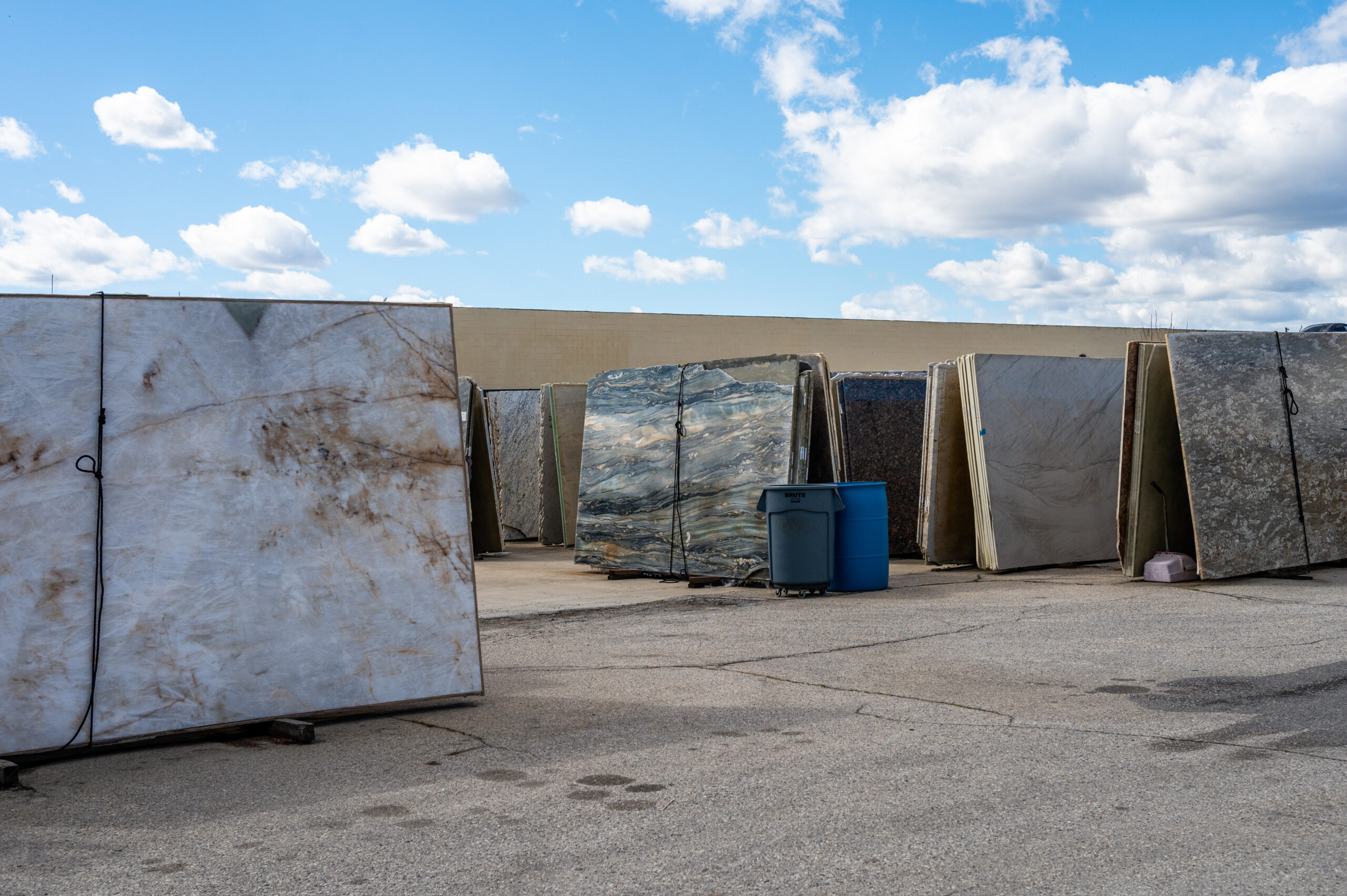

For more than 15 years, Oscar worked nearly seven days a week in the San Fernando Valley of Los Angeles, cutting and polishing stone countertops for kitchens and bathrooms. He didn’t know the engineered stone he was fabricating was rapidly killing him.
At the age of 45, Oscar began to have difficulty breathing. He felt extremely tired and weak, unable to lift the stone slabs he once carried with ease.
“My lungs couldn’t take it anymore,” Oscar said in Spanish. “They were already collapsing.”
Oscar spoke on condition that he be identified only by his first name in order to protect his privacy.
In 2022, he said he was rushed to Olive View-UCLA Medical Center, where he was diagnosed with silicosis, a progressive and incurable occupational lung disease. He said he cried when the doctor delivered the news and told him he would never be able to work again.
“I was always a hardworking person who helped my parents, my children, my family,” he said in the living room of the one-bedroom apartment he shares with his sister and niece, which is dotted with toys, drawings and family photos. A statue of Jesus decorated with rosaries peers over his shoulder. “I always helped them whenever I could, and working made that possible.”
Silicosis has rapidly become a public health crisis among stone fabrication workers cutting engineered stone. In California alone, the disease has killed at least 29 people and sickened hundreds more in just the past few years, but, until now, little has been done to rein it in.

After receiving a double lung transplant, Oscar’s chest and torso is marked by scars.
California passed the first law in the nation, which took effect Jan. 1, aimed at protecting workers from the deadly illness and has begun taking incremental steps to prevent workers like Oscar from contracting silicosis.
But many doctors and public health officials said they believe stricter industry regulations are not enough to stop the growing epidemic among stone fabricators and that only a full ban on engineered stone, as has been enacted in Australia, will stem the tide of disease and death.
They said they face fierce pushback from industry lobbyists, distributors and manufacturers, who fault poor workplace conditions and claim that a ban will eliminate thousands of jobs.
Engineered crystalline silica stone, also known as artificial stone or quartz, gained popularity in the early 2000s and is now the most popular countertop material being installed in kitchens and bathrooms across the country. Workers who cut, grind and polish the stone countertops can inhale tiny silica dust particles that scar and tear their lungs, making it extremely difficult for them to breathe. Though preventable, there is no cure for silicosis besides supplemental oxygen and, in severe cases, a lung transplant.
“I was on oxygen almost day and night because I couldn’t breathe. I couldn’t even take a shower because I would completely run out of air,” said Oscar. “Eventually, even oxygen wasn’t having much effect because my lungs had nothing left.”
Oscar spent about two years on supplemental oxygen while on a waitlist for a double lung transplant, which he received in 2024. A long, deep scar now stretches across his torso, just below tattoos of his daughters’ names.
“Thank God they were able to do the transplant,” he said, now able to breathe more easily. “[But] I imagine it’s a process that will never end.”
A lung transplant is a risky and expensive procedure that typically only extends a worker’s life an average of six years. If the worker’s body doesn’t immediately reject the transplant, they are still subject to a lifetime of medication, with its own set of side effects.
A single lung transplant can cost over $1 million. Since most stone fabricators are low-wage contract workers who lack workers’ compensation, the major cost of these procedures often falls on Medi-Cal and, in turn, taxpayers.
“We never knew that stone could cause harm, that it could cause so much damage,” Oscar said. “If I had known that those materials caused that type of illness, I personally think that I would not have worked with them.”

Oscar takes medication several times a day to prevent his body from rejecting his lung transplants.
An Epidemic on the Rise
Oscar is the face of a rapidly increasing and deadly threat that has caught California regulators flat-footed, sickening hundreds of low-wage, mostly Latino workers and killing dozens in the state since 2019, public health experts said.
“We’ve had a collective failure to protect fabrication workers against the dangers of engineered stone,” said Robert Harrison, a physician and clinical professor of medicine who founded and directed the Occupational Health Program at the University of California, San Francisco.
“We need to do something quite urgently to really tackle this problem,” he told the California Occupational Safety and Health Standards Board in a public meeting in December.
Silicosis is one of the oldest occupational diseases, once prevalent among coal, gold and metal miners, as well as granite and sandstone quarrymen. It was thought to have been virtually eradicated through the use of personal protective equipment such as respirator masks, proper ventilation and the use of water when excavating.
There are three types of silicosis: chronic, accelerated and acute. In the past, it typically took a lifetime of exposure to a small amount of dust while excavating in a mine to develop simple silicosis. When exposed to higher dust concentrations, workers could develop accelerated silicosis. But acute silicosis, caused by brief yet high dust exposure, was rare.
That has changed dramatically in recent years as the stone fabrication industry has increasingly used engineered stone with higher concentrations of crystalline silica. Now, acute silicosis cases are recorded in men as young as their 20s and 30s, who have only been working in the industry for an average of 10 years, said Harrison.
Harrison, who served on the California Occupational Safety and Health Standards Board, has been researching and treating acute silicosis for more than a decade. He described it as “a kind of silicosis that we usually don’t see from other kinds of silica dust exposure,” adding that cases from artificial stone are “very severe.”

A fan in a fabrication shop is covered in dust from the cutting and polishing of stone slabs.
Engineered stone contains a much higher crystalline silica content (more than 90%) compared to natural stone such as granite (30%) or marble (<10%). It is created by pulverizing crystalline silica into a fine powder, which is then mixed with other polyester resins. When cutting artificial stone, the toxic soup of airborne microscopic dust particles is much easier for workers to inhale.
Silicosis caused by engineered stone has quickly become a global health crisis. The rise of acute silicosis cases followed the influx of engineered stone, which was first patented in Italy in 1975. Italy, Spain, Israel, and Australia have all previously reported rising cases among fabricators working with engineered stone.
California is now facing a rapidly surging epidemic, according to health experts.
The California Department of Public Health has recorded 529 cases and 29 deaths since it began tracking cases of engineered stone silicosis in 2019. Los Angeles County, which has the largest concentration of stone fabrication shops in the state, is California’s epicenter, with 271 cases.
The workforce at risk is a vulnerable population of predominantly immigrant men from Mexico and Central America, many of whom are undocumented. Statewide, 98% of all cases are Latino men, state data shows. The median age of those diagnosed with silicosis from engineered stone is 46 years old, while the median age at death is only 49 years old, the state Department of Health reported.
Silicosis cases increased by 100% in L.A. County last year, said Alice Berliner, director of the Office of Worker Health & Safety for the county Department of Public Health.
“We keep getting cases every week,” she said. “So we’re very likely to see cases continuing to rise at that rate over the next one to two years.”
To curb the epidemic, the county health department launched an outreach campaign in 2023 to educate workers and employers about the dangers of the disease and the state’s job safety guidelines for working with engineered stone.
“Ongoing enforcement and education is key,” Berliner said. But now that most workers are informed about the disease, screening and diagnosing it is the “next hurdle,” she added.
Detecting silicosis often requires a CT (computed tomography) scan rather than the faster and cheaper chest X-ray. Health officials said they believe the number of cases in California is much higher as many workers go undiagnosed or misdiagnosed.
“This is in part because workers have not been screened yet for the disease” or they “have been misdiagnosed as having other diseases like tuberculosis or cancer,” Berliner said.

A worker uses a hand tool to cut engineered stone at a fabrication shop.
The California Department of Public Health estimates there are more than 1,300 countertop fabrication operations in the state, and in August 2025, the California Division of Occupational Safety and Health, or Cal/OSHA, reported about 4,600 stone fabrication workers in the state. With the global rate of cases around 17%, public health experts said they believe the true number of cases in California could be nearing the thousands.
One 2023 Australian silicosis screening study found that almost one-quarter of workers fabricating engineered stone had silicosis.
California is currently the only state actively tracking silicosis cases, and it was among the first states in the nation to import and fabricate engineered stone in the late 1990s and early 2000s, said Berliner.
“The time in which the workers in the industry have been exposed [in California] has been slightly longer [than that of other states], which is why we’re starting to see these cases first,” Berliner said.
“We are likely to see these cases start popping up all across the country,” she added.
Reports of silicosis are already emerging nationally, including in Texas, Colorado, Illinois and Massachusetts.
A New California Law to Regulate the Industry
Most of the engineered stone manufacturers are foreign companies, with Cambria being the leading domestic manufacturer.
“The vast majority of slabs in the U.S. are imported,” said Rebecca Shult, the chief legal officer of Cambria during the February Cal/OSHA meeting. “Last week, the US International Trade Commission issued a report that less than 12% of the entire market for US quartz is from domestic producers like Cambria. That is over 88% are imported from foreign producers.”
These companies use vibro-compression machines to press the stone slabs, meaning people are not breathing the toxic materials during the production phase.
Distributors and showrooms buy the stone slabs from manufacturers and sell them to consumers. They then send those slabs to fabrication shops for workers to cut and customize with tablesaws and hand tools so they can be installed in kitchens and bathrooms. When cutting the stone, the toxic materials are released as dust that can enter workers’ lungs.
In addition to producing engineered stone, Cambria fabricates a portion of their own product with the use of state of the art machines and wet cutting hand tools.
“Cambria knows that our product can be fabricated safely,” said Marshall Engstrom, industrial hygienist for Cambria, during the February meeting. “It has been proven in our three fabrication shops where we have worked with Cambria products exclusively for over 20 years, without being aware of a single case of silicosis.”
Later in the meeting, Shult acknowledged that none of the company’s workers have been screened with CT scans for silicosis. Cambria declined Capital & Main’s requests for comment.
Most fabrication shops, however, are typically small businesses with five to 10 workers that often struggle to meet the updated requirements for working with engineered stone, said Harrison.
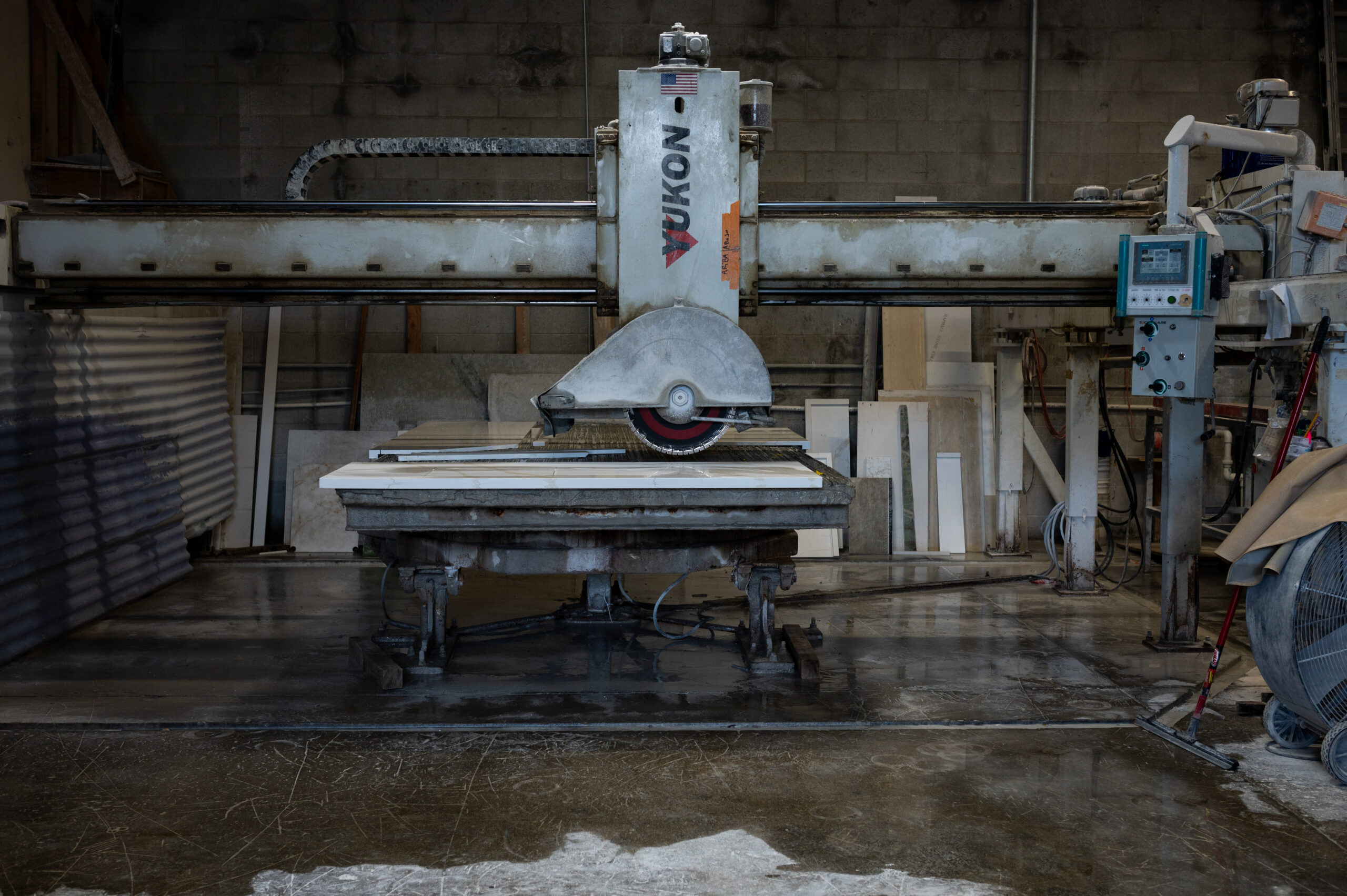

Wet saws use water to minimize dust and debris when cutting stone.
To address the rise in silicosis cases, over the last couple years Cal/OSHA has instituted temporary regulations requiring fabrication shops to use full coverage respirator masks, to increase ventilation and to use wet-cutting methods.
“We’re seeing high noncompliance, primarily across small and medium-sized shops where we are not seeing workers in the correct personal protective equipment,” Berliner said, adding that a small percentage of shops are still dry cutting, and “workers are not receiving the mandated screening and training.”
Those regulations were codified last year, when California passed SB 20, the first law in the nation to address the growing epidemic.
The law imposed stronger regulations on the industry by banning dry cutting of stone countertops, mandating that employers provide adequate training and requiring the state health department to provide education about silicosis prevention and diagnosis to the affected workforce. It also for the first time classified silicosis from artificial stone as a “serious injury or illness” in an effort to boost enforcement response from Cal/OSHA by reducing reporting time and increasing violation penalties.
Bill author state Sen. Caroline Menjivar, a Democrat who represents the Northeast San Fernando Valley, the region most affected by the deadly disease, posted a statement in October after Gov. Gavin Newsom signed the bill into law.
Menjivar said that her constituents “had lost hope that their elected officials would take action to protect their fathers, husbands, and brothers from this scourge on stone fabrication workers in our communities.”
She added: “While this bill alone will not end silicosis from stone fabrication activities, we are taking decisive steps to increase tracking, accountability, and enforcement.”
In public meetings, industry representatives have championed the bill, calling for incremental regulations over a full ban on the product. They have argued that that engineered stone is safe to work with as long as fabrication shops implement proper protective measures.
“This is not simply a materials issue; it is a failure of operations, training, culture and oversight,” said Laurie Weber, CEO of the International Surface Fabricators Association, at the state Occupational Safety and Health Standards Board’s December meeting. “Human factors and organizational weaknesses are the primary drivers of exposure.”
At another board meeting on Jan. 15, Weber presented the industry’s plans for complying with the new law, which included a phased rollout of a certification and licensing process for fabrication shops.
“We believe that bans happen when systems fail, and we are here to help fix the system,” said Weber.
Is a Ban the Only Real Solution?
Public health advocates argued that the law doesn’t go far enough and is short-sighted in the face of such an urgent health crisis.
Internationally, many medical professionals have agreed that there is no safe way to work with the extremely toxic product — a conclusion that Australia came to in 2024, when it became the first nation to ban the importation and sale of engineered stone containing more than 1% crystalline silica.
“I don’t believe that enforcement and inspections are going to be enough to put an end to this urgent epidemic,” said Harrison at UC San Francisco.
“It’s very difficult to set up a shop and be able to work with [engineered stone] safely,” he added. “It requires a high level of investment and automation that the vast majority of shops will not be able to achieve.”
Harrison took a research trip to Australia in November to examine how the industry has fared since the implementation of the ban and presented his findings to the Occupational Safety and Health Standards Board at its December meeting.
“This is like a déjà vu,” he said about the conditions in Australia before implementing the ban. The country had restrictions similar to those in California, a comparable number of cases and high noncompliance among small fabrication shops.
A year after the ban, Harrison said, consumers still have a wide variety of material choices, with safer amorphous silica stone substitutes manufactured by the same companies. He found little to no effect on jobs in the industry, while safe workplace practices are still being enforced.
The Western Occupational & Environmental Medical Association, a nonprofit that represents occupational medicine physicians and other experts in occupational and environmental health and safety in seven Western states, filed a petition with Cal/OSHA in December urging California to follow Australia’s lead in banning engineered stone.
“I don’t want to see my patient be put in that dilemma to choose between their health and their livelihood,” said Harrison, who supported the petition.
“Prohibiting artificial stone and going to safer alternatives is a form of a safety seat belt to protect workers against the most toxic form of silica,” he added. “It’ll be a very effective tool in starting to end this epidemic.”
Copyright 2026 Capital & Main


-

 The SlickApril 20, 2026
As Prices Climb, California Imports More Gasoline Made From Russian Oil
-

 Latest NewsApril 21, 2026
Federal Job Cuts Hit Black Women Hard — A Year Later, Unemployment Is Up
-

 Latest NewsApril 17, 2026
What Could a Republican Governor Get Done in Deep-Blue California?
-

 Featured VideoApril 15, 2026
Teaching LGBTQ+ History in Trump’s America
-
 The SlickApril 22, 2026
Texas’ Gulf Coast Has a Health Problem: Benzene Emissions Are Among the Highest in the Nation
-

 Column - State of InequalityApril 16, 2026
Hot Union Spring at LAUSD
-
 Latest NewsApril 28, 2026
A May Day Push to ‘Shut It Down’ Takes Shape Across the Country
-

 Latest NewsApril 24, 2026
A Grieving Afghan Man Says He Tried to Get Medical Care for His Brother Who Died in ICE Custody