
Latest News
Homes That Survived the 2025 L.A. Fires Are Still Contaminated
Testing of homes in communities surrounding the Eaton and Palisades fires has found dangerous levels of lead and asbestos — even after remediation.
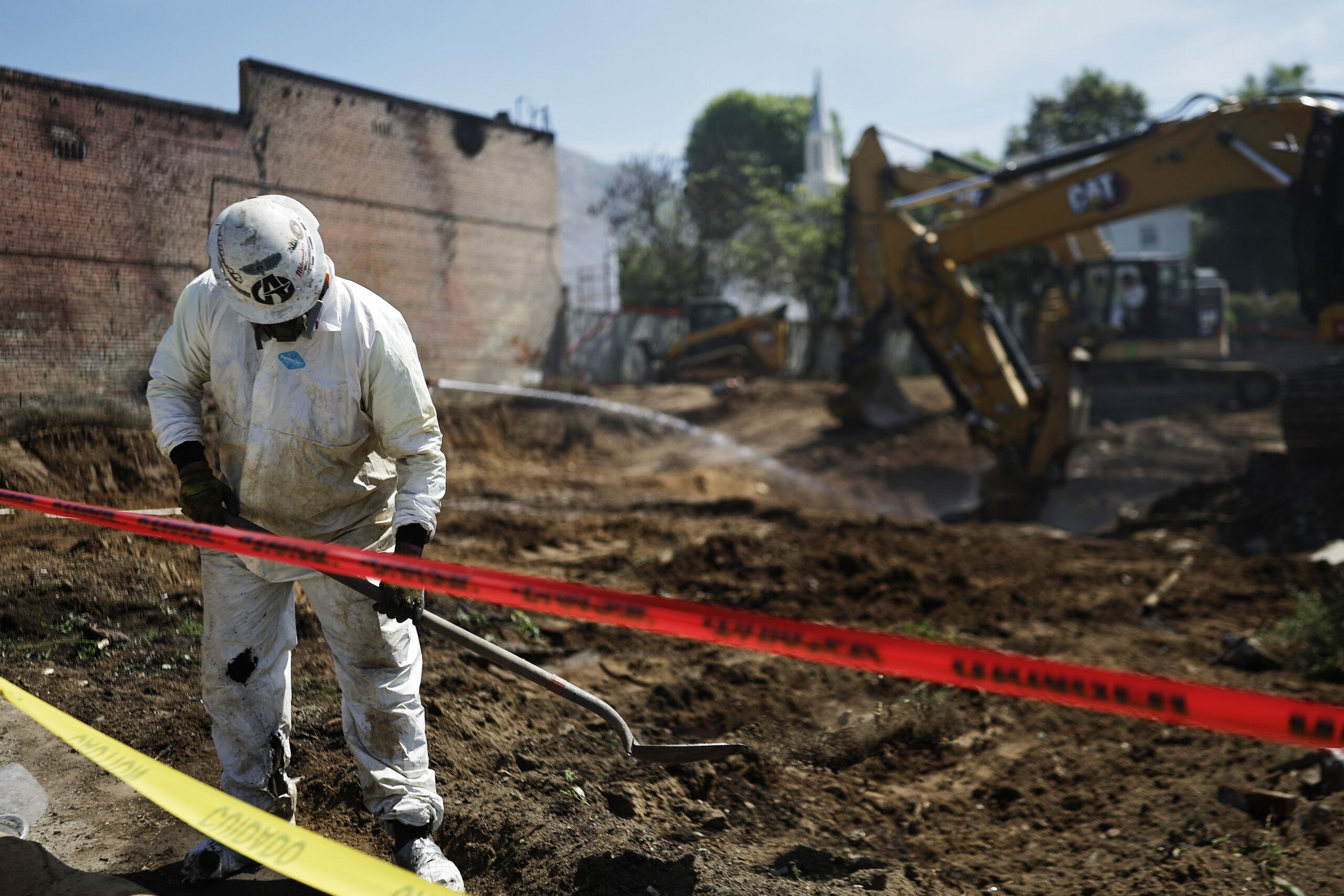

After the devastating Eaton and Palisades fires, federal officials and private companies led a patchwork of efforts to remove debris and contaminated material from areas that burned and others covered in toxic ash.
One year later, homeowners have had the inside of their houses tested after completing remediation and many found hazardous levels of chemicals including lead and asbestos. Community groups and scientists who have worked together on testing projects are now pushing for a more stringent certification system to ensure families don’t move into homes with dangerous levels of pollutants.
In Pasadena and Altadena, a group of fire survivors formed Eaton Fire Residents United to help each other navigate the various post-fire challenges, notably: making sure their homes were adequately cleaned of contaminants. After not getting clear answers from their insurance companies, members of the group hired experts who began testing their homes following the disaster. The insides of 50 homes were also tested after being remediated. Out of 45 where interior surfaces were wiped down to test for lead, 43 had at least some level of contamination with the toxic metal, which has no safe level of exposure and can cause learning disabilities, lower IQs and other permanent developmental problems.
Nicole Maccalla is a longtime Altadena resident and data scientist who co-founded Eaton Fire Residents United last January and leads its data work. She said her insurance company has not approved any testing for contaminants.
“You’ve got a whole bunch of variability in testing approaches and practices, and it’s just left residents navigating through just a nightmare,” Maccalla said. “Basically, trying to figure out and educate their [insurance] adjuster at the same time while they’re displaced, and while they’re trying to navigate recovery and jobs and families.”
The California Department of Public Health, the California Department of Toxic Substances Control, Los Angeles County and City of Pasadena health officials and the U.S. Environmental Protection Agency said they do not have any standards for testing inside homes after fires in the wildland urban interface, the transition zone between developed areas and unoccupied land. Fires in those areas, including in Altadena and Pacific Palisades, raise increased health concerns because of the toxic materials they burn through.
The Los Angeles County and Pasadena public health departments said they do not currently employ any wildland urban interface fire experts to provide recommendations for further remediation. Agency inspectors examining homes have not been trained in assessing wildfire or smoke damage. Without official guidance, residents are left to let the market present the best way forward.
The U.S. Environmental Protection Agency and the U.S. Army Corps of Engineers were tasked with removing hazardous waste from the sites of homes that burned down. That two-phase process was completed about seven months after the fires after the fires killed 31 people and destroyed more than 16,000 structures. For several months, the Federal Emergency Management Agency refused to fund analyses of contaminated soil as part of the debris removal process, although the agency had funded testing in the past. In a remarkable about-face earlier this month, the agency announced it would conduct lead testing at the sites of 100 homes destroyed in the Eaton fire.
Further hampering residents’ efforts to find answers was the Trump administration’s closure of the Environmental Protection Agency’s Office of Research and Development, which was responsible for analyzing threats posed by hazards like toxic chemicals, climate change, wildfires and water pollution.
Many residents feared that the ash and soot left behind contained toxic chemicals that would expose their families to ongoing health risks. In the days following the fires, scientists from across Los Angeles and other parts of the country lent their expertise to help monitor contaminants in the communities surrounding the burn areas. The results show dangerous contaminants remain in homes, parks, schools and beaches in or near the Los Angeles County burn areas.
While experts believe that the lead and asbestos being detected most likely came from building materials and lead paint in older homes that burned, there are concerns about wider health effects from the fires. A December study from Cedars-Sinai found a drastic increase in emergency room visits for heart attacks, pulmonary and general illness from January to April 2025. In another scientific study published in August, researchers estimated that 409 people were killed by health problems resulting from exposure to pollution from the smoke.
Seth John, associate professor of earth sciences at the University of Southern California, is one of the researchers who sprang into action after the fires. In what began as a volunteer project, he and other faculty and students (as well as his daughters) drove through the area surrounding the Eaton burn, sweeping up ash and soot for analysis. They kept up the sampling throughout the year, and expanded their efforts under a project called Contaminant Level Evaluation and Analysis for Neighborhoods, or CLEAN, which has invited people across L.A. County to submit soil samples from their homes, parks and schools for lead testing. John and the rest of the team have continued to find elevated levels of lead in areas near the Eaton fire.
“We expect those levels of lead to persist for some time until the remediation is really complete,” John said. “Until all of that material is removed, you’re going to see elevated lead there.”
Eaton Fire Residents United is calling on local, state and federal officials to establish and enforce a “comprehensive clearance” requirement that homes be certified as free of toxic chemicals before people are allowed to move in. U.S. Rep. Judy Chu, whose district includes the Eaton Fire area, told Pasadena Now she found the group’s findings “deeply alarming,” and she has urged Gov. Gavin Newsom, state Insurance Commissioner Ricardo Lara and the L.A. County Board of Supervisors to support a pre-occupancy clearance standard.
Lead is just one of dozens of toxic materials experts are concerned about residents being exposed to in the wake of the fires. Eaton Fire Residents United conducted a review of indoor contamination in homes post-remediation and found that asbestos was present in nine of 25 houses that were tested for the cancer-causing material.
UCLA, Purdue University and Loyola Marymount University are leading another effort to monitor the soil and air for pollutants from the fires. Initial findings from dozens of samples submitted by residents to that program found that lead concentrations in soil were higher where the Eaton fire burned in Pasadena and Altadena than in areas burned in the Palisades fire. Soil samples were also tested for elements such as arsenic, cadmium, chromium, cobalt, lead, selenium and zinc. Researchers behind both that project and the USC-led effort plan to continue monitoring the soil and air in the areas surrounding the fires for the next several years.
Residents and researchers have put so much effort into monitoring because they understand that only prolonged observation will allow them to determine whether remediation efforts were successful.
“If we don’t handle these houses, then for the next 20, 30 years, people are exposed,” Maccalla said.
Copyright 2026 Capital & Main


-

 Column - State of InequalityApril 9, 2026
Despite Apocalyptic Warnings, California Fast Food Wage Hike Didn’t Kill Jobs
-

 Latest NewsApril 14, 2026
ICE Has Arrested Dozens of Delivery Drivers at the Gates of a San Diego Military Base
-

 Deadly Dust: The Silicosis EpidemicApril 13, 2026
As Worker Silicosis Deaths Mount, GOP Moves to Shield Companies From Liability
-

 The SlickApril 20, 2026
As Prices Climb, California Imports More Gasoline Made From Russian Oil
-

 Pain & ProfitApril 10, 2026
U.S. Demand for Mining Concessions in Return for Health Funding Prompts Backlash
-

 Latest NewsApril 21, 2026
Federal Job Cuts Hit Black Women Hard — A Year Later, Unemployment Is Up
-

 Latest NewsApril 17, 2026
What Could a Republican Governor Get Done in Deep-Blue California?
-

 Featured VideoApril 15, 2026
Teaching LGBTQ+ History in Trump’s America