
The Slick
The Rio Grande Was Once an Inviting River. It’s Now a Militarized Border.
Since Trump returned to office, dozens of environmental, wildlife and public access rules have been waived to make way for the border wall.

As a child, Michelle Serrano would take trips to Boca Chica with her grandmother. From her home in Brownsville, the drive ran east through Texas wetlands and countryside before landing on miles of beach, stretching far down the Gulf Coast just above the U.S.-Mexico border. They’d spend the day there, swimming, laying out — which didn’t cost anything, unlike at South Padre Island to the north. For them, it was the peoples’ beach.
Today, decades later, it’s hard for Serrano to believe those memories. It’s early December at Boca Chica Beach. A thick fog has settled over the sand dunes as Serrano pulls up the hood of her jacket to block the coastal wind. Already, she had seen four U.S. Border Patrol trucks driving along the sand — trucks she knows will slow down as the drivers stare at her with suspicion.
Two rocket launch pads loom behind her, actively under construction for Elon Musk’s SpaceX Starbase. There, more Border Patrol units sit.
“I’ve never seen this many Border Patrol trucks before,” Serrano said. “I mean, who would go out here now? We’d just be watched, suspected. It’s sad. It’s sad because this isn’t our beach anymore.”
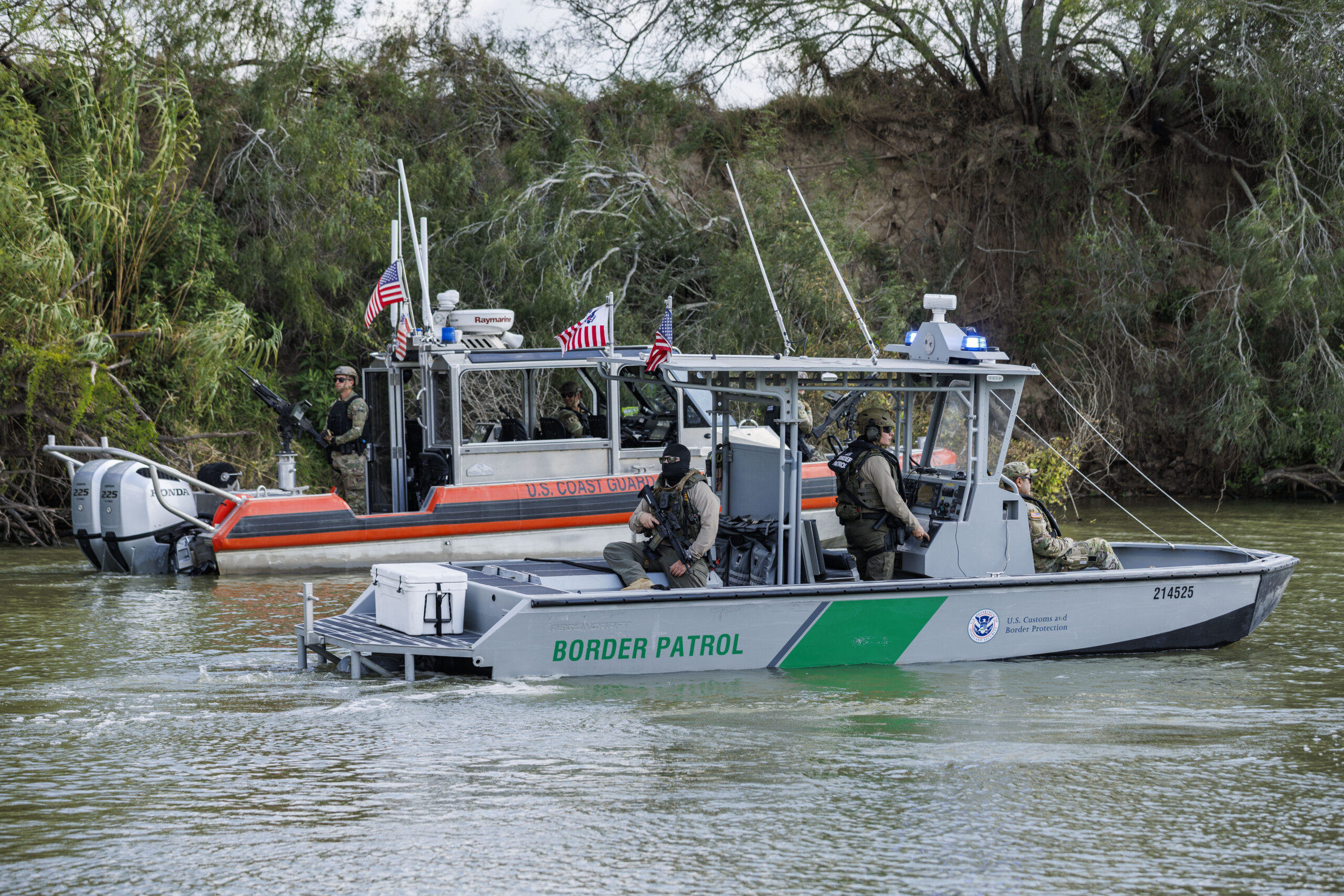
Over the last few years, Serrano and other residents living at the southernmost tip of Texas have seen a dramatic shift in their environment. The Rio Grande Valley, which has for decades been home to border security, is now a land of increased militarization and border wall construction that has ramped up since President Donald Trump returned to office last January, including waiving a long list of national, state and local laws designed to protect the environment, wildlife and public access. Alarmed, critics have expressed deep concern about the escalating impact this effort has on the local ecology and waterways, and the growing limitations on those who once frequented public beaches, parks and the Rio Grande.
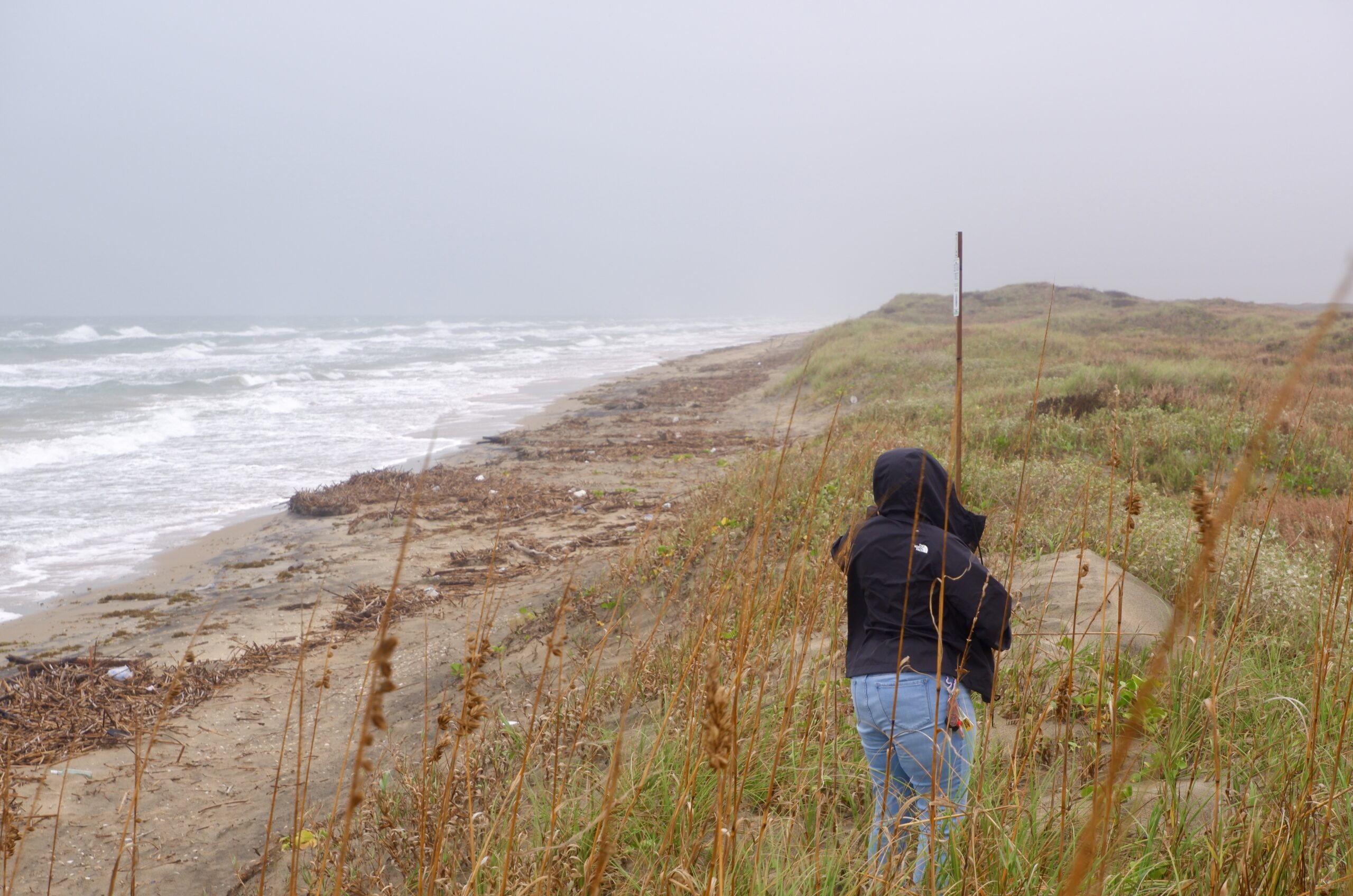
Michelle Serrano walks along Boca Chica Beach. Photo: Elena Bruess.
Experts warned that Trump’s second term in office would be worse for the environment than his last term, and now point to the Trump administration’s actions last year. The administration signed numerous waivers to bypass environmental, Indigenous rights and endangered species laws along the border to expedite border wall construction, including waiving all procurement and contract laws for the entire 2,000-mile U.S.-Mexico border. The most recent waiver for the Rio Grande Valley was signed Dec. 9, bypassing nearly all environmental laws along the 100 mile stretch from Brownsville to Rio Grande City. Of the 61 waivers for the border signed since 2005, the Trump Administration signed 27 of them, all in 2025.
The One Big Beautiful Bill allocated $170 billion for immigration and border enforcement, including $46.5 billion for border wall construction, over four years and expanded the national defense area through 250 miles of the Rio Grande Valley, giving the Department of Defense jurisdiction over the land.
For Serrano and other residents, this means there’s even more reason to avoid the border. Serrano can barely remember a time that she spent at the Rio Grande without the presence of border security. And now, it would be impossible to get near it without drawing the attention of the roving Border Patrol units.
“It’s not really a river anymore. It’s like it’s lost its identity,” Serrano said. “Now all it is a border between us.”
Bypassing Environmental Law
Since the George W. Bush administration adopted the first border waiver through the 2005 Real ID Act, environmentalists and ecologists have expressed concerns over the militarization along the border and the impact that the increased personnel, installations and wall would have on the local habitat, wildlife and the Rio Grande itself.
Today, these waivers give Secretary of Homeland Security Kristi Noem the authority to waive all legal requirements for the construction of the border wall, which will stretch from the Pacific Ocean to the Gulf of Mexico.
Most recently, the rate of waiver implementation has increased in frequency and force, according to Dinah Bear, a lawyer specializing in environmental policy.
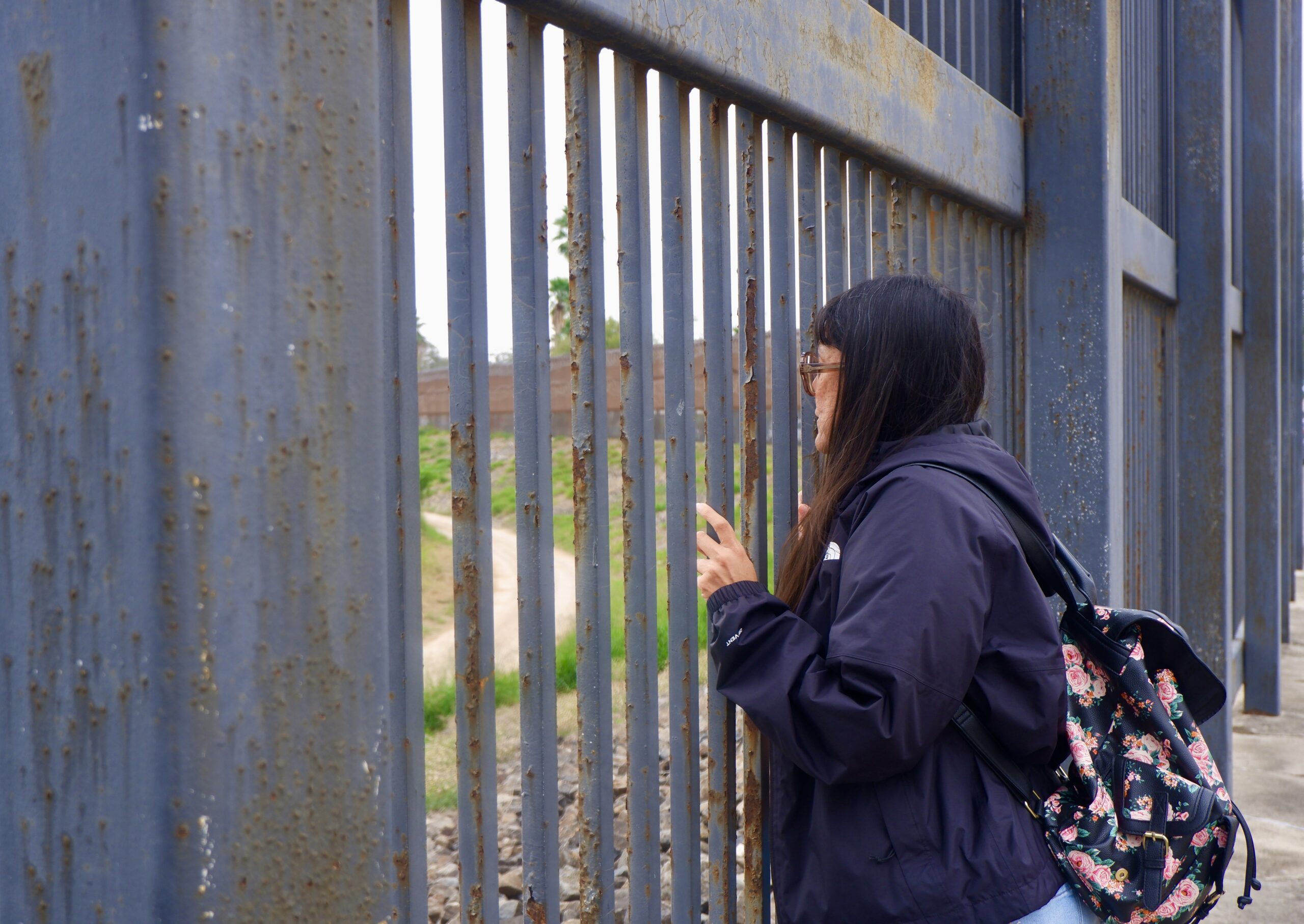
Michelle Serrano looks through the border wall in Brownsville. Photo: Elena Bruess.
In October, the Trump administration adopted contract and procurement waivers that cover the full border, meaning the entire $46.5 billion border wall construction project no longer has to abide by laws meant to increase contract transparency, foster competition and limit fraud or bribery.
Typically, the government would take bids from numerous contenders for a federal project, sort through them and choose an awardee. Then a contract would be drawn up complete with rules, regulations and limitations in mind.
“Waivers are usually set for a specific area, such as a section of the Rio Grande Valley, but this time they did the entire border with the procurement waivers,” Bear said. “They [the government] can kind of do whatever they want within $46 billion.”
The Trump administration also recently signed a waiver for a little more than 100 miles of border along the Rio Grande Valley, noting that it would bypass numerous environmental laws, including the National Environmental Policy Act, the Endangered Species Act, the Clean Water Act, the Safe Drinking Water Act and many others.
The environmental waivers are particularly concerning for ecologists and environmentalists.
“Animals are crossing for food, water and mates, crossing this arbitrary line,” said Kate Ostrom, a researcher in Latin American literature and environmental humanities at the University of Michigan. “We see the line, but you know wildlife is not thinking about that. They’re moving through these connected (vertical) habitats.”
Ostrom studies the ecological losses in borderscapes such as the U.S.-Mexico border. In one case, along the Texas border, the black bear’s southernmost habitat is in northern Mexico. However, the border wall and increased militarization prevents the bear from crossing into Mexico — meaning that Mexico could eventually lose its entire black bear population, Ostrom said.
“At the same time we’re seeing this militarizing physical borders, we’re seeing an increase in drought or hurricanes or natural disasters making it harder for not only humans to flee, but wildlife as well,” Ostrom said. “Some animals are shifting north and it’s harder to cross.”
For example, according to a report published by the U.S. Geological Survey in 2024, the climate niche for lizards and snakes is shifting due to climate change and warming temperatures. Eventually, the environments these animals need to survive will no longer exist and the reptiles will need to move elsewhere, the report notes.
“It might not just be difficult for them to cross, it may be impossible,” Ostrom said. “So in their circumstance, they would just die anyway because they aren’t living in the area they’re supposed to live in.”
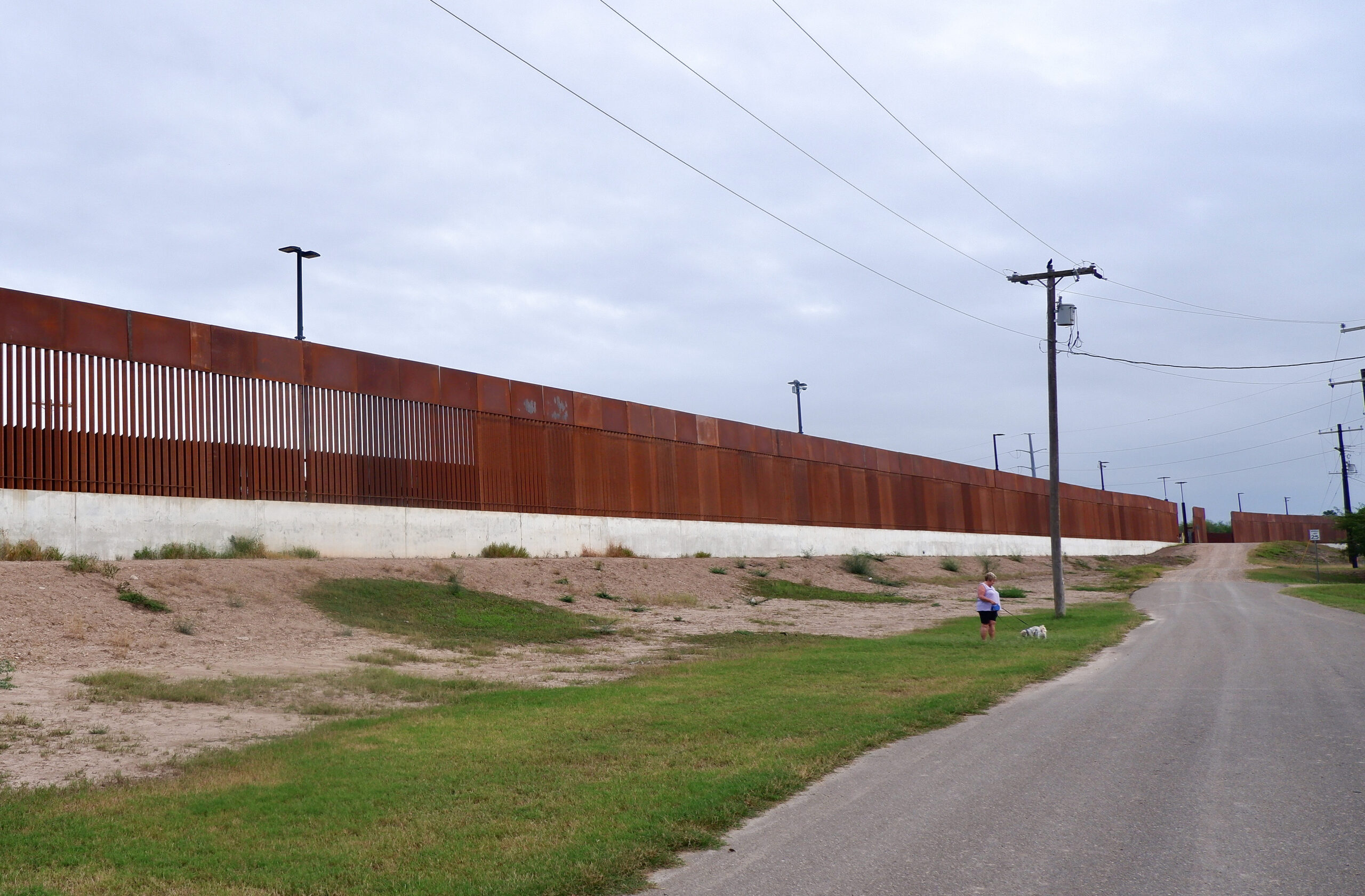
A woman walks her dog along the border wall in McAllen, Texas. Photo: Elena Bruess.
The border wall also prevents border animals from crossing during a natural disaster. In Hidalgo County at the border, the border wall is being built directly in the levees created to prevent flooding in the community from the Rio Grande, according to the International Boundary and Water Commission.
This is a concern for border wall critics like Scott Nicol, an art professor at South Texas College, just a few miles north of the Rio Grande. Nicol has been following the border wall implementation since the first Trump administration. At the border wall in Hidalgo County, he said he can see the clear difference between a levee with a wall and a levee without one.
“In the past, animals who were escaping flood waters would run up over the levee to safety,” Nicol said. “Now the smaller animals will get trapped between the concrete, which is several feet high, and drown.”
As the border wall construction continues, these negative effects will grow with time, he predicted.
“The levees work with the landscape,” Nicol said. “The wall does not.”
Relationship With the River
In Brownsville, Serrano is alarmed by the increase in security at Boca Chica, and it’s not just the Border Patrol presence. Buoys and other obstacles placed in the river to prevent people from crossing are growing in number. She said that the place she grew up is no longer as accessible as it once was.
Serrano has dedicated much of her life to the border, only having left the area briefly for Houston and Austin. She earned her masters degree in nonprofit management and now is co-director of the immigration and environmental nonprofit Voces Unidas RGV. Recently, the organization hosted a Dia de los Muertos event near the border wall to honor migrant lives and connect with the land in the Rio Grande Valley.
The Department of Homeland Security is “cutting off some of the most beautiful places we’ve seen, that we have access to,” Serrano said. “Some people [in the Rio Grande Valley] were here before this area was even Texas. We lived on this land and now we’ve been losing the connection.”
The waivers signed in 2025 include the waterborne project, which places obstacles such as buoys in the water between Texas and Mexico. In July, the administration signed a waiver to construct a 17-mile waterborne barrier in Brownsville, including stretches along the Lower Rio Grande Valley National Wildlife Refuge. The buoy system has been called a massive humanitarian risk by activists, officials and human rights organizations, leading the U.S. Department of Justice to file a lawsuit against the state of Texas in 2023 for using the buoys in the Rio Grande.
The administration plans to extend the buoy system all the way to Boca Chica Beach, where the Rio Grande meets the Gulf of Mexico — about 25 miles east of Brownsville.
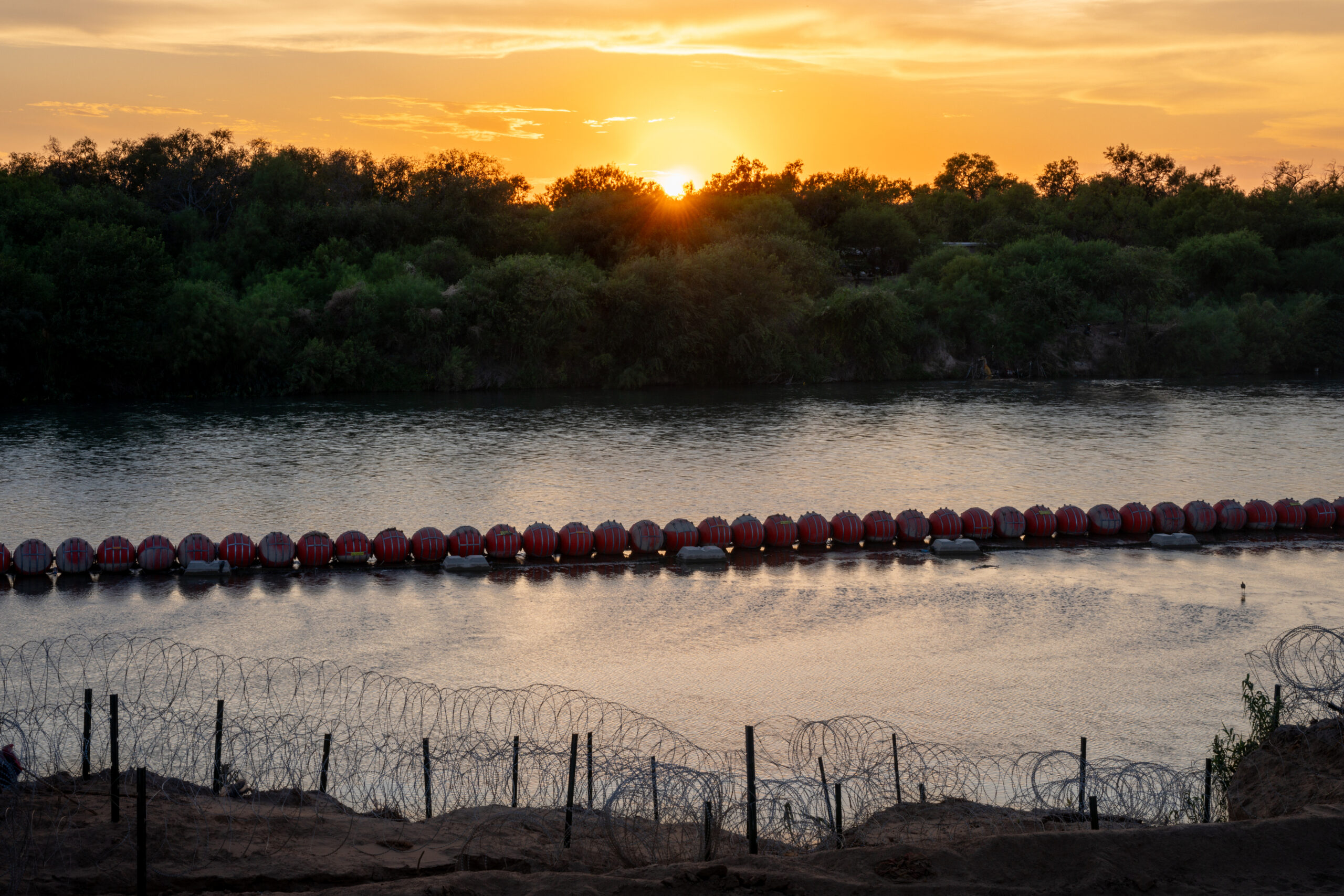
Buoy barriers situated in the Rio Grande in Eagle Pass, Texas. Photo: Brandon Bell/Getty Images.
“All of this just eliminates litigation for the government, for the Department of Homeland Security,” Bear said. “With the waivers, states and local authorities can’t do anything to prevent it. I mean they’ve waived everything they can, but who says they won’t go for other laws in the future too?”
Residents in Brownsville and McAllen no longer interact with the river in any recreational way, said Ricky Garza, an immigration and civil rights lawyer based in McAllen, a border town about 60 miles west of Brownsville.
Garza grew up in the Valley, and his family has roots here as far back as the 1800s.
“There was a time when there were lots of restaurants and bars along the river,” Garza said. “Now, there is just one. It’s also the only place you can get a boat tour of the Rio Grande.”
It’s much the same in other areas along the border, such as El Paso. Vianey Rueda, a PhD candidate at the University of Michigan focused on water rights and the Rio Grande Valley, said the interactions that locals have with the river have changed.
Rueda sees an incongruity between the environmental concerns over the Colorado River compared to the Rio Grande. While drought and the water crisis in the Colorado River are constant topics of conversation, with the Rio Grande, despite a very similar water crisis, the focus is on the military at the border and the wall construction.
She grew up in a small community just outside El Paso called San Elizario, and never once has she been able to access the river there because of the border wall. Citizens are allowed to go beyond the wall since it’s still U.S. territory, but people avoid doing that, said Rueda.
“When I visited Boca Chica, it was my first time actually touching the river, and I realized not only are these barriers impacting ecology through dividing nature, but it’s also altering the minds of people that live there,” Rueda said.
Rueda’s mother in San Elizario remembers the river as a place where she swam and had picnics; now her mother almost forgets there is a river at all.
“I’m having conversations with people, like my mom, and it’s like not just something they miss, but it’s something they forgot that they missed,” she said. “Now they all just think about it as a border and the immigration and the law, not a river.”
For Garza, no one wants to get close to the border, especially if they feel particularly targeted by Border Patrol or Immigration and Customs Enforcement. In one case, Garza was walking along one of the border parks with his wife when Border Patrol agents came up to them to ask why they were so close to the border.
They said they were going on a walk in the park, and the agents responded “that they better be careful because they were searching for some bodies in the area.”
“And by bodies he meant immigrants who crossed over,” Garza said. “Why would anyone want to come to the park if you could have an interaction like that?”
Copyright 2026 Capital & Main


-
 Latest NewsApril 14, 2026
ICE Has Arrested Dozens of Delivery Drivers at the Gates of a San Diego Military Base
-

 Deadly Dust: The Silicosis EpidemicApril 13, 2026
As Worker Silicosis Deaths Mount, GOP Moves to Shield Companies From Liability
-
 The SlickApril 20, 2026
As Prices Climb, California Imports More Gasoline Made From Russian Oil
-

 Latest NewsApril 21, 2026
Federal Job Cuts Hit Black Women Hard — A Year Later, Unemployment Is Up
-
 Latest NewsApril 17, 2026
What Could a Republican Governor Get Done in Deep-Blue California?
-

 Featured VideoApril 15, 2026
Teaching LGBTQ+ History in Trump’s America
-
 The SlickApril 22, 2026
Texas’ Gulf Coast Has a Health Problem: Benzene Emissions Are Among the Highest in the Nation
-
 Column - State of InequalityApril 16, 2026
Hot Union Spring at LAUSD