Education
Millennials: Lower Expectations for Higher Education


For many Millennials, the present higher education system exudes an overwhelming sense of permanence. In our short lives, college tuition has always been high, education funding has always been decreasing, and college has always meant a risky “investment in our futures.” We know that these yearly tuition hikes are wrong, and that the current tuition rates already saddle us with debt we probably won’t pay off until we retire, if we retire. For many of us, the consequences are much more immediate, as many low-income students cannot afford higher education anymore. Yet we continue to shell out the money, or take out the loans. Confronted with the institutional power of the higher education system, we feel powerless.
Depressing, right? But history shows us that all is not lost by exposing the mechanisms that brought about the status quo. In their Fall 2012 article in Dissent, Aaron Bady and Roosevelt Institute Fellow Mike Konczal reveal what higher education used to mean and how it was systematically destroyed. Bady and Konczal transport us to 1950s-’60s California, where bipartisan support for a University of California system built the state into a land of prosperity and innovation, a burgeoning middle class sent its children to college for free, and progressive Republicans happily funded education to support inclusion and social mobility for California’s next generation. In 1960, the Donahoe Act, or the Master Plan for Higher Education, represented California’s commitment to educate anyone who wanted to be educated. Despite the concurrent trends of racism, sexism, and American imperialism that pervaded that era, California’s higher education system was a golden example of what America could achieve.
So what happened? Where did it go? In 1966, Ronald Reagan was elected Governor of California and began dismantling the promising work of the past 20 years. Previously, admission had been free, except for a few relatively small fees, but the Reagan government lifted regulations on how much schools could charge in fees, allowing costs to skyrocket. Also, incentives were created for colleges to accept out-of-state students, who would pay higher fees. Both of these strategies shifted the financial responsibility for higher education onto students rather than the state. The process of culturally redefining higher education as not a right, or a public good, but an investment, subject to the whims of the marketplace and corporate capitalism, had begun.
Reagan’s policies continued to affect Californian higher education after he left office. Bady and Konczal point out two of the most important elements of his legacy: Proposition 13, which cut property taxes and capped their growth rate, limiting state property tax revenue; and the prison-building boom. These policies not only decreased the amount of money the state could use to fund higher education, but also diverted a greater portion away to build prisons. Since then, state investment in higher education has decreased dramatically. Such cuts in spending came as demand for higher education continued to rise, driving up costs even further and restricting access.
This conservative rethinking of higher education did not stay in California. The destruction of public education in California was the first domino in the Reagan revolution, reflected in Reagan’s policies as president and in the policies of governors in other states. Bady and Konczal appropriately call California policies “the beginning of the end of public higher education in the United States as we’d known it.”
These policies were the first cells of a virus that grew and replicated so effectively that it eventually posed as the institutional normal. Today, it can be hard to see through the elaborate and restrictive veil that separates us from our education. However, by understanding how it all began, we can see that the all-powerful system we inherited is not permanent. By identifying how it started, we can condemn it and clear a path toward restoring our values and our institutions.
Higher education was never meant to be an “investment.” It was meant to be a public good — a right. Pursuing dreams of a college education should not require dire consequences that threaten to cancel out its benefits. Progressives and Millennials will not continue to absorb the seemingly incremental infringements on our rights and liberties. We understand history. We understand that the system was not and is not forever. Today, students fight increases in student loan interest rates, challenging the institutions that say the higher interest rates are necessary. We can take back higher education for ourselves: fight to decrease tuition and fees, increase access for all, and make higher education something we can truly be proud of as Americans.
(Mario Goetz is a junior at the University of Michigan and a Roosevelt Institute | Campus Network Summer Academy Fellow. His post first appeared on the institute’s site and is republished with permission.)



-
 Latest NewsJune 9, 2026
Ousted by the Trump Administration, U.S. Immigrants Remain Locked up in African Kingdom
-
 The SlickJune 10, 2026
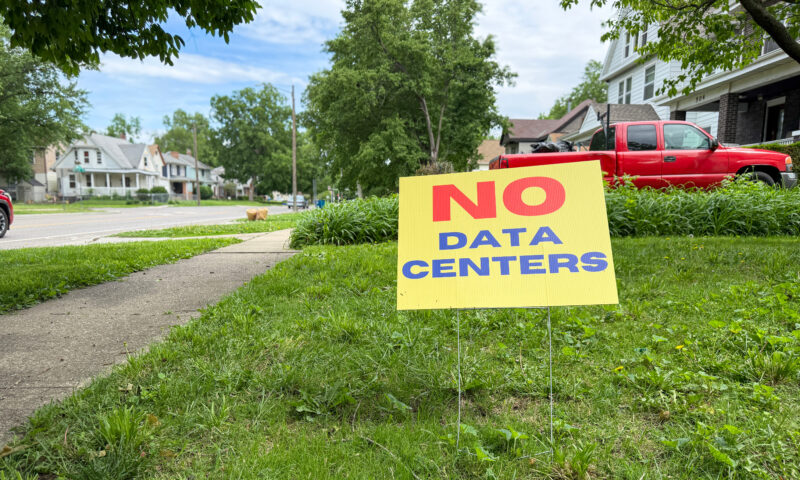
Data Centers Are on the Ballot — This Pennsylvania Candidate Won Her Primary Keeping Them Top of Mind
-

 Latest NewsJune 8, 2026
The Glacier May Be Gone, but the Love Isn’t
-
 Latest NewsJune 12, 2026
California Town Lets Private ICE Detention Centers Police Themselves
-
 Column - State of InequalityJune 11, 2026
County Tax Measures Show Limits of Local Responses to Medicaid Cuts
-
 The SlickJune 16, 2026
Why Coal Will Lead to More Deaths in Colorado
-

 Latest NewsJune 17, 2026
California Rideshare Drivers Move Toward Unionizing, Following Massachusetts
-
 Latest NewsJune 19, 2026
Sheriff’s, Probation Litigation Cost L.A. County Taxpayers $1 Billion, Study Finds