Labor & Economy
How to Avoid Taxing the Wrong People


Brace yourself. In coming weeks you’ll hear there’s no serious alternative to cutting Social Security and Medicare, raising taxes on [the] middle class and decimating what’s left of the federal government’s discretionary spending on everything from education and job training to highways and basic research.
“We” must make these sacrifices, it will be said, in order to deal with our mushrooming budget deficit and cumulative debt.
But most of the people who are making this argument are very wealthy or are sponsored by the very wealthy: Wall Street moguls like Pete Peterson and his “Fix the Debt” brigade, the Business Roundtable, well-appointed think tanks and policy centers along the Potomac, members of the Simpson-Bowles commission.
These regressive sentiments are packaged in a mythology that [says] Americans have been living beyond our means: We’ve been unwilling to pay for what we want government to do for us, and we are now reaching the day of reckoning.
The truth is most Americans have not been living beyond their means. The problem is their means haven’t been keeping up with the growth of the economy — which is why most of us need better education, infrastructure, and healthcare, and stronger safety nets.
The real median wage is only slightly higher now than it was 30 years ago, even though the economy is twice as large.
The only people whose means have soared are at the very top, because they’ve received almost all the gains from growth. Over the last three decades, the top one percent’s share of the nation’s income has doubled; the top one-tenth of [the] one percent’s share, tripled. The richest one-tenth of one percent is now earning as much as the bottom 120 million Americans put together.
Wealth has become even more concentrated than income (income is a stream of money, wealth is the pool into which it flows).
The richest one percent now own more than 35 percent of all of the nation’s household wealth, and 38 percent of the nation’s financial assets – including stocks and pension funds.
Think about this: The richest 400 Americans have more wealth than the bottom 150 million of us put together. The six Walmart heirs have more wealth than bottom 33 million American families combined.
So why are we even contemplating cutting programs the middle class and poor depend on, and raising their taxes?
We should tax the vast accumulations of wealth now in the hands of a relative few.
To the extent they have any wealth at all, most Americans have it in their homes – whose prices have stopped falling in most of the country but are still down almost 30 percent from their 2006 peak.
Yet homes are subject to the only major tax on wealth — property taxes.
Yale Professor Bruce Ackerman and Anne Alstott have proposed a two percent surtax on the wealth of the richest one-half of one percent of Americans owning more than $7.2 million of assets.
They figure it would generate $70 billion a year, or $750 billion over the decade. That’s more than the fiscal cliff deal raises from high-income Americans.
Together, the two sets of taxes on the wealthy — tax increases contained in the fiscal cliff agreement, and a wealth tax such as Ackerman and Alstott have proposed — would just about equal the spending cuts the White House has already agreed to, totaling $1.5 trillion (or $1.7 trillion including interest savings).
That seems about right.
(Robert B. Reich, Chancellor’s Professor of Public Policy at the University of California at Berkeley, was Secretary of Labor in the Clinton administration. Reposted from his website with permission.)



-

 Imperial DivideJune 3, 2026
California’s Lithium Valley Dreams Meet Reality at the Only Restaurant in Town
-

 Column - State of InequalityJune 4, 2026
California’s Economy Runs on Labor Trump Wants to Deport
-

 Featured VideoJune 5, 2026
At This New Mexico Park, Mountain Bikers Pedal Amid Hundreds of Oil Wells
-

 Latest NewsJune 9, 2026
Ousted by the Trump Administration, U.S. Immigrants Remain Locked up in African Kingdom
-
 The SlickJune 10, 2026
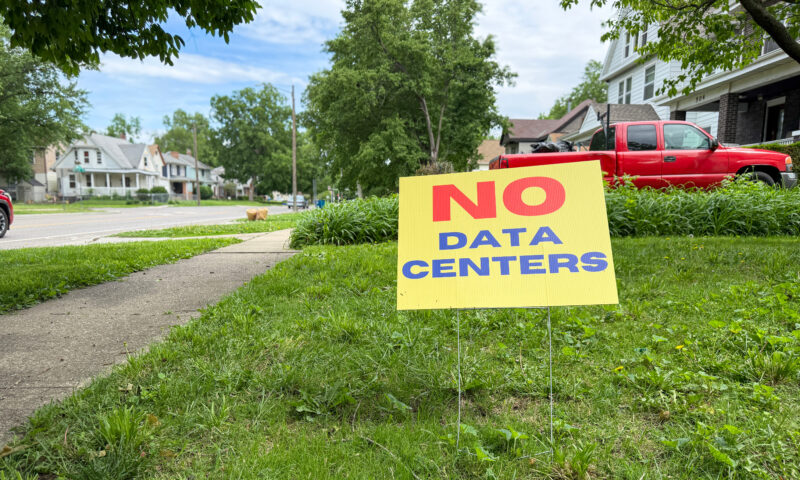
Data Centers Are on the Ballot — This Pennsylvania Candidate Won Her Primary Keeping Them Top of Mind
-

 Latest NewsJune 8, 2026
The Glacier May Be Gone, but the Love Isn’t
-
 Latest NewsJune 12, 2026
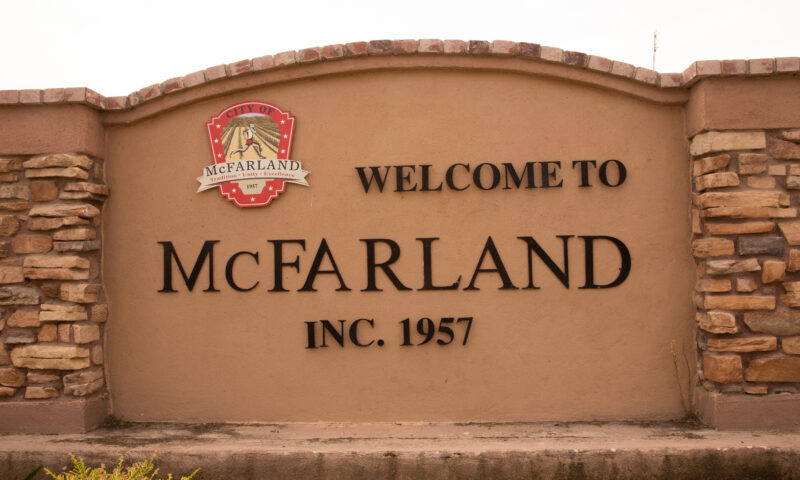
California Town Lets Private ICE Detention Centers Police Themselves
-
 Column - State of InequalityJune 11, 2026
County Tax Measures Show Limits of Local Responses to Medicaid Cuts