
Podcast
LISTEN: Why Hello Alfred Is Focused More On Its Workers And Less On Algorithms
On this episode of The Bottom Line, CEO Marcela Sapone lays out her vision for turning service jobs into good jobs.


When Hello Alfred launched a few years ago, many naturally assumed that the service was exploitive, with the company’s “home managers” tackling household chores and running errands for folks while earning meager pay and no benefits. This, after all, is how most of the “gig economy” functions.
One early customer, for example, wondered whether she was “contributing to unfair labor practices” by using Alfred Club, as it was then called, noting in Fast Company that she couldn’t “stop feeling guilty about it.” Slate characterized the startup as “Uber for servants.”
Yet, in fact, Hello Alfred has always been the anti-Uber—at least when it comes to taking care of its workers.
“People need to have jobs, and they need to feel like they are connected to the mission of the company that they’re working for, that they’re being paid well and treated well,” Marcela Sapone, Hello Alfred’s CEO and co-founder, told me on the latest episode of my podcast, The Bottom Line. “That’s how you actually affect change at a large scale.”
In tangible terms, this means that Hello Alfred has only W-2 employees, not independent contractors. They make about $25 an hour on average, according to Sapone, and “we’re hoping that over time we can pay even more.” Those at Hello Alfred also have health, vision, and dental coverage. And the company is intent on adding a retirement plan “once we’re a little more established,” Sapone vows. Front-line workers are offered skills training on a regular basis, as well.
This deep investment in employees is smart business, Sapone maintains, because, “at the end of the day, they really are our product”—even though Hello Alfred is powered by software to help maximize efficiency and considers itself a tech firm.
The model seems to be paying off. Sapone says that Hello Alfred, which serves primarily residents of large apartment buildings in New York, Boston, and San Francisco, is “operationally profitable.” It has plans to expand next year into Chicago, Washington, and Los Angeles.
But Sapone’s vision extends beyond Hello Alfred. She hopes that the company can help to set a new standard for service jobs across the country.
“There is a general distaste . . . in technology companies,” she says, “to really focus on the people element. A lot more of it is focused on how you build these algorithms, what’s the machine learning component, what’s the AI component.”
Many of who’ve been able to disrupt existing industries have achieved “rock star status,” she adds. But “you also have kind of a duty to build things . . . and not just for one class of people but for all the people in that value chain.”
You can listen to my entire interview with Sapone here, as well as Ernest Savage reporting on efforts by the National Domestic Workers Alliance to create good jobs in sectors that haven’t traditionally had them, and Dorian Warren weighing in on the mad rush by one city after another to attract Amazon’s new headquarters.
The Bottom Line is a production of Capital & Main.



-

 Column - State of InequalityMay 21, 2026
In California Governor’s Race, Xavier Becerra Walks Away From Single-Payer
-

 Latest NewsMay 22, 2026
Where California’s Gubernatorial Candidates Stand on Climate and Taking Big Oil Money
-

 The SlickMay 20, 2026
70-Foot Wastewater Geyser Reflects New Mexico’s Latest Oilfield Challenge
-

 The SlickMay 29, 2026
Feds to Open Tens of Thousands of Acres of Colorado Wilderness to Oil Drilling
-
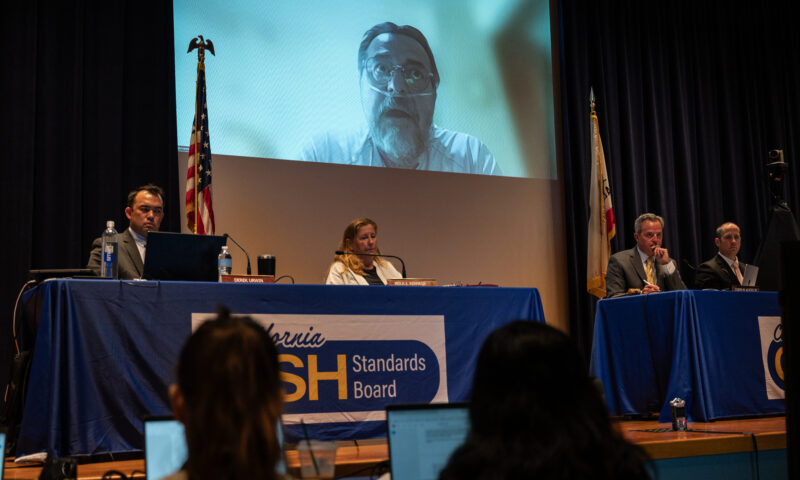
 Deadly Dust: The Silicosis EpidemicMay 27, 2026
California Moves to Ban Quartz Countertop Fabrication to Combat Silicosis Epidemic
-

 Latest NewsMay 26, 2026
Conditions at California ICE Detention Centers Are Getting Worse, Inspections Find
-
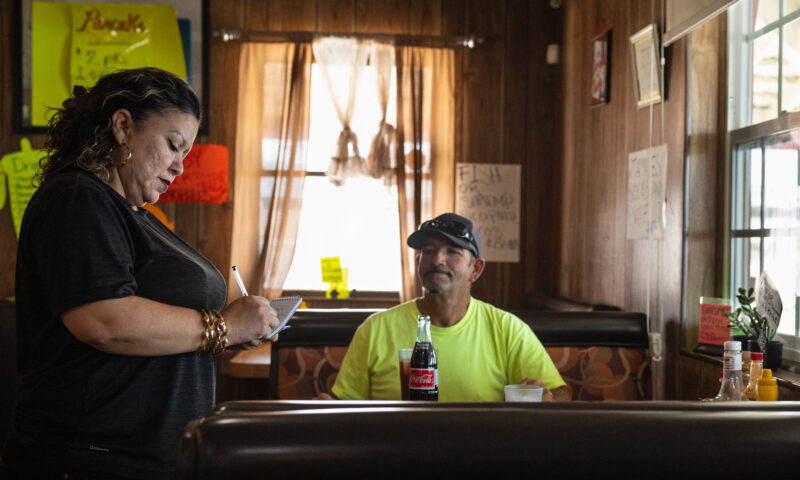
 Imperial DivideJune 3, 2026
California’s Lithium Valley Dreams Meet Reality at the Only Restaurant in Town
-

 Column - State of InequalityMay 28, 2026
Top Democratic Candidates Agree on Housing Urgency, Not the Fix