Latest News
‘A Fraudulent Scheme’: New Mexico Sues Texas Oil Companies for Walking Away From Their Leaking Wells
New Mexico’s lawsuit accuses three Texas oil executives of pocketing revenue from oil and gas wells and offloading cleanup costs to the public. An investigation in 2024 by ProPublica and Capital & Main uncovered some of these business dealings.

This story was originally published by ProPublica.
The state of New Mexico is accusing three Texas oil executives of orchestrating “a fraudulent scheme” to pocket revenue from hundreds of oil and gas wells in New Mexico and offload the cost of plugging and cleaning up the wells onto the state’s taxpayers. The suit, filed in late December by the New Mexico attorney general’s office, is the latest salvo in the state’s fight against oil and gas executives accused of foisting old wells onto the public.
The 72-page complaint alleges a yearslong pattern of fraud and self-dealing in which the oil executives — Everett Willard Gray II, Robert Stitzel and Marquis Reed Gilmore Jr., all of Midland, Texas — repeatedly transferred wells among “a series of shell corporations, LLCs, and partnerships they created.” On multiple occasions, the men placed companies into bankruptcy protection, only to move their profitable wells to other companies they owned or managed outside the bankruptcy proceedings, the suit said.
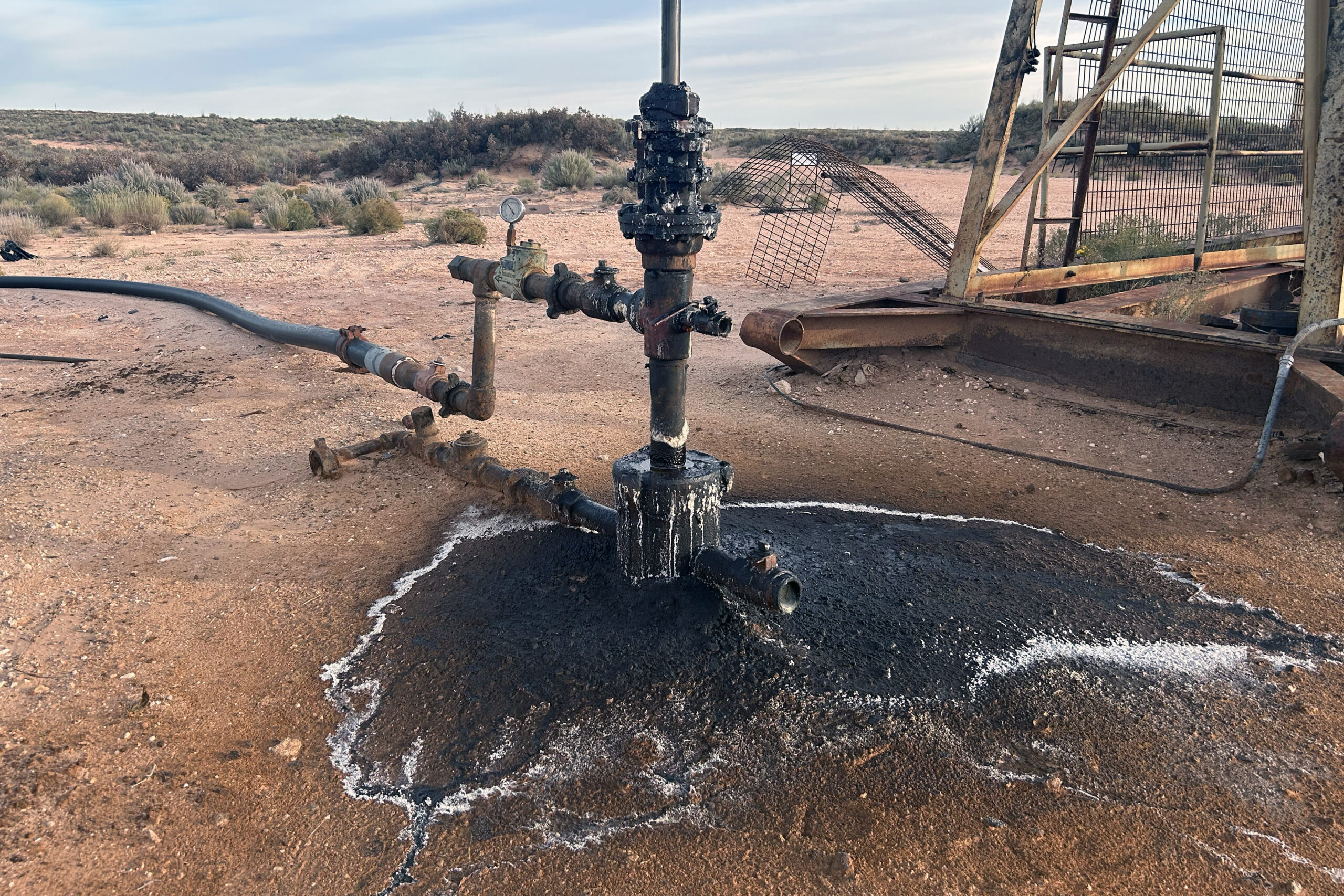
New Mexico faces millions of dollars in costs to plug wells the companies shed through the bankruptcies. Unplugged oil and gas wells can emit climate-warming methane and carcinogenic gases and often leak briny, radioactive wastewater, as ProPublica and Capital & Main detailed in a 2024 investigation. The newsrooms uncovered Gray, Stitzel and Gilmore’s early business dealings and use of bankruptcy proceedings.
“I will not stand by while bad actors take advantage of the system — avoiding responsibility, burdening the state with costly remediation, and recklessly endangering the health of New Mexicans,” Raúl Torrez, the state’s attorney general, said in a statement.
As part of ProPublica and Capital & Main’s 2024 investigation, the news organizations toured dozens of wells belonging to Remnant, the group of companies through which the men launched their enterprise. Some wells leaked such high volumes of methane that, if ignited, the air could explode; others emitted hydrogen sulfide at potentially lethal concentrations; and several were surrounded by oil and wastewater spills. At the time, the owner of an oil field services company that had worked on Remnant’s wells said that the men filed for bankruptcy protection without paying his company what it was owed.
The recent lawsuit is “meritless” and built on “baseless claims,” Gray said in a statement responding to questions from ProPublica and Capital & Main. “I have always acted ethically and never been involved in any activities to defraud the state of New Mexico. I strongly deny any wrongdoing in this matter,” he said.
New Era Energy & Digital, one of Gray’s companies named in the state’s complaint, ended up with 87 of the group’s best gas wells, and the company said in a press release that those “no longer align with the Company’s business model.” New Era is focused instead on building an AI data center powered by a yet-to-be-built nuclear power station, it said.
Stitzel and Gilmore didn’t respond to requests for comment.
The tactics alleged by the attorney general are commonly used in the industry to squeeze profits from old wells before companies go bankrupt. Oil and gas executives so frequently follow a similar pattern that environmentalists call it “the playbook.”
Oil companies and trade groups argue that most orphan wells are from an earlier era and that modern operators are helping address the problem by paying into various government-managed funds that pay for the plugging of some old wells.
The exact number of orphan wells awaiting cleanup nationwide is unknown, but the figure is believed to be in the hundreds of thousands, if not higher. New Mexico faces as much as a $1.6 billion bill to plug such wells, according to a June 2025 Legislative Finance Committee report.
“As the oil boom is aging and a lot of the wells are becoming low-producing, the risk is increasing,” said Mandy Sackett, the lead New Mexico campaigner for environmental group Earthworks. The potential for taxpayers to be saddled with plugging oil companies’ orphan wells, she said, “poses such a massive financial risk.”
‘Out of the Dark Ages’
The problem of Remnant and other companies leaving wells as orphans is informing a broader reckoning among legislators and regulatory agencies about the inadequacy of New Mexico’s safeguards.
Oil companies are required to set aside funds, called bonds, that the state can call on to pay for well plugging and environmental cleanup. These bonds are meant to protect taxpayers from shouldering such costs in the event that a company goes bankrupt or walks away.
But like all oil-producing states, New Mexico’s bonds cover only a fraction of the true cost of cleanup. A 2024 ProPublica and Capital & Main analysis found that the 15 states that account for nearly all the nation’s oil and gas production held bonds that would cover less than 2% of the projected $151.3 billion cost to plug the wells in their states.
In New Mexico, a fresh attempt at bonding reform kicked off with hearings in October, as the state’s Oil Conservation Commission began updating bonding rules. The proposed amendments, which are backed by a coalition of environmental groups, would require companies to put forward a $150,000 bond for each inactive or low-producing well. Research has shown that these are disproportionately likely to become orphans and the state’s responsibility to plug.
The proposed regulations target companies with large collections of these risky wells and would require companies whose portfolios are made up of at least 15% inactive or low-producing wells to buy bonds for each of their wells. The proposals would also place other layers of regulatory scrutiny on sales of wells to poorly capitalized companies and limit the time that wells could remain idle before needing to be plugged.
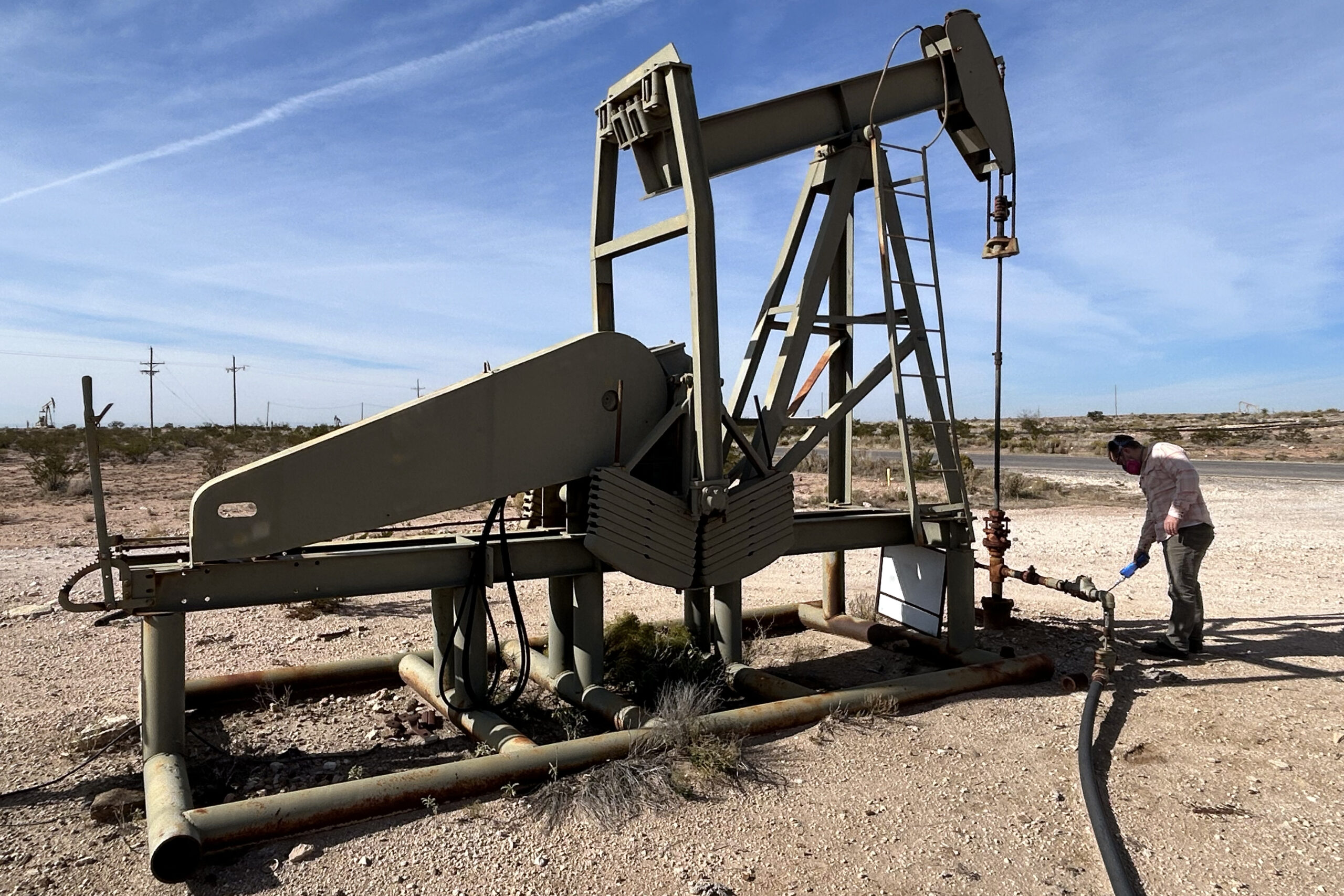
Reporter Nick Bowlin tests an orphan well that had belonged to Remnant and Acacia for methane and hydrogen sulfide leaks near Artesia, New Mexico. Photo: Mark Olalde/ProPublica.
Oil Conservation Division officials said in a statement that “the interested parties are currently engaged in settlement talks” for the bonding rulemaking. The agency declined to comment on the attorney general’s lawsuit.
New Mexico’s State Land Office, which oversees the state’s publicly owned land, recently initiated a similar process to increase the amount of money set aside in bonds to plug wells within its jurisdiction. The agency estimates that there are 15,000 unplugged oil and gas wells on land it manages.
Ari Biernoff, general counsel of the State Land Office, said that these reforms would bring bonding requirements “out of the Dark Ages” and closer to what the agency would need to fund cleanup should companies walk away.
“Any reasonable observer would conclude we have grossly inadequate bonding,” Biernoff said.
Industry groups have expressed dissatisfaction with the proposed rules.
The New Mexico Oil & Gas Association and Independent Petroleum Association of New Mexico submitted counterproposals with significantly reduced bonding increases. The latter said in comments submitted to the state that its suggestion “will keep smaller operators from going out of business.”
“We do not believe it’s in New Mexico’s best interest for the State Land Office to kill a lot of smaller, state-based, good operators to leave only a handful of supermajors,” Jim Winchester, executive director of the Independent Petroleum Association of New Mexico, wrote to the agency.
Remnants of the Oil Industry
Beginning in 2015, Gray, Stitzel and Gilmore aggregated several hundred wells in southeastern New Mexico under the Remnant companies, subsequently racking up regulatory violations, including having too many inactive, unplugged wells. The state’s Oil Conservation Division gave Remnant a deadline of July 2019 to plug some of its wells. Fifteen days before the deadline, the men placed the company into bankruptcy protection.
Remnant’s dissolution kicked off a complex and disputed series of transactions among the three men. According to the attorney general’s complaint, Stitzel and Gilmore created several companies under the name Acacia and purchased most of Remnant’s wells from themselves. Gray, meanwhile, created Solis Partners — a wholly owned subsidiary of Gray’s New Era — and ended up with 87 of the group’s most lucrative gas-producing wells. The bill of sale that landed the wells with Gray’s company was for $10, and Gray signed on behalf of Remnant a change-of-operator application that sent wells to Solis Partners.
Then, in December 2024, a major oil company that the state had asked to plug some of Acacia’s wells sued Acacia to force it to clean up its own mess. Two weeks later, Acacia filed to liquidate through bankruptcy.
Of Remnant’s and Acacia’s wells, 172 ended up as the responsibility of the State Land Office, according to the agency. Eleven of those have been plugged, all but one by other oil companies that hold leases with the agency and stepped up to do the work. Based on the state’s estimated per-well cleanup cost, the remaining wells could cost a total of more than $25 million to plug.
The agency was able to claim a single bond from Remnant worth $20,000.
“This is a very vivid demonstration of why we need an upgrade to the bonding rule,” said Biernoff, the State Land Office general counsel.
The most lucrative wells from Gray, Stitzel and Gilmore’s foray into New Mexico’s oil and gas industry belong to Solis Partners. But even that company appears at risk of leaving them as orphans, as it has about 120 inactive wells on state trust land, according to the State Land Office. Its parent company, New Era, which is pitching plans for a 3,500-acre AI data center campus in southeastern New Mexico, said it is selling the wells.
“Having enriched themselves with the profits from Solis Partners’ and Acacia’s oil and gas production, the Individual Defendants are once again seeking to walk away from the plugging and remediation costs,” the attorney general’s complaint alleged.
Charlie Barrett is an ecologist with environmental group Oilfield Witness who has chronicled pollution at Remnant’s and Acacia’s wells for years. “They’re old, they’re just falling apart,” he said. They are also, he said, emblematic of the small oil and gas operators that represent the final stage of the industry leaving its wells as orphans.
“I wish I could say that it’s unique,” Barrett said, “but it isn’t.”


-
 The SlickApril 20, 2026
As Prices Climb, California Imports More Gasoline Made From Russian Oil
-

 Latest NewsApril 21, 2026
Federal Job Cuts Hit Black Women Hard — A Year Later, Unemployment Is Up
-

 Latest NewsApril 17, 2026
What Could a Republican Governor Get Done in Deep-Blue California?
-

 Featured VideoApril 15, 2026
Teaching LGBTQ+ History in Trump’s America
-
 The SlickApril 22, 2026
Texas’ Gulf Coast Has a Health Problem: Benzene Emissions Are Among the Highest in the Nation
-

 Column - State of InequalityApril 16, 2026
Hot Union Spring at LAUSD
-

 Latest NewsApril 28, 2026
A May Day Push to ‘Shut It Down’ Takes Shape Across the Country
-

 Latest NewsApril 24, 2026
A Grieving Afghan Man Says He Tried to Get Medical Care for His Brother Who Died in ICE Custody