The 50-100 Pay Gap
Timeline: How Corporate America Has Helped Decimate Unions
The declining bargaining power of unions contributes to the crisis of extreme income inequality in the United States.

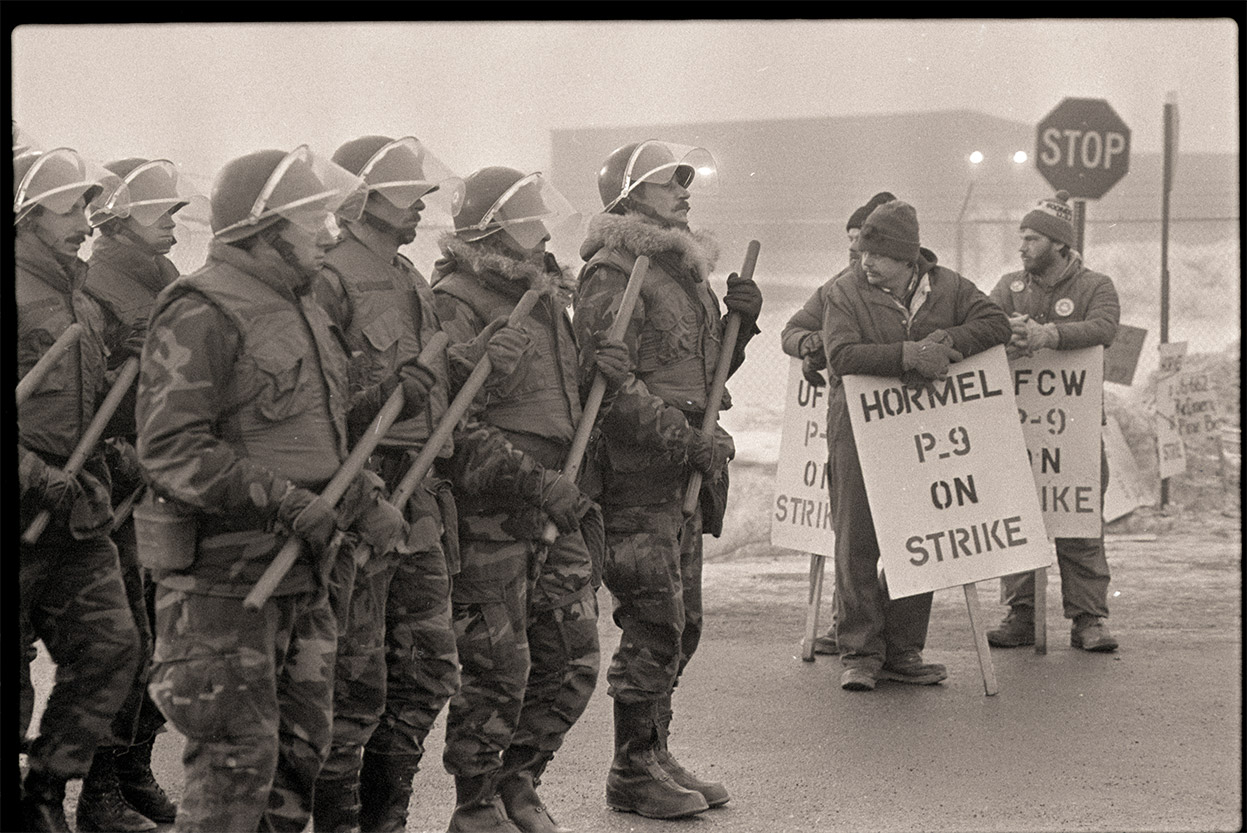
The strength of unions, which used to be powerful protectors of low-wage factory and manufacturing workers in the United States, has declined precipitously over the past 50 years. In 1954, almost 35% of all U.S. workers belonged to a union. In 2020, less than 11% of U.S. workers were union members, despite the fact that 65% of Americans approve of labor unions, the highest in over a decade, and nearly half of nonunion workers say they would join.
Co-published by The American Prospect
The declining bargaining power of unions contributes to the crisis of extreme income inequality in the United States. “The erosion of collective bargaining is the second largest factor that suppressed wage growth and fueled wage inequality over the last four decades,” finds the Economic Policy Institute. Belonging to a union significantly boosts wages: Unionized workers earn, on average, over 11% more than their nonunionized counterparts and are more likely to have health benefits from their employer. Unionized workers also are less likely to get laid off than their nonunion workers.
While many point to inexorable forces like automation and globalization to explain unions’ waning influence in the U.S., sector-wide collective bargaining agreements cover most workers in other advanced democracies, like those in Western Europe, that were subject to the same forces. The weakening of unions in the U.S. was not inevitable: It was the result of a series of laws and court rulings that favored businesses’ and companies’ increasingly aggressive suppression of organizing efforts.
Here’s a brief timeline charting the decline of unions in the United States:
Copyright 2021 Capital & Main


-
 Latest NewsApril 28, 2026
A May Day Push to ‘Shut It Down’ Takes Shape Across the Country
-

 Latest NewsApril 24, 2026
A Grieving Afghan Man Says He Tried to Get Medical Care for His Brother Who Died in ICE Custody
-

 The SlickApril 29, 2026
With Promises of Money, Controversial Gas Pipeline on Navajo Nation Passes First Hurdle
-
 Deadly Dust: The Silicosis EpidemicMay 6, 2026
California Could Be the First State to Ban Quartz Countertops
-

 Latest NewsApril 27, 2026
As the U.S. Spends Billions Fighting Iran, War-Driven Inflation Hits Working Families Hard
-

 Latest NewsMay 1, 2026
In One of L.A.’s Food Deserts, ‘Hands That Harmed Are Now Hands That Heal’
-
 Column - State of InequalityApril 30, 2026
Don’t Call It Upward Mobility If People Still Can’t Afford to Live
-

 Latest NewsMay 5, 2026
Fire Recovery Could Wipe Out Altadena’s Affordable Rentals