
Labor & Economy
Transit Investments Can Get Manufacturing Moving Again

As our nation pauses to observe Labor Day this week, you have to wonder what the future holds for American workers. Rising income inequality, a dwindling middle class, the growth of low-wage jobs without benefits, and unemployment rates that remain uncomfortably high should make us wonder whether we’ve allowed the American Dream to become a mythic fairy tale.
While these realities are certainly dire and downright depressing, they are not insurmountable.
Last month, President Obama began laying out a plan to rebuild America’s manufacturing base and shore up job security with good wages in stable industries. He called for rewarding companies for keeping jobs at home or bringing them back to the U.S. And, he said that we can and must train workers — especially those left farthest behind by the economic downturn — to get on new career tracks that lead them to the middle class.
Now, you can certainly call the president’s plans audacious (remember that word?), but what you can’t call them is impossible to achieve. There are ways to accomplish this vision. Here’s one of them.
Every year, transit agencies across the country spend about $5.4 billion on bus and railcar purchases to upgrade public transportation fleets. That’s a huge sum. Yet, despite a $50 billion investment over the past 10 years in buses and railcars alone, tens of thousands of jobs have been lost because so much of the manufacturing of those vehicles has been done outside of the United States.
Any jobs and economic gains that have been made can likely be attributed to Buy America — a federal law that the Obama administration has actively enforced that ensures that transportation projects be built with 60 percent American-made products. But there’s still more to do to boost the retention and re-shoring of manufacturing and the jobs that come with it.
Plus, 91 percent of railcar manufacturing workers in the United States are white and 83 percent are male, according to the Bureau of Labor Statistics. That means we have a lot more to do to ensure that all Americans — especially those facing endemic poverty and unemployment — have an opportunity to get a job building buses and railcars for our public transit systems.
Doing more means thinking and acting outside the box. Right now, the standard practice is to award transit manufacturing work to whichever contractor offers the lowest price. But if we do that, we miss an enormous opportunity. Our railcars will likely be built in Japan or Mexico, using cheap labor and creating very few new American jobs.
We can do better and make it a win-win situation for both U.S. jobs and improved public transit. It starts with encouraging transit agencies across the country to make sure contractors who bid on bus and railcar manufacturing contracts are rewarded for building American job creation strategies — especially for disadvantaged workers — into their proposals.
This process works. It’s already resulted in the creation of 500 new manufacturing jobs re-shored at facilities in Los Angeles and St. Cloud, Minnesota, based on more than $1.2 billion in procurements by the Los Angeles County Metropolitan Transportation Authority over the last two years.
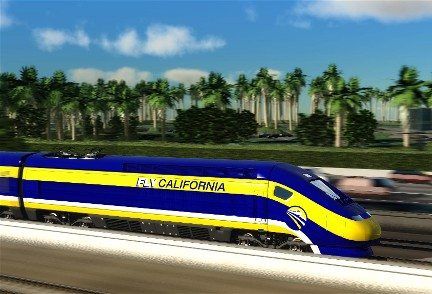
We should get behind President Obama and the Department of Transportation’s commitment to increase the economic benefits of infrastructure investments in a big way. And it doesn’t get any bigger than the imminent $3 to $4 billion high-speed railcar purchase by Amtrak and the California High-Speed Rail Authority. This historic investment — which will replace the current ACELA cars and put the first California high-speed rail vehicles into service — will usher in a new era of rail transportation in our country. It should also usher in a new way of supporting American suppliers and their employees–current and future.
The question is whether the rest of us will get on board by supporting ideas like maximizing transit investments to achieve the goals of rebuilding American manufacturing — or whether we will leave our businesses and workers idling at the station. This Labor Day, let’s renew our commitment to getting out of the box and building a new economy where everyone wins.
(Kimberly Freeman Brown is Chief of the Washington, D.C. office of , a national organization working to build an inclusive green economy strong enough to lift people out of poverty. Her post first appeared on Huffington Post and is republished with permission.)



-
 Imperial DivideJune 3, 2026
California’s Lithium Valley Dreams Meet Reality at the Only Restaurant in Town
-
 Column - State of InequalityJune 4, 2026
California’s Economy Runs on Labor Trump Wants to Deport
-
 Featured VideoJune 5, 2026
At This New Mexico Park, Mountain Bikers Pedal Amid Hundreds of Oil Wells
-

 Latest NewsJune 9, 2026
Ousted by the Trump Administration, U.S. Immigrants Remain Locked up in African Kingdom
-
 The SlickJune 10, 2026
Data Centers Are on the Ballot — This Pennsylvania Candidate Won Her Primary Keeping Them Top of Mind
-

 Latest NewsJune 8, 2026
The Glacier May Be Gone, but the Love Isn’t
-
 Latest NewsJune 12, 2026
California Town Lets Private ICE Detention Centers Police Themselves
-
 Column - State of InequalityJune 11, 2026
County Tax Measures Show Limits of Local Responses to Medicaid Cuts