Politics & Government
State's Game-Changing Election Rules Now in Effect

As dismal as things may seem, we Californians actually have a few things to look forward to. The fruits of reform efforts are ripening, with three common-sense laws making their influential debuts.
This new year will see a much-needed shake-up of the State Assembly and Senate. For decades legislators drew their own districts, ones that favored incumbents and decreased voters’ power. Thanks to the California Citizen’s Redistricting Commission created in 2008 and further empowered in 2010, our state finally has fair and honest State Assembly, State Senate and U.S. Congressional districts. Many current representatives find themselves in districts they are unlikely to win next year, and are making decisions to move to “safer” districts. This will pit many voters against Sacramento’s staunch culture of incumbency when party leaders run candidates in areas they haven’t represented in the past.
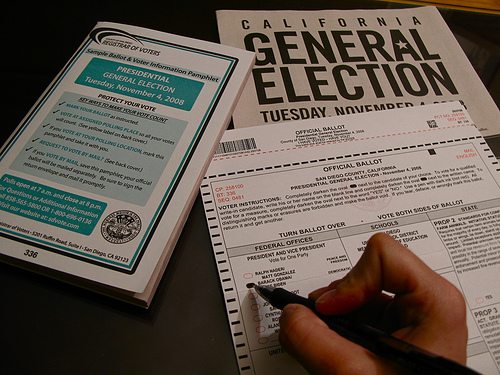
Voters will see another change at the ballots in the coming year. Instead of Democratic and Republican primaries for state and local office, open primaries will be held and a runoff will take place between the top two vote getters. This will force primary candidates to reach out to the center instead of taking hard-line positions to rally a partisan base. Elections will be more about a candidate’s ideas and positions, and less about his or her party, dealing a blow to the polarizing two-party system that too often brings California’s state government to a halt.
The third law will do much to reform a deep-rooted fault in the national political system. Last August, Governor Jerry Brown signed the National Popular Vote bill, making California the eighth state to agree to give all of its Electoral College votes to whichever presidential candidate wins a majority of the popular vote. The national popular vote issue strikes a major chord with young people, myself included. For many of us, our first experience in American politics was the 2000 presidential election and the catastrophes that ensued. The basic injustice of a candidate who lost the popular vote winning the presidency solidified our sense that the political system did not care about citizens or fairness.
In fact, we were partly right; the Constitution’s framers set up the Electoral College specifically to distance voters from legitimate and influential power. The National Popular Vote bill would effectually negate the Electoral College once a majority of College votes are controlled by states that have passed it.
In California, these reforms mark the end of an era of gerrymandering and deep partisanship. Representatives will be elected because they’re the right voice for their districts, not because they are the only candidate with an (R) or a (D) next to their names. They will better reflect the communities that elect them, and above all, everyday people will matter more.



-

 The SlickMay 29, 2026
Feds to Open Tens of Thousands of Acres of Colorado Wilderness to Oil Drilling
-

 Deadly Dust: The Silicosis EpidemicMay 27, 2026
California Moves to Ban Quartz Countertop Fabrication to Combat Silicosis Epidemic
-

 Latest NewsMay 26, 2026
Conditions at California ICE Detention Centers Are Getting Worse, Inspections Find
-

 Imperial DivideJune 3, 2026
California’s Lithium Valley Dreams Meet Reality at the Only Restaurant in Town
-

 Column - State of InequalityMay 28, 2026
Top Democratic Candidates Agree on Housing Urgency, Not the Fix
-

 Latest NewsJune 1, 2026
Deep Cuts to Civilian Support Staff for Families of Deployed Marines Raise Concerns
-

 Column - State of InequalityJune 4, 2026
California’s Economy Runs on Labor Trump Wants to Deport
-

 The SlickJune 5, 2026
At This New Mexico Park, Mountain Bikers Pedal Amid Hundreds of Oil Wells