Labor & Economy
How Obamacare Mandate Delay Helps Workers

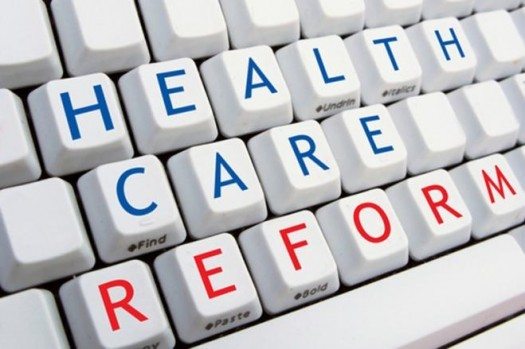
In my post last week, after the announcement that the employer mandate would not be enforced for a year, I wrote that it was vital that the Obama administration show as much concern for the workers who might be denied health insurance as it did for employers. Specifically, I asked the administration to make clear that a worker would be able to get subsidized health coverage through the new exchanges based on filling out an application, without having to get proof from an employer. On Friday [July 5, the Department of Health and Human Services] issued that ruling.
The decision not to enforce the employer mandate for a year is certain to cost some people health coverage as some employers decide to postpone complying with the law. Their workers, possibly also confused by the delay, may not apply for subsidized coverage. But if they do apply, the new ruling will be a big help to them.
As noted, the HHS ruling made it clear that the exchanges should rely on the information workers provide rather than proof from their employers. Workers can ask their employer to help provide the information, but that is not a requirement. And the exchanges can try to verify the information if possible, but that will be difficult and again is not a requirement. Under the new ruling, a worker who reports that he or she is not offered affordable health coverage at work will qualify for subsidized coverage. (Affordability is measured by the employee share of premiums being no more than 9.5 percent of their income.)
The HHS announcement is an important measure to help get coverage to uninsured workers. Of course, it has received little attention compared to the news about the employer mandate. That news is almost always reported incorrectly, with most articles saying that the mandate itself has been postponed for a year. What has been postponed is the enforcement of the mandate through penalties for employers that do not comply. It’s still the law that large employers are required to offer affordable coverage. But if they don’t, there will be no penalty.
There’s one more potentially interesting twist to this story, one that could provide real benefit to some workers in 2014 and then highlight a big problem with the employer mandate in 2015. Workers who get health insurance through the exchanges will get coverage that is much more affordable – lower premiums and out-of-pocket costs than health insurance offered by employers. This will be particularly true for the low-wage employers most likely to not offer coverage. As a result, workers who get coverage in 2014 in the exchange may find in 2015 that they are forced to get coverage that is much more expensive to buy and use, and covers fewer health services, from their employers. The workers will want to stick with the exchanges, putting pressure on employers to pay a fine and let the employees stay in the exchanges, or to improve the coverage they offer.
We are likely to see a lot more debate about how to reform the employer mandate in Congress this year and next as the ACA is implemented. In a future post, I’ll describe ways to change the employer mandate to make good health coverage more affordable for workers.
(Richard Kirsch is a Senior Fellow at the Roosevelt Institute, on whose Next New Deal blog this post first appeared. Republished with permission.)



-

 Column - State of InequalityJune 4, 2026
California’s Economy Runs on Labor Trump Wants to Deport
-

 Featured VideoJune 5, 2026
At This New Mexico Park, Mountain Bikers Pedal Amid Hundreds of Oil Wells
-

 Latest NewsJune 9, 2026
Ousted by the Trump Administration, U.S. Immigrants Remain Locked up in African Kingdom
-
 The SlickJune 10, 2026
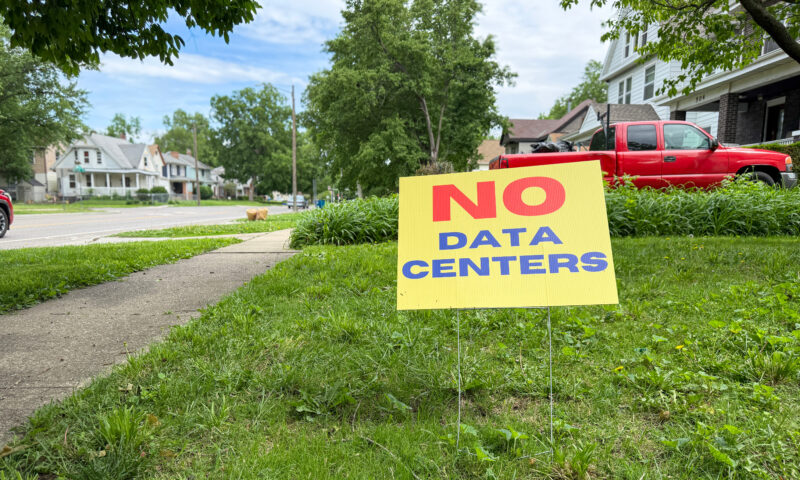
Data Centers Are on the Ballot — This Pennsylvania Candidate Won Her Primary Keeping Them Top of Mind
-
 Latest NewsJune 12, 2026
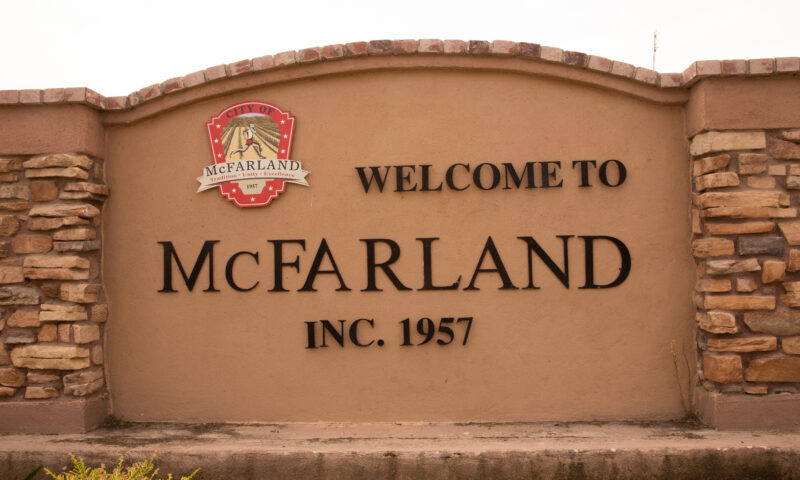
California Town Lets Private ICE Detention Centers Police Themselves
-

 Latest NewsJune 8, 2026
The Glacier May Be Gone, but the Love Isn’t
-
 Column - State of InequalityJune 11, 2026
County Tax Measures Show Limits of Local Responses to Medicaid Cuts
-
 The SlickJune 16, 2026
Why Coal Will Lead to More Deaths in Colorado