
Environment
Eating Blinky: Nuclear Power Safety Jitters

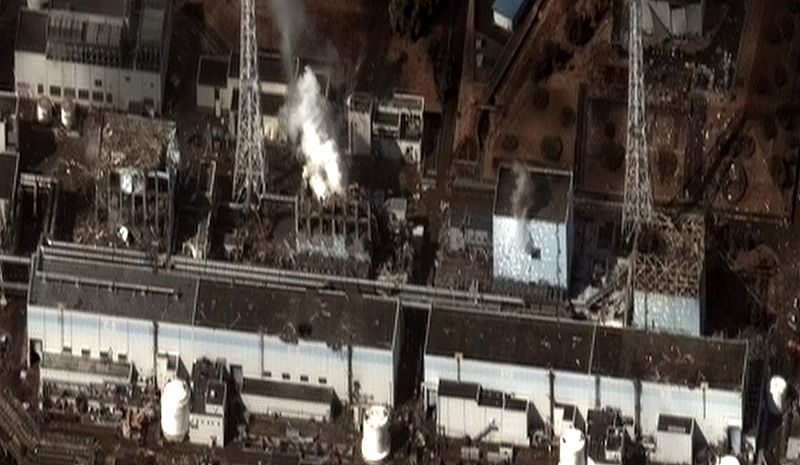
If you’re not a subscriber, I guess you’ll have to pay for access to this recent New Yorker piece, but it is well worth it. Evan Osnos took a look at Japan and the Fukushima nuclear meltdown seven months after the terrible tsunami destroyed so many lives and very nearly killed many more.
This is compelling writing and reminds me of something I’d forgotten—hadn’t we all agreed that nuclear disaster was a real and legitimate fear again, and change was needed? What happened?
The article raises a theory that resonates. In a long section in the middle of the piece detailing the history of nuclear power in Japan, Osnos notes that post-Chernobyl Japanese officials actually became less safe and at the same time more assertive of the safety of nuclear power.
The idea was to defend the industry against attacks by distinguishing the practices in Japan from those in the USSR, but somehow while the language did just that, the reality went the opposite way.
It reminded me of a time back in 1989 or 1990, in high school chemistry. Much to my father-in-law’s chagrin (he just retired after nearly 40 years as a chem prof), this was never my subject, and I was a rather indifferent student who paid as a little attention as possible. I was, however, proudly political, and thus sat up when a man in uniform (I know we all like a man in uniform, but I honestly can’t recall what branch of the military he was in), showed up to talk to us about the benefits of nuclear power.
He began by asking who in the class was concerned about nuclear safety, and I raised my hand, expecting at least a handful of others to do the same. They didn’t. Big surprise, I suppose, that when a guy with a gun comes to class, kids aren’t too eager to step out with a contrary opinion.
The rest of the class was an extended argument between he and I, and I lost absolutely — knowing, of course, nothing about nuclear power and having no capacity to make the case for potential dangers.
I still don’t, of course, except to point to this article about last August’s Virginia quake, which calmly quoted the head of the affected facility saying that “These plants are designed for this kind of seismic event.” A week later we learned that these plants were not designed for “this kind of seismic event” at all. Because, as in Japan, nuclear power is too important to our nation’s energy system to bother with actually confronting the very real risks — it’s much easier to reassure everyone that things are fine. Ultimately, however, Mr. Burns doesn’t eat the fish, and you probably aren’t ordering a lot of Japanese beef these days.


-
 The SlickMay 29, 2026
Feds to Open Tens of Thousands of Acres of Colorado Wilderness to Oil Drilling
-
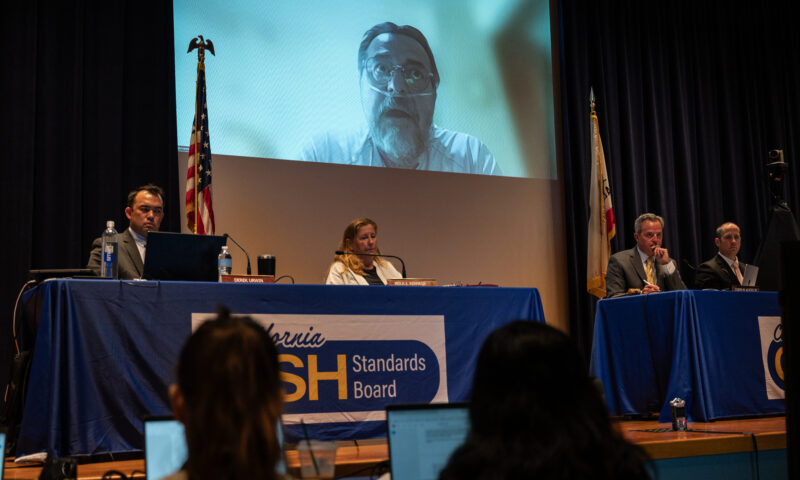
 Deadly Dust: The Silicosis EpidemicMay 27, 2026
California Moves to Ban Quartz Countertop Fabrication to Combat Silicosis Epidemic
-
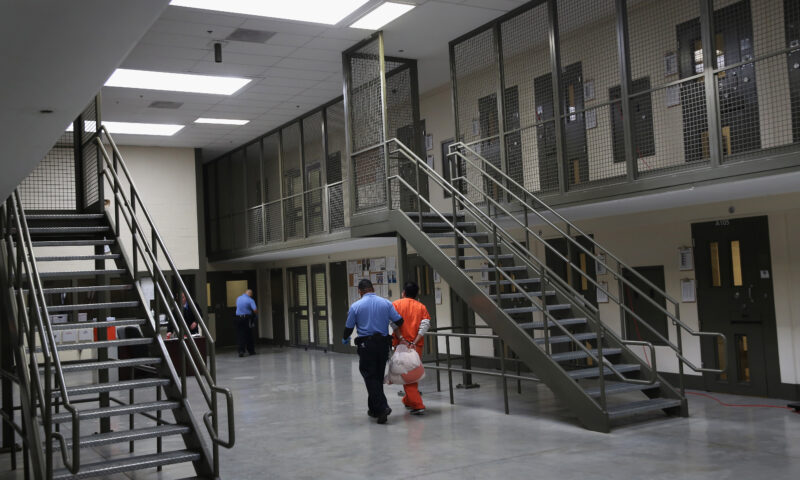
 Latest NewsMay 26, 2026
Conditions at California ICE Detention Centers Are Getting Worse, Inspections Find
-
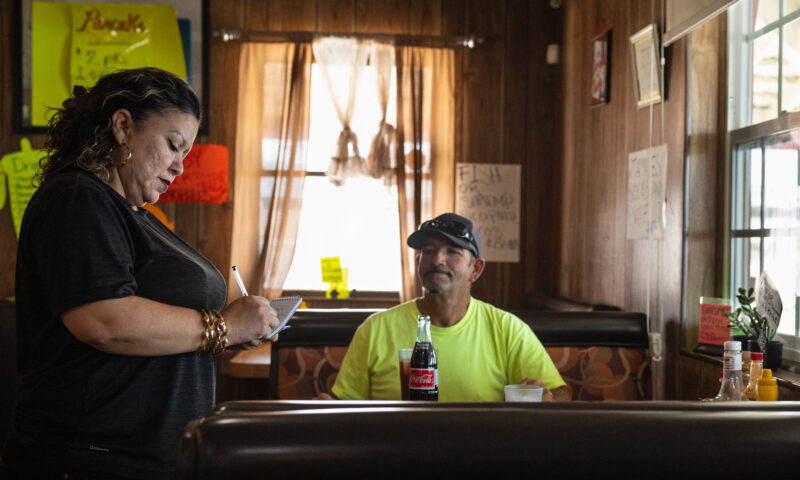
 Imperial DivideJune 3, 2026
California’s Lithium Valley Dreams Meet Reality at the Only Restaurant in Town
-

 Column - State of InequalityMay 28, 2026
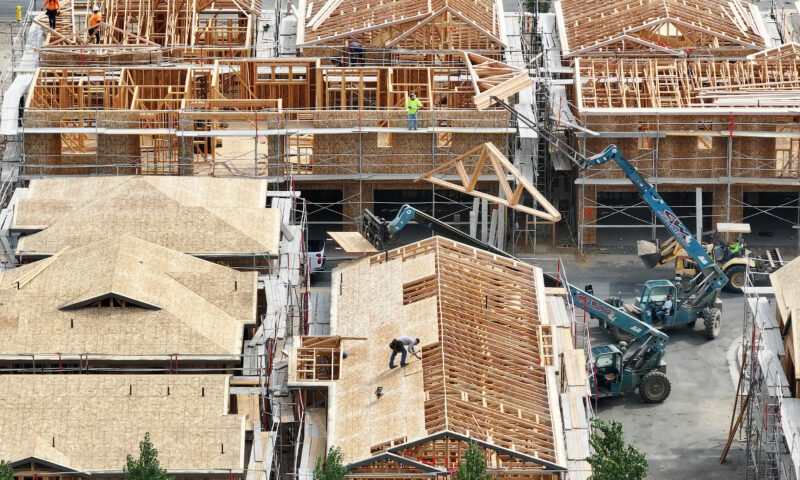
Top Democratic Candidates Agree on Housing Urgency, Not the Fix
-

 Latest NewsJune 1, 2026
Deep Cuts to Civilian Support Staff for Families of Deployed Marines Raise Concerns
-
 Column - State of InequalityJune 4, 2026
California’s Economy Runs on Labor Trump Wants to Deport
-
 The SlickJune 5, 2026
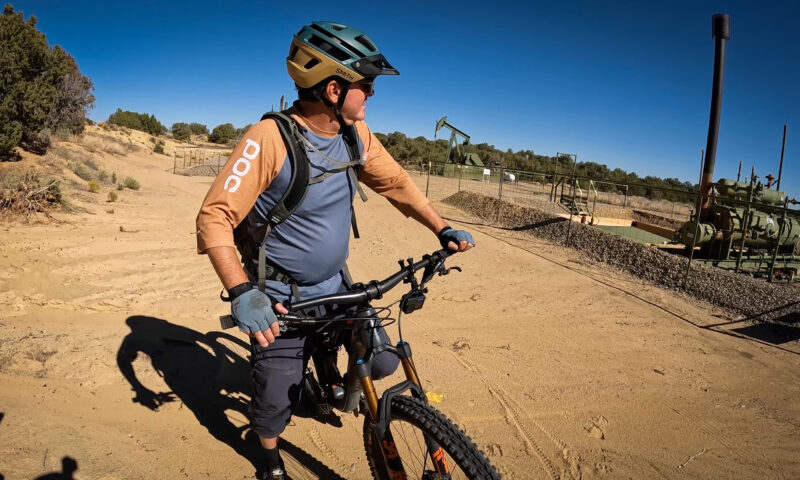
At This New Mexico Park, Mountain Bikers Pedal Amid Hundreds of Oil Wells