
Labor & Economy
Divided We Stand

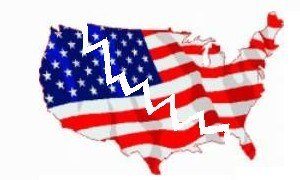
We come together as Americans when confronting common disasters and common threats, such as occurred in Boston, but we continue to split apart economically.
Anyone who wants to understand the dis-uniting of America needs to see how dramatically we’re segregating geographically by income and wealth. Today I’m giving a Town Hall talk in Fresno, in the center of California’s Central Valley, where the official unemployment rate is 15.4 percent and median family earns under $40,000. The so-called “recovery” is barely in evidence.
As the crow flies Fresno is not that far from California’s high-tech enclaves of Google, Intel, Facebook, and Apple, or from the entertainment capital of Hollywood, but they might as well be different worlds.
Being wealthy in modern America means you don’t come across anyone who isn’t, and being poor and lower-middle class means you’re surrounded by others who are just as hard up. Upward mobility — the old notion that anyone can make it with enough guts and gumption — is less of a reality.
The probability that a poor child in America will become a poor adult is higher now than it was 30 years ago, and higher in the United States than in the United Kingdom, which has a long history of class rigidity.
Almost one out of four of the nation’s children is in now in poverty, but you wouldn’t know that in Washington, where our representatives are now busily cutting safety nets children depend on, or in many state capitals that continue to slash budgets for education and social services.
Many of America’s wealthy don’t see why they should pay more taxes to support the less advantaged because they have no idea what it means to be less advantaged, while many in America’s middle class can’t afford to pay more because their real wages continue to decline.
Our thoughts turn to Boston — as they should. But Fresno and other places like it across America remain ignored.
(Robert B. Reich, Chancellor’s Professor of Public Policy at the University of California at Berkeley, was Secretary of Labor in the Clinton administration. Reposted from his Web site with permission.)



-
 Column - State of InequalityJune 4, 2026
California’s Economy Runs on Labor Trump Wants to Deport
-

 Featured VideoJune 5, 2026
At This New Mexico Park, Mountain Bikers Pedal Amid Hundreds of Oil Wells
-

 Latest NewsJune 9, 2026
Ousted by the Trump Administration, U.S. Immigrants Remain Locked up in African Kingdom
-
 The SlickJune 10, 2026
Data Centers Are on the Ballot — This Pennsylvania Candidate Won Her Primary Keeping Them Top of Mind
-
 Latest NewsJune 12, 2026
California Town Lets Private ICE Detention Centers Police Themselves
-

 Latest NewsJune 8, 2026
The Glacier May Be Gone, but the Love Isn’t
-
 Column - State of InequalityJune 11, 2026
County Tax Measures Show Limits of Local Responses to Medicaid Cuts
-
 The SlickJune 16, 2026
Why Coal Will Lead to More Deaths in Colorado