
Culture & Media
Are the Occupy Camps Reaching a Crossroad?

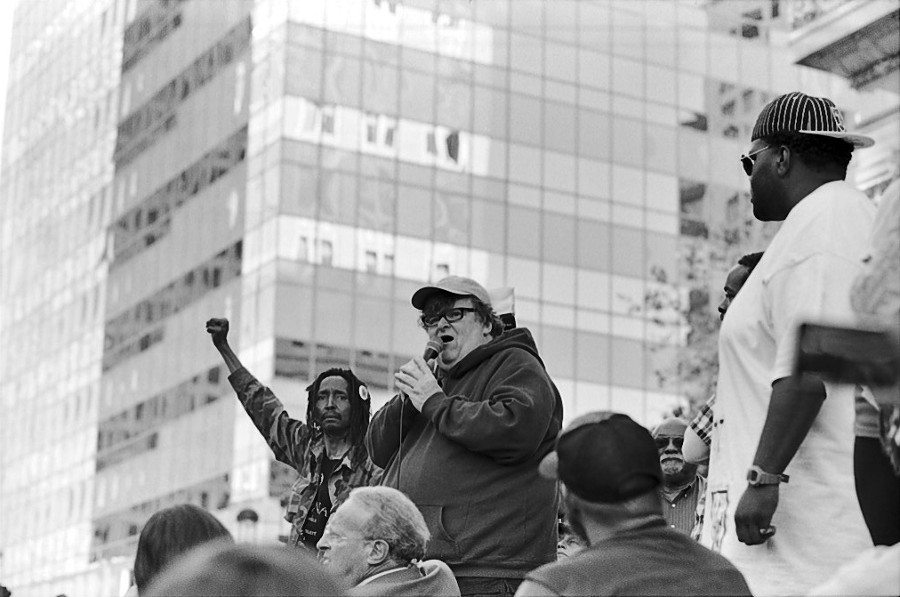
I have been photographing the Occupy camps since the inception of Occupy Los Angeles. I’ve spoken to many people and have thoroughly visited each layer of the emerging strata in the Occupy movement. I have seen it evolve.
On Day One it was as if the raucous levity of Venice Beach had been transplanted to Los Angeles City Hall. But within several days, the occupation had matured. People were tired. For even the most hardy, nights of sleeping on the ground in a not-so-private atmosphere and sharing a rancid pit toilet with hundreds of others is understandably wearing. What is this movement to become?
There is no mainstream media outlet objectively reporting the story. The pushing and pulling of the facts to fit readership deny the true story. Admittedly, I come from a bias of support for the movement. However, there can be no greater support for the movement than holding a great big mirror in the direction of its errant ways.
Occupy L.A. had me yearning to visit other camps. My chance came when Scott Olsen, the 24-year-old former U.S. Marine and two-tour Iraq War veteran, was felled by a police projectile during the October 21 crackdown on protesters. The following day, protesters in San Francisco had fended off – en masse – the police department’s attempt to raze their camps. I jumped in my car and sped north through the autumn tan of the Central Valley to where the forefront of the Occupy movement seemed to be unfolding.
Late that evening, I was greeted by a modest gaggle of protesters encamped in front of the Federal Reserve Building on San Francisco’s Market Street. The protest was a tidy, symbolic face-off with the Federal Reserve. The apparent spokesperson described the movement frankly but carefully. “Is this it?” I asked, looking upon the 25 or so people milling around.
“Oh no,” the spokesperson educated me. “There’s the other camp a block down. But, we don’t want anything to do with them. We disagree with what they’re up to.”
A hundred yards from the Federal Reserve protest was an establishment of tents and shanties which I would come to dub “The Cambodian Village” after Colonel Kurtz’s exploits in Apocalypse Now. The ubiquitous waft of marijuana and sage would occasionally drown out the ever present stench of urine. I was greeted by a very stoned young man who rolled his head around and barked orders to others. He was paired with a thickly bearded fellow in his fifties, packed in a filthy parka and staring unblinkingly into the night sky.
The young man held up a hand: “No photos.” His voice trailed off commensurate with his state of inebriation. I pulled my press credential and he had a change of heart. “Okay. Go ahead,” he said, waving me by.
Based on the livestream flowing from the respective Occupy websites, I expected to find some form of organization beyond the tentative structures encircling the camp. There was none of that — the camp was largely a drug-fueled circus playing upon the spontaneous inclinations of the sadly mentally ill whom migrated from the city’s homeless underworld. Occupants flitted playfully about in the night shadows while others stewed in a deep state of anesthetization. The spark of chaos was ever-present.
The police seemed to be confused about what to do. I spoke at length to a sergeant who, initially, bent over backwards to accommodate any anticipated issue with political correctness that might arise. I got him to relax and just talk to me. His intimations led me to understand that the city might raze the camp over the next several days. “Throngs” of reserves had been at the ready the night before, but a “wait and see” attitude had been adopted.
I thought of a young man with whom I spoke just earlier. Obviously mentally ill, he furiously bit at his painted fingertips as he lectured about the forthcoming lawsuit against the Fed for implanting wireless mesh in his head to control his thoughts. The “comrade” to his side nodded in approval and belted out, “It’s quantum physics!”
Redemption was found in Oakland. While the camp in Frank Ogawa Plaza entailed some of the elements that seeped their way into San Francisco (and Los Angeles), Oakland was all business. This was good considering what had occurred several nights earlier. Michael Moore, visibly incensed by the recent police action, had come to give his support and blessing to Oakland occupiers. It is difficult to know if the city’s olive branch is firmly held in hand. I pray it is. Given the forthcoming general strike planned for today, November 2, we will soon find out.



-
 Imperial DivideJune 3, 2026
California’s Lithium Valley Dreams Meet Reality at the Only Restaurant in Town
-
 Latest NewsJune 1, 2026
Deep Cuts to Civilian Support Staff for Families of Deployed Marines Raise Concerns
-

 Column - State of InequalityJune 4, 2026
California’s Economy Runs on Labor Trump Wants to Deport
-
 Featured VideoJune 5, 2026
At This New Mexico Park, Mountain Bikers Pedal Amid Hundreds of Oil Wells
-
 Latest NewsJune 9, 2026
Ousted by the Trump Administration, U.S. Immigrants Remain Locked up in African Kingdom
-
 The SlickJune 10, 2026
Data Centers Are on the Ballot — This Pennsylvania Candidate Won Her Primary Keeping Them Top of Mind
-

 Latest NewsJune 8, 2026
The Glacier May Be Gone, but the Love Isn’t
-
 Latest NewsJune 12, 2026
California Town Lets Private ICE Detention Centers Police Themselves