Labor & Economy
After Wisconsin, the Deluge?


While hardly surprising to anyone who read the polls, yesterday’s victory by Republican Governor Scott Walker was a body blow to Wisconsin unions and to American workers. Within Wisconsin, Walker’s victory ensures that his law repealing collective-bargaining rights for public employees will stay on the books, and if Republicans maintain their hold on the state senate—four of their senators faced recall elections, and as I write this at least three have survived—they will, at least in theory, be able to go forward on other parts of their Social Darwinist agenda. Whether they will—and whether they opt to go after private-sector unions, too, with right-to-work legislation—remains unclear. Such a move on Walker’s part, coming on the heels of the most divisive 18 months in the state’s history, would only escalate what is already a political civil war. Even Walker may think it the better part of valor to pass on that for now.

But the damage already done by Walker’s anti-union legislation, which eliminated public employee unions’ ability to automatically collect dues from its members’ paychecks, is vast. A May 30 article in the Wall Street Journalreported that membership in the American Federation of State, County and Municipal Employees (AFSCME), a union founded in Wisconsin in 1936, had declined in state from 62,818 in March 2011 to 28,745 in February of this year. Membership in the American Federation of Teachers had declined in-state from 17,000 to 11,000, the article reported. The membership numbers for Wisconsin’s largest public-sector union, the National Education Association, are not available.
Added to the prohibition on their ability to bargain over wages and conditions of work, what the dramatic drop in union membership means is that workers’ power to win a decent life either at the workplace or at the ballot box will be weakened. Union treasuries will grow smaller, as will the level of resources they can devote to election campaigns. That means not just less money to campaign for union-specific issues, but for the whole panoply of causes (and the candidates who back them) that unions routinely support—women’s and minority rights, affordable higher education, financial regulation, the works.
The larger question coming out of Wisconsin is whether the result will embolden other Republican governors to go down this path. Some, of course, have already tried and been soundly rebuffed, most particularly Ohio’s John Kasich, whose own law repealing his state’s public employee bargaining rights was overturned by referendum last November by a 61-percent-to-39-percent margin. I’ve attempted on this blog to analyze why the outcomes were so different, especially since Wisconsin is by every measure a more liberal state than Ohio. I’ve noted that Ohio union activists had the ability to wage a timely referendum campaign, while Wisconsin law has no provision for referendums, and the recall—a more complicated question—had to wait more than a year before being put before state voters.
Unions were also able, or inclined, to spend a lot more in Ohio than they were in Wisconsin. In Ohio, the referendum campaign against Kasich’s law raised and spent just under $30 million, while the campaign to support it raised just $11.4 million. In Wisconsin, by contrast, Walker and the independent expenditure campaigns on his behalf spent $45.6 million, while the campaign of his Democratic opponent, Milwaukee Mayor Tom Barrett, and the independent campaigns on his behalf, spent just $13.4 million—about 29 percent of the pro-Walker spending. Unions also spent an additional $4.5 million on the campaign of Barrett’s Democratic primary opponent, Kathleen Falk, but much of that was directed against Barrett and hardly helped his election prospects. The primary, which was held just four weeks ago, looks increasingly to have been a disaster for the recall effort: the inability of the Democrats to unify early around a single candidate, while Walker had the better part of a year to raise funds and build his campaign, surely contributed to Walker’s victory.
So which lessons will Republican governors heed—the cautionary ones of Ohio or the bring-on-the-jihad message of Wisconsin? A number of Republican governors already steamed into office with radical programs last year and have paid the price of dwindling public support—Florida’s Rick Scott in particular. Labor has certainly made clear that a war on unions comes at a price. But labor, its defeats notwithstanding, still punches well above its weight at election time and remains the chief impediment to Republican rule in states with a union presence. Taking it down—either through right-to-work legislation that weakens private-sector unions or collective-bargaining restrictions that weaken their public-sector counterparts—has long-term rewards both for Republican politicians and for businesses that depend on keeping wages low and benefits lower, if not non-existent.
Of course, as historian Fred Siegel, a leading opponent of public-sector unions, remarked to me many years ago (when he was still on the left), before unions, the common form of protest for workers seeking a better life was rioting. That may eventually prove to be the common form of protest after unions, too.
(This column first appeared in the American Prospect and is reposted here with the author’s permission.)


-
 Column - State of InequalityMay 21, 2026
In California Governor’s Race, Xavier Becerra Walks Away From Single-Payer
-
 Latest NewsMay 22, 2026
Where California’s Gubernatorial Candidates Stand on Climate and Taking Big Oil Money
-

 The SlickMay 20, 2026
70-Foot Wastewater Geyser Reflects New Mexico’s Latest Oilfield Challenge
-

 The SlickMay 29, 2026
Feds to Open Tens of Thousands of Acres of Colorado Wilderness to Oil Drilling
-
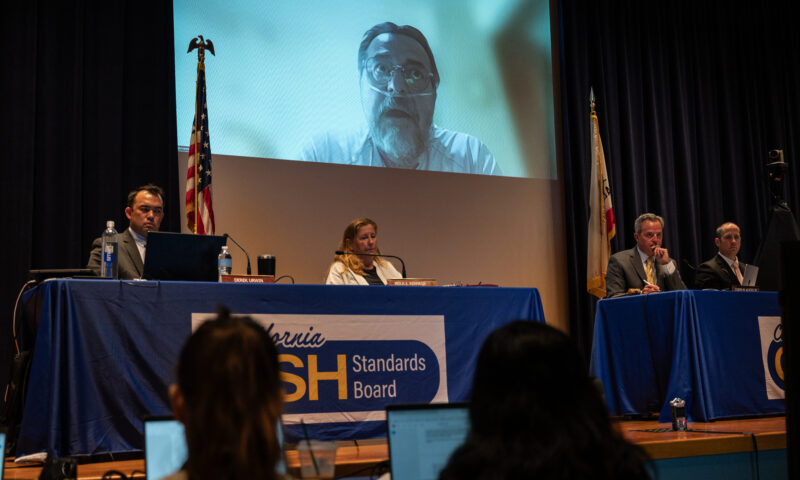
 Deadly Dust: The Silicosis EpidemicMay 27, 2026
California Moves to Ban Quartz Countertop Fabrication to Combat Silicosis Epidemic
-
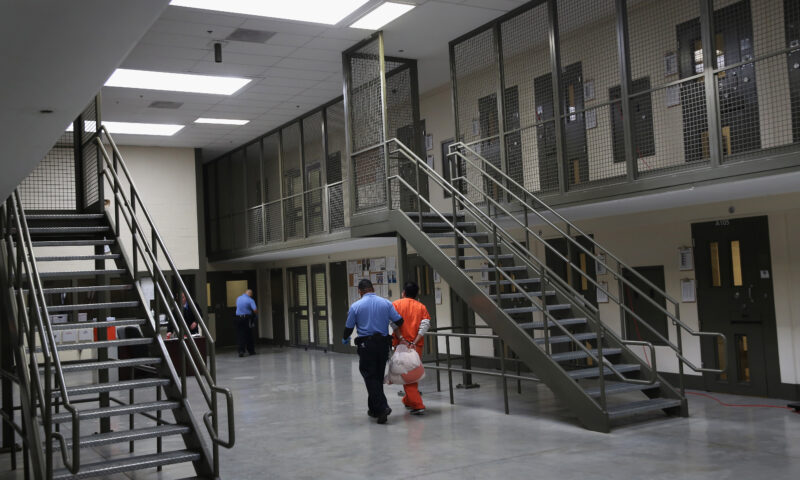
 Latest NewsMay 26, 2026
Conditions at California ICE Detention Centers Are Getting Worse, Inspections Find
-
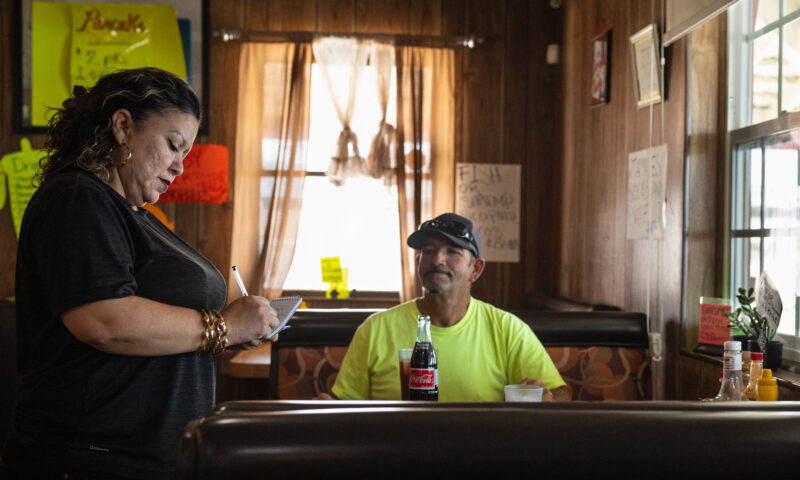
 Imperial DivideJune 3, 2026
California’s Lithium Valley Dreams Meet Reality at the Only Restaurant in Town
-
 Column - State of InequalityMay 28, 2026
Top Democratic Candidates Agree on Housing Urgency, Not the Fix