
Labor & Economy
Unions Hold Hope for Latino Workers

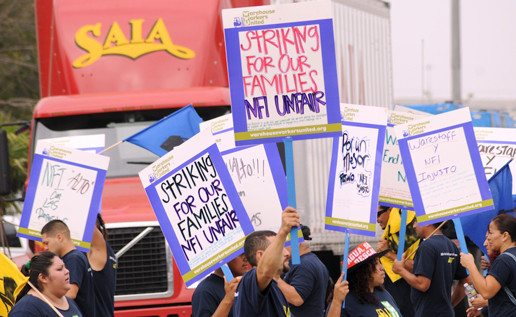
Ask Los Angeles Times reporter Alana Semuels why union membership in California rose by 100,000 in 2012 and she’ll give you a simple answer:
“Latino workers.”
To explain the contrast between the trend in California and the U.S. as a whole – where union membership dropped last year by 400,000 – Semuels turned to some credible sources, including Steve Smith of the State Labor Fed who cited “an appetite among these low-wage workers to try to get a collective voice to give themselves opportunity and a middle-class lifestyle.”
Quoting Smith and others, Semuels finds that, “After working hard to get here, many Latino immigrants demand respect in the workplace and are more willing to join unions in a tough economic environment, organizers say.”
True enough: Immigrant workers have been particularly important for unions in California and Latino organizing has helped reignite the state’s labor movement. But that’s only part of the story.
Many California unions, allied with progressive groups up and down the state, have dedicated enormous resources to community and economic organizing. This has influenced California’s political culture. Union-friendly city councils, boards, commissions, a Democratic legislature and statewide office holders produce a relatively pro-worker political and economic atmosphere.
Though employer resistance to unions can be as fierce in California as in other states, there is also a growing sense that a cooperative relationship with labor can be good business (note the expedited permitting for the construction of downtown L.A.’s Farmers Field).
California unions were ahead of the curve in recognizing the power of Latino workers and voters and then led other states in building diverse constituencies around progressive economic development strategies. The number of “living wage” districts around the state testifies to that.
There is no pro-union state in the U.S. But California (with 18.4 percent of the workforce unionized) may be pointed in that direction.
Despite its failure to offer context, the L.A. Times piece draws the same conclusion.
“Labor’s more optimistic proponents say that California could serve as a blueprint for unions across the country as they seek to stem membership declines,” writes Semuels. ” The trend comes amid forecasts that the Latino population in the U.S. is likely to double in two decades.”
(This post first appeared on LaborLou and is republished with permission.)


-

 Column - State of InequalityMay 21, 2026
In California Governor’s Race, Xavier Becerra Walks Away From Single-Payer
-

 Latest NewsApril 28, 2026
A May Day Push to ‘Shut It Down’ Takes Shape Across the Country
-

 The SlickApril 29, 2026
With Promises of Money, Controversial Gas Pipeline on Navajo Nation Passes First Hurdle
-
 Deadly Dust: The Silicosis EpidemicMay 6, 2026
California Could Be the First State to Ban Quartz Countertops
-

 Latest NewsApril 27, 2026
As the U.S. Spends Billions Fighting Iran, War-Driven Inflation Hits Working Families Hard
-

 Latest NewsMay 1, 2026
In One of L.A.’s Food Deserts, ‘Hands That Harmed Are Now Hands That Heal’
-

 Column - State of InequalityApril 30, 2026
Don’t Call It Upward Mobility If People Still Can’t Afford to Live
-

 Latest NewsMay 5, 2026
Fire Recovery Could Wipe Out Altadena’s Affordable Rentals