
Culture & Media
Joe Burns: Bring Back the Strike!

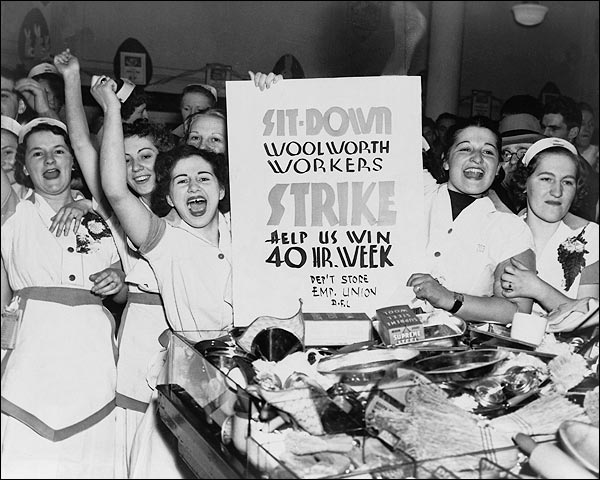
The American labor movement needs a jolt and Joe Burns’ new book, Reviving the Strike, delivers just the right shock treatment.
Debunking commonly held assumptions about labor’s inevitable decline and extinction, Burns, a veteran union lawyer, argues clearly and persuasively that worker power is still possible — but will require a dramatic shift in thinking and strategy.
Don’t expect standard academic or progressive bromides about “coalition-building,” “corporate campaigns,” “organizing-to-scale” or “social unionism.” In taking on some of the labor left’s sacred cows — living wage campaigns, worker centers, etc. — Burns praises and honors the commitment, brains and tenacity of activists. But these approaches, he suggests, lack the singular component necessary to transform power relations in the political economy. That, he contends, is the capacity to stop production.
Burns makes his case in a tightly-written narrative. After the union insurgencies of the 1930s, Congress and the courts imposed a system he calls “labor control,” one designed to disable unions’ principal and primary weapon: the strike. While acknowledging the disastrous impact of communist purges and union bureaucratization, Burns also holds progressive unionists complicit in labor’s decline. In his chapter, “Why Organizing Cannot Solve the Labor Crisis,” he alleges of their failure:
The main strategy that [the contemporary] labor movement has engaged in to deal with its dwindling numbers is “organizing the unorganized” . . . [T]he idea that the labor movement can resolve its crisis simply by adding new members — without a powerful strike in place — actually constitutes one of the greatest theoretical impediments to union revival.
Although Burns challenges many other popular ideas, including prevailing assumptions about “union density,” I found myself agreeing with him more often than not. I enjoyed his sometimes counter-intuitive observations, such as his belief that on matters of strike theory and economics, the conservative Samuel Gompers and other early labor leaders in America were more radical than their descendants in today’s labor left.
Burns also does a nice job describing his vision of working-class solidarity:
In the process of striking, the workforce develops a group consciousness. The most militant workers pull along their hesitant co-workers. This prompts people to do things they might not do as individuals. Ultimately, this is how large social movements are built.
Though his book’s premise is sound and provocative, I was a little let down by Burns’ conclusion that the strike somehow offers a new and radical alternative to what he sees as three decades of failure. I suppose no one really knows how to bring the strike – and the labor movement – back to its glory days. But Burns does us a favor by raising important questions. For union activists trying to recover from the disappointments of the Obama administration, Reviving the Strike may light a spark and get us talking.
REVIVING THE STRIKE: How Working People Can Regain Power and Transform America By Joe Burns. IG Publishing, 224 pages. $15.95.



-

 The SlickMay 29, 2026
Feds to Open Tens of Thousands of Acres of Colorado Wilderness to Oil Drilling
-

 Imperial DivideJune 3, 2026
California’s Lithium Valley Dreams Meet Reality at the Only Restaurant in Town
-

 Latest NewsJune 1, 2026
Deep Cuts to Civilian Support Staff for Families of Deployed Marines Raise Concerns
-

 Column - State of InequalityJune 4, 2026
California’s Economy Runs on Labor Trump Wants to Deport
-

 The SlickJune 5, 2026
At This New Mexico Park, Mountain Bikers Pedal Amid Hundreds of Oil Wells
-

 The SlickJune 10, 2026
Data Centers Are on the Ballot — This Pennsylvania Candidate Won Her Primary Keeping Them Top of Mind
-

 Latest NewsJune 9, 2026
Ousted by the Trump Administration, U.S. Immigrants Remain Locked up in African Kingdom
-

 Latest NewsJune 12, 2026
California Town Lets Private ICE Detention Centers Police Themselves